Lines, delays, and desperation: Inside the appointment bottleneck at the Mexican consulate
The consulate provides crucial services for over a million Mexicans living in the Southeast. Getting an appointment can be so tough that some have resorted to paying for it.
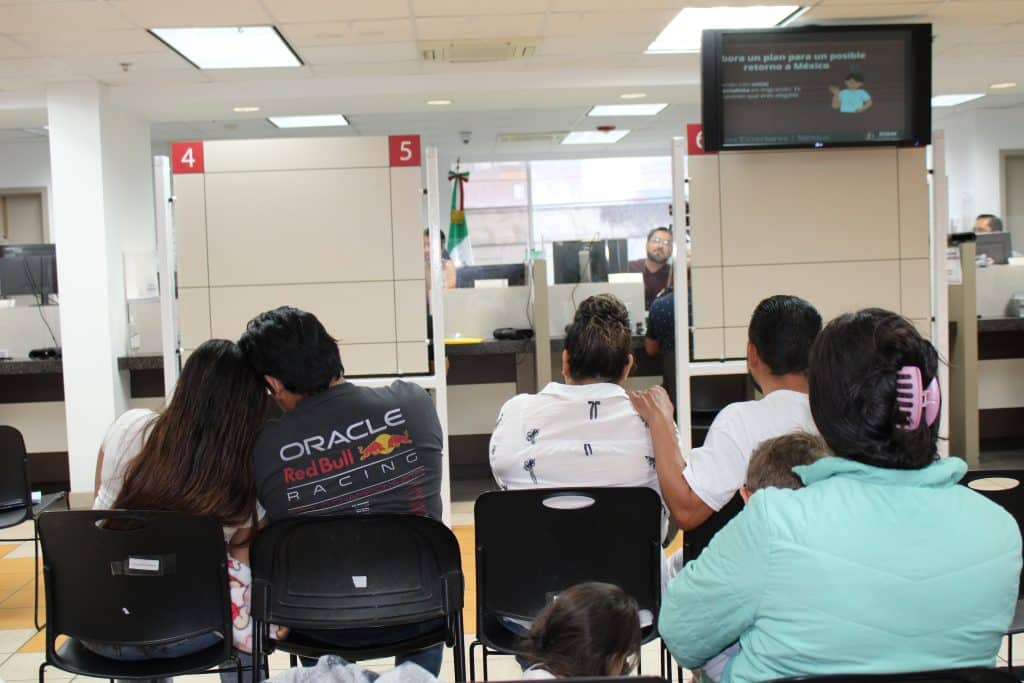
Rosalva Romo received the call on a Thursday morning. Her father, whom she’d left behind in Hidalgo, Mexico, when she immigrated to the United States 26 years ago, had been diagnosed with an advanced form of cancer. His health had been in decline for months—but now the doctor was giving him only a few days to live.
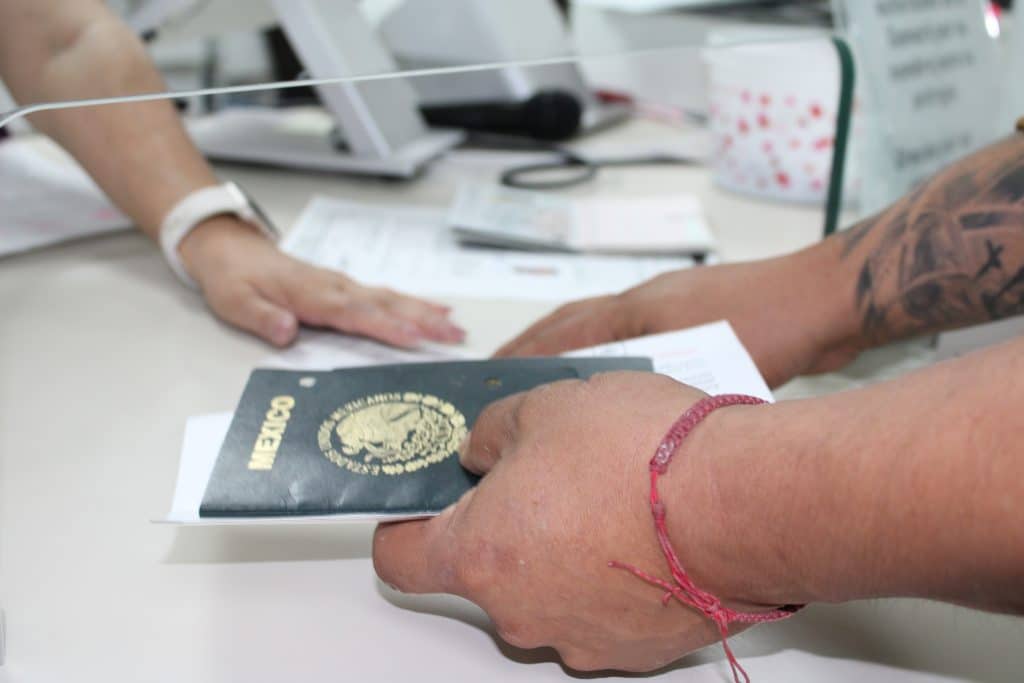
Desperate, she booked a flight to Mexico for the next day. That night, though, she realized her Mexican passport had expired. To fix the situation, she’d have to make an appointment at the local Mexican consulate. “The world closed down on me,” said Rosalva, a legal permanent resident of the U.S. who only has a Mexican passport. “The first thing that came to mind was all the horror stories I had heard about trying to get anything done at the Mexican consulate in Atlanta. I knew this was going to be a struggle.”
She’s not the only one who feels that way: 285 South has been speaking with local residents over the last few months who say it can seem nearly impossible to secure an appointment at the Consulate General of Mexico in Atlanta.
“It is incredibly frustrating,” said Maria Inez Flores, who tried for weeks to obtain an appointment to get a copy of her Mexican birth certificate. “I needed the paperwork for my enrollment in law school. The deadline was coming up, and I just couldn’t get through.”
Such challenges aren’t new, and officials are well aware of the issue. “This is an issue that has been dragging on as one of—and probably the most serious—obstacles we face in terms of the consulate’s image, because the truth is that this is one of those cases where demand far exceeds supply,” said Oswaldo A. Canto Arias, deputy consul general at the Atlanta consulate, when 285 South spoke to him in December. “We like to blame Covid,” he continued—in 2020, the pandemic forced the consulate to shut down for several months. “But there are many other factors that have piled up over time.”
The Consulate General of Mexico in Atlanta has been operating for more than 50 years, with a staff of 79 serving around 1.2 million Mexicans in Georgia, Alabama, and parts of Tennessee. That number is growing, Oswaldo said: “I think it’s already approaching 1.5 million.” The consulate provides a broad range of services, from issuing passports and registering births to offering legal, health, and financial assistance.
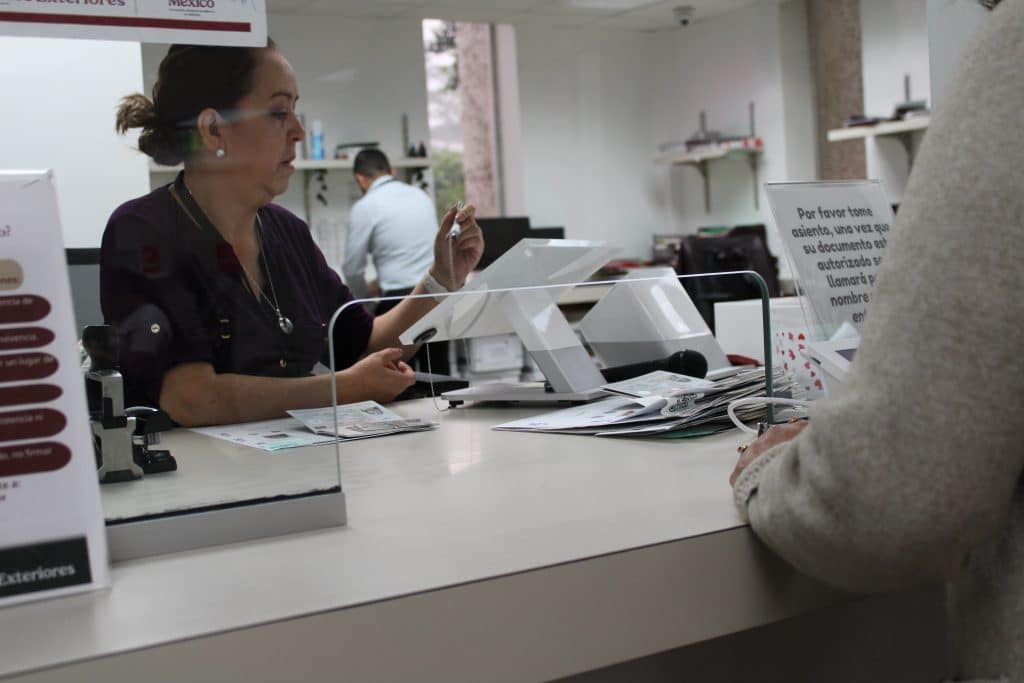
While demand has exceeded capacity for a long time, Oswaldo said, it’s grown even higher recently—particularly in the Protection department, which assists Mexican citizens in American prisons or immigrant detention centers, verifying their well-being, ensuring dignified treatment, providing identification documents, and connecting them with defense attorneys. “The Department of Protection is very busy right now because, thanks to Trump and the arrest figures he’s reporting, the workload has increased,” said Canto Arias.
Some with urgent needs resort to unofficial means. For Maria Inez, that meant paying for an appointment—even though appointments are free. “I went to a small stall at Plaza Fiesta, as a friend suggested. I paid $70, gave my information, and received a very official appointment confirmation via WhatsApp that same day. My appointment was scheduled for just two days later,” she said. “I really don’t understand how that works or why those people are able to get an appointment right away when I had tried for weeks, but I was desperate and willing to pay.”
The appointment that Maria Inez purchased at Plaza Fiesta didn’t come directly from the consulate; it came from an outside company. How these groups obtain appointments remains unclear, even to consulate workers themselves. “There are several theories,” Oswaldo said. “These administrative services firms have become specialists in managing appointments, but the truth is that our role has basically been to try to convince people not to go near them.”
There is only one official phone number to call to make an appointment directly with the Mexican Consulate: 424-309-0009. But the consulate doesn’t directly control scheduling. Calls are routed to MiConsulado, a call center in Mexico City that serves Mexico’s entire consular network in the United States and Canada. (Sourcing a third-party company to manage appointments isn’t uncommon among consulates; the Indian, British, and Swiss consulates in Atlanta do it too.) Call center workers are not employees of the Mexican government; they are employees of Bufete Empresarial GTI S.A. de C.V., the company awarded the contract by Mexico’s Ministry of Foreign Affairs through a 2021 bidding process.
Each consulate determines how many appointment slots the call center can make available to the public, largely based on size and capacity. “The Mexican Consulate in Atlanta can handle 350 appointments in a day, while smaller markets like Seattle handle around 100,” Oswaldo said, conceding that this arrangement can be hard for everyday people to understand. To address the bottleneck, the Atlanta consulate has begun assigning appointments directly at community events and churches, where staff can schedule visits on the spot. This past Sunday, for instance, consulate staff were at Plaza Las Americas, where they registered more than 300 people for appointments, according to the consulate’s press officer. “The consulate has complete flexibility,” Oswaldo continued. “There’s always room for one more.”
Changes like this have begun to take shape with the arrival of a new general consul, Rafael Laveaga, in August 2025—accompanied by hopes for a more positive perception among the Mexicans the consulate serves. Another initiative is the revival of mobile consular units to provide some of the most requested services, such as passport renewals and identification documents. These units travel to areas with high concentrations of Mexican residents and strong demand for services, with one serving the Tennessee region, particularly Nashville, and the other covering Alabama. However, these units can face their own challenge, said Oswaldo. Lines are long, and staffing is limited.“In reality, the ideal number of staff to form a team is 11, plus the official in charge,” Oswaldo said. “Right now, the team is seven. We’re only operating at about 70 percent of capacity.” The root of the understaffing problem stems from limited budget allocations, which come directly from the Mexican government under President Claudia Sheinbaum. “‘We have to do more with less’ is the current administration’s mantra of absolute austerity,” Oswaldo said.
Eight months after Laveaga took charge and began implementing changes, some remain frustrated.
On a Friday evening, desperate to renew her passport so she could see her father before it was too late, Rosalva was left only with the option that the Mexican consulate had advertised on its media platforms: She could simply show up to the office, tell them it was an emergency, and hope to be seen. Not feeling optimistic about her prospects, she called every phone number she could find on the Atlanta consulate’s website.
“Surprisingly, I got a call back on Saturday morning,” Rosalva said. “An actual human called me and told me to show up Monday morning, saying that I had spoken to her.”
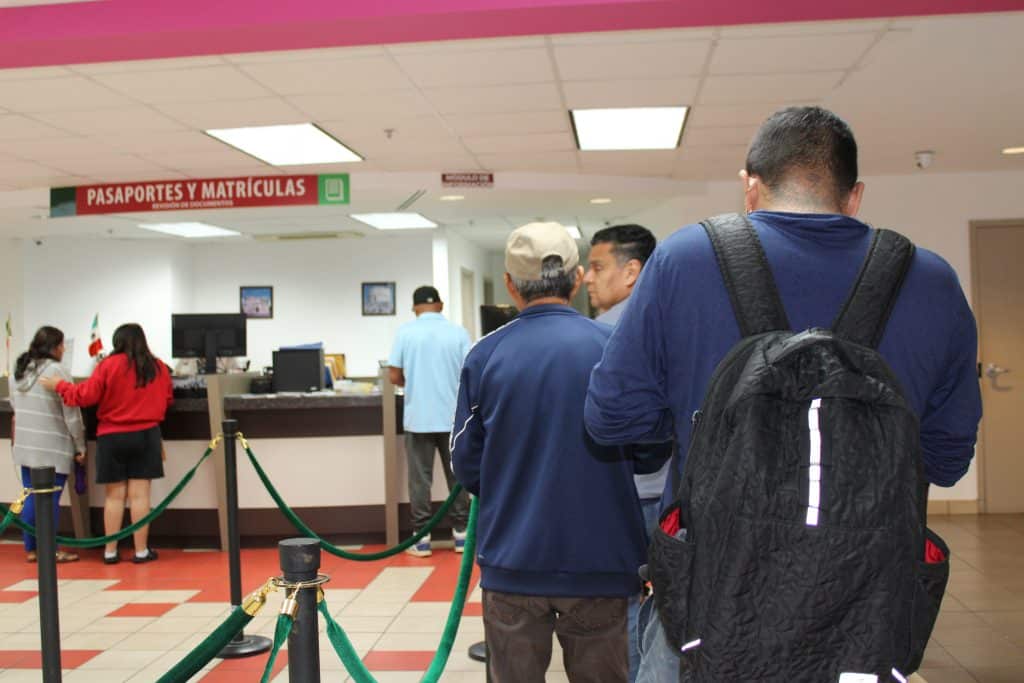
She got there at 6:30 a.m., the streetlights still on as the darkness of night faded. The parking lot of the consulate—which sits beside I-85 in a less busy area of Brookhaven, tucked between a 24/7 spa and a law firm—was quieter than usual, but a group of people was already lined up by the door. One by one, they were allowed into the building. A security guard checked names on a clipboard and directed people to either the appointment line or the no-appointment line. Rosalva was sent to the left line, where 15 other people without appointments already stood.
By 7 a.m., the no-appointment line had more than tripled. The appointment line was down to two people.
While waiting, two women standing behind Rosalva complained about their experiences trying to secure appointments. One had been trying to get her U.S.-born son a Mexican passport; the other was trying to send her late mother’s remains back to her home country.
“This is very sad for us as Mexicans,” one woman said. “My husband paid $60 and got his appointment immediately, but I didn’t want to pay for another one, so we just showed up hoping to be seen.”
Certain categories of people do not need a prior appointment and can simply show up. This includes people over the age of 60, pregnant women, people with disabilities who require assistance, and anyone facing an emergency, even one related to a leisure trip.
Rosalva finally stepped up to the counter at 7:30 a.m., and by 8:30 was walking out with her renewed passport—just in time to catch her flight to Mexico City.
“I hope I didn’t just get lucky,” she said. “I hope this is an actual change in the operation of the consulate. We deserve better.”
Author

Related Articles
“We believe that God will make a way for us, whether here in America or somewhere else”
As Temporary Protected Status for Haiti expires, a Lawrenceville pastor is comforting his community, amid reports of self deportations and job cuts

“I didn’t expect it to happen in my family.”
A flurry of homemade videos points to a summer uptick in immigration arrests in the Atlanta area
Venezuelan man dies in immigration custody in Georgia
45-year-old Jesus Manuel Arenas-Silvia is the third person to die in ICE custody in Georgia this year.