From dawn till dusk, Minas Grill & Emporium meets the needs of Atlanta’s Brazilian community
For decades, the Marietta hot spot has screened World Cup matches for fans of the Brazilian team. With the games coming to Atlanta this summer, they’re getting ready to party once again.
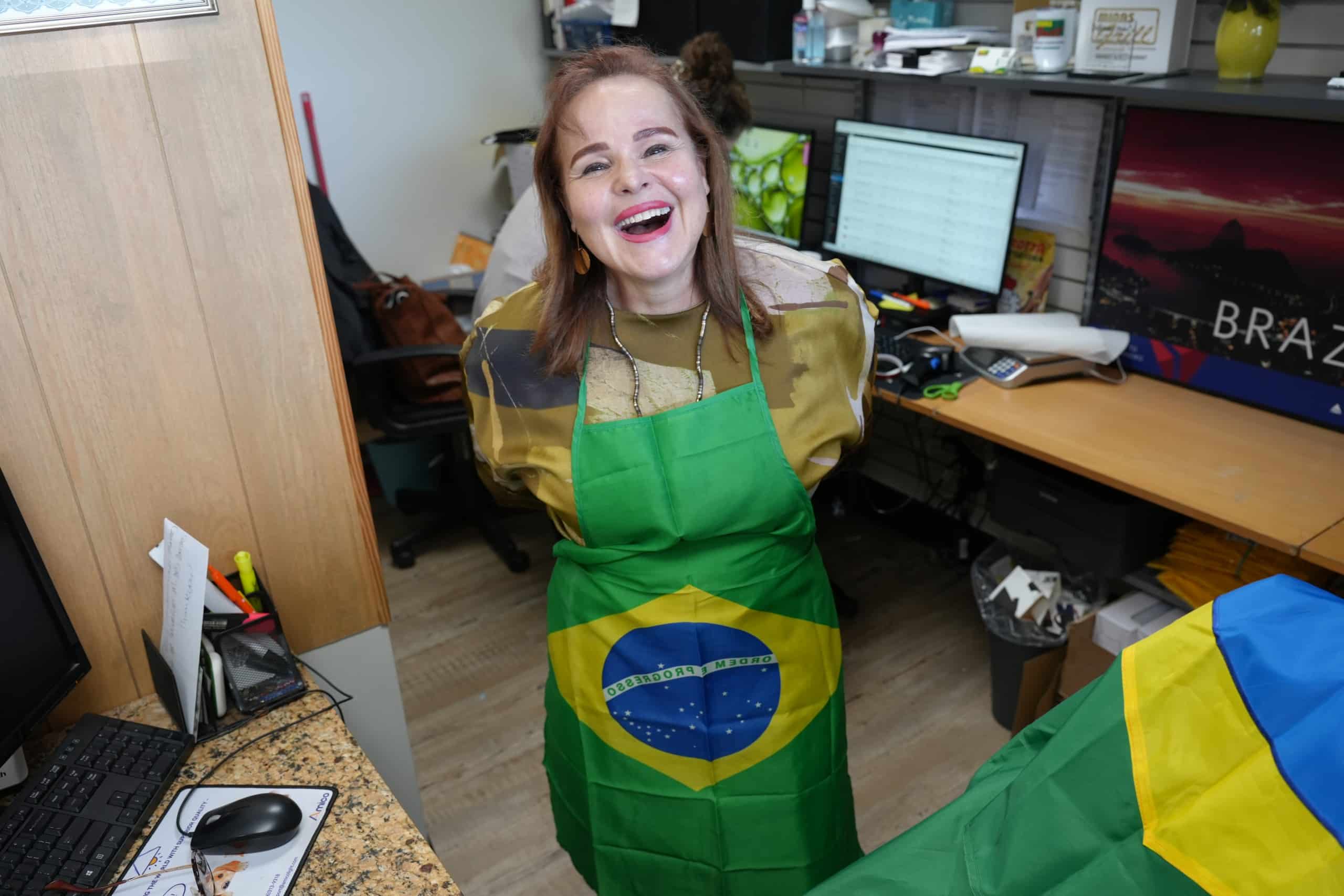
For decades, the Marietta hot spot has screened World Cup matches for fans of the Brazilian team. With the games coming to Atlanta this summer, they’re getting ready to party once again. Photo credit: Gabriela Henriquez Stoikow.
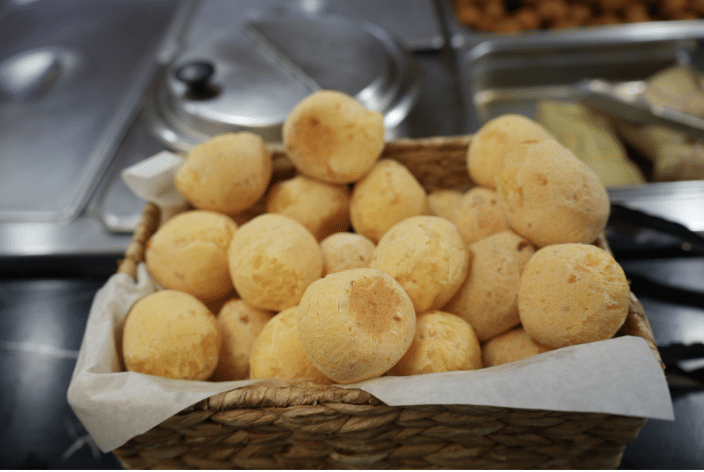
Most mornings, customers begin to trickle through the doors of Marietta’s Minas Grill & Emporium as soon as it opens at 6. That’s just in time for local workers—many of them Brazilian, dropping by for something familiar—to stop in and grab an all-you-can-eat breakfast of pão de queijo (also known as pan de bono), a cheese-filled cassava bread, or coxinhas, a teardrop-shaped bread filled with shredded chicken and creamy cheese. Then it’s on to the rest of their days.
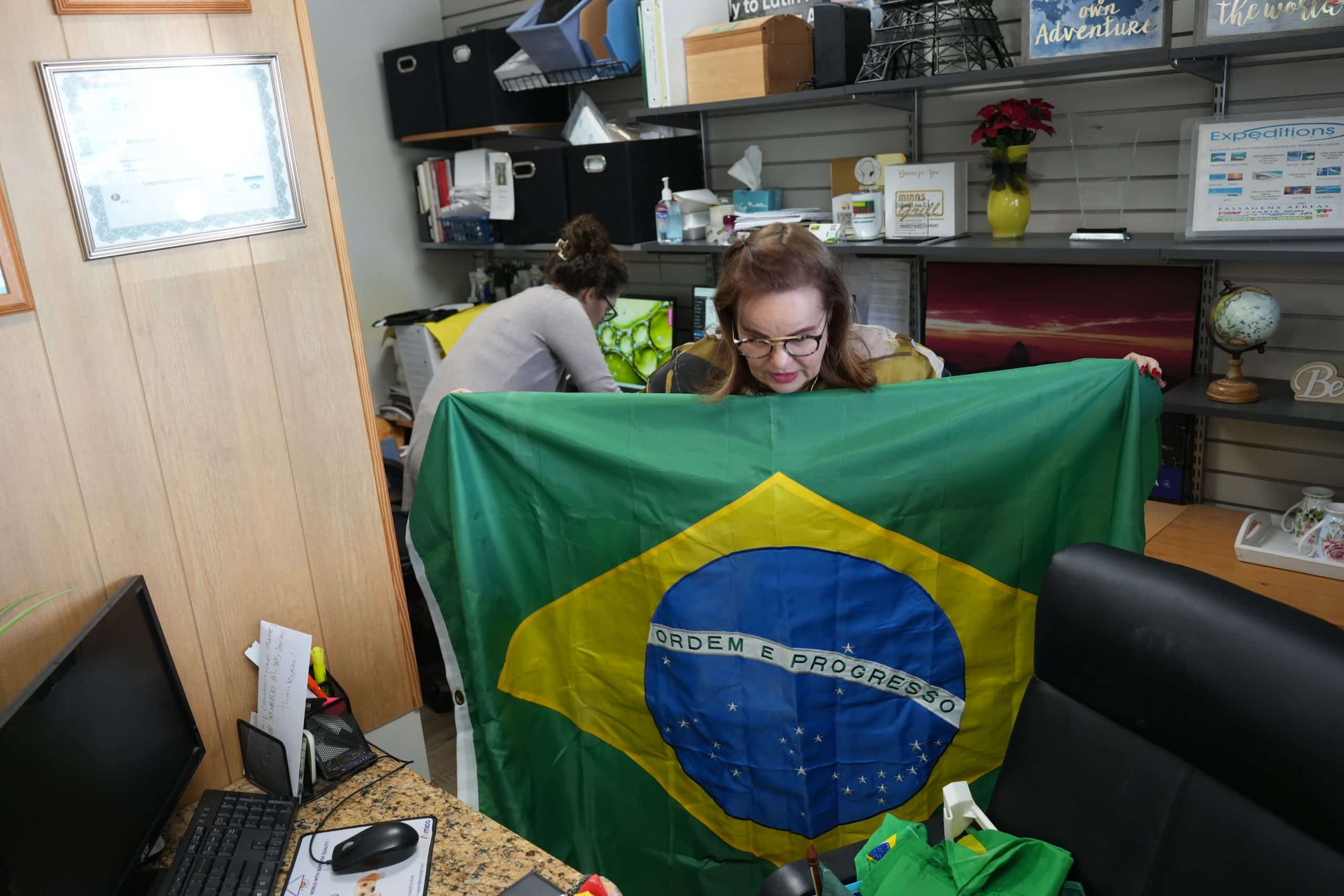
On a recent Thursday morning, just before the kitchen switched gears to begin serving lunch, Rosana Lima welcomed 285 South into her business, which encompasses both a market and a restaurant, connected to each other from inside. Sitting in her office—a tiny desk in a corner of the store—she spoke in a mix of Spanish, Portuguese, and English as she explained how she created a family business that’s now been a touchstone of the Brazilian community in Atlanta for more than two decades.
Most Brazilians in the area live in Cobb County—so that’s where Rosana first opened her business in the early 1990s, starting in Roswell before settling in Marietta. “Nosotros éramos como una conexión entre Brasil y los brasileños de acá,” Rosana said. We were sort of a connection between Brazil and the Brazilians here. She said that because every Brazilian arriving in Atlanta knew about her store, others decided to open businesses nearby and people looked for housing as well. “Marietta es como si fuera la meca de la comunidad brasileña y todo empezó acá,” she said. Marietta is like the mecca of the Brazilian community, and it all started here.
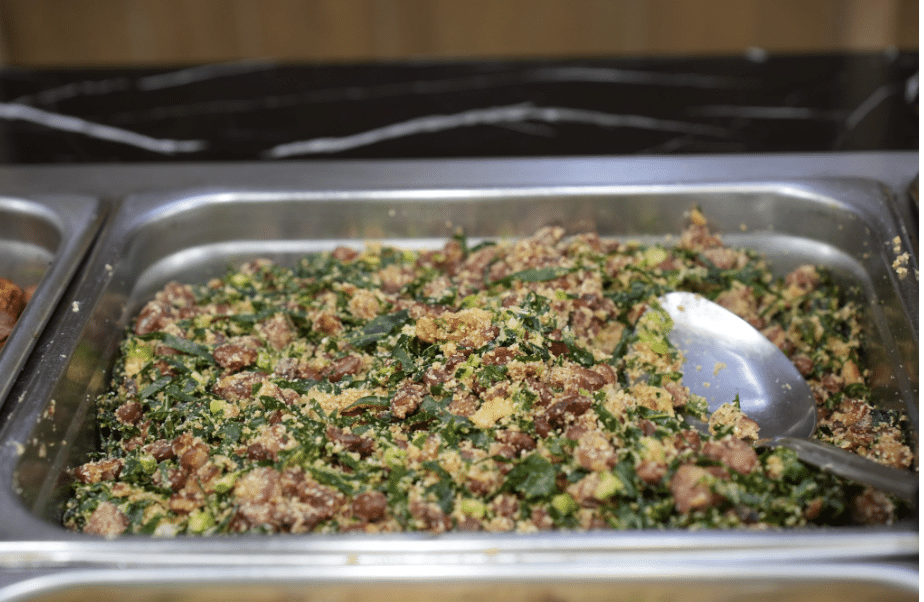
At 11 a.m., when lunch becomes available, a second wave of customers makes its way through the doors for a menu that includes all-you-can-eat churrasco, meats cooked in a rotisserie oven. Offerings at the buffet, prepared by a mostly Brazilian kitchen staff, include feijão tropeiro, a hearty dish made with pinto beans, sausage, bacon, eggs, cassava flour, and collard greens that’s served with fried pork and rice, and Brazilian vinaigrette, a fresh salad usually served with meat. Feijoada, a slow-cooked stew with black beans, pork and beef, smoked bacon, and sausages such as linguiça (a Portuguese smoked pork sausage), is served on Wednesdays, Saturdays, and Sundays; the point is to enjoy it with family over a long lunch.
The market, which specializes in Brazilian products includes favorites like frozen pan de bono; guaraná, a popular fruit soda; and condensed milk made with Brazilian sugar, which—Rosana explained—Brazilian women prefer to use for baking because it’s sweeter. At the back of the store, a butcher counter sells Brazilian cuts of meat and sausages—the same kind offered on the restaurant menu. “Una cosa que complementa a otra. Tenemos los productos en la tienda, tenemos la carnicería y tenemos el restaurante,” Rosana said. One thing complements another. We have the products in the store, we have the butcher shop, and we have the restaurant.
Rosana moved from Brazil to Atlanta in 1997 with her children and her husband, Alvaro, who was relocated by his employer, the Coca-Cola Company. With Alvaro at work and two young children away at school, Rosana found herself trying to figure out what to do with her free time. When she found out that TV Globo, the largest Brazilian television network, was beginning to send its signal to the U.S., she decided she’d sell and install the antennas for Brazilians. She found clients by looking through the phone book.
“Yo buscaba los nombres que eran brasileños, Pereira, Oliveira, Silva, después que los niños se iban a dormir, yo empezaba a llamar por los números de cuando decían Aló, yo ya sabía que era brasileño y decía Mira, sabes que la televisión va a llegar?” she recalled. “Entonces fue así que empezó el negocio, tan pequeñito como una mesa como ésta y a crecer como creció.” I would look for names that sounded Brazilian—Pereira, Oliveira, Silva—and after the children had gone to sleep, I would start dialing the numbers. The moment they answered, “Alo?,” I knew right away that they were Brazilian, and I would say, “Look, did you know that the TV Globo is coming?
As she connected with each Brazilian family in their homes, people began asking for her husband to bring food and other items from Brazil every time he traveled for work. That gave her a new business idea: She could sell Brazilian goods while serving coffee and snacks such as pan de bono (baked by her aunt) and coxinhas.
As she learned more about the needs of her community—and sought to meet them—Rosana’s business continued to grow. “Teníamos una hoja con las personas que querían trabajar y las personas que ofrecían empleo, y siempre porque llegaban los autobuses acá paraba en esta puerta y acá ya sabían dónde podían trabajar, quién estaba buscando trabajo, quién estaba ofreciendo trabajo,” she said. We had a sheet listing the people who wanted to work and the people offering employment. Since the buses always arrived here, they would stop right at this door, and right here people already knew where they could work, who was looking for work, and who was offering work.
They also printed physical maps so that Brazilians, learning their way around the city long before Google Maps, could get around, and translated the state driver’s license manual into Portuguese so people could study for the exam. Rosana became a Western Union representative; she sold phone cards. The small office eventually turned into a small cafe, and over the years, Rosana and her husband opened five stores—four in Georgia and one in Charlotte, North Carolina. As they grew older, though, they decided to close the others and focus on the single location at Marietta.
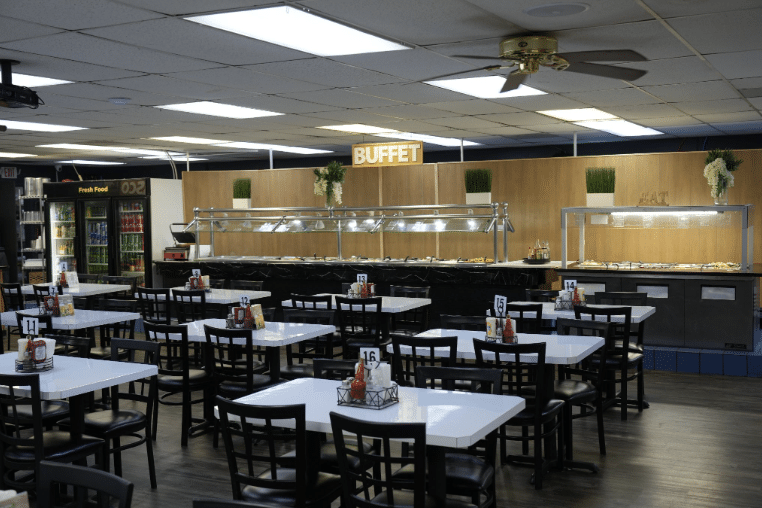
Every four years, when the World Cup brings together millions of soccer fans to cheer for their teams, local Brazilians gather at Minas. Since 2002, the family business has screened the game and given people a place to cheer on the national team, which has won five times—most recently in 2002.
With the World Cup in Atlanta this summer, Minas is again welcoming customers to graze from the buffet while they watch the game on the big screen. (The Brazilian team itself isn’t playing in Atlanta; the matches are taking place in cities across the U.S., Canada, and Mexico.) “Todos saben que aquí nosotros tenemos los juegos,” Rosana said. “Nos estamos preparando para decorar todo acá con las cosas de Brasil porque está lleno cuando hay partidos.” Everybody knows that we play the games here. We’re getting ready to decorate everything here with Brazilian gear, because it gets packed when there are matches.
*This article was updated to clarify that pan de bono is called by Brazilians as “pão de queijo.”
Author
Related Articles
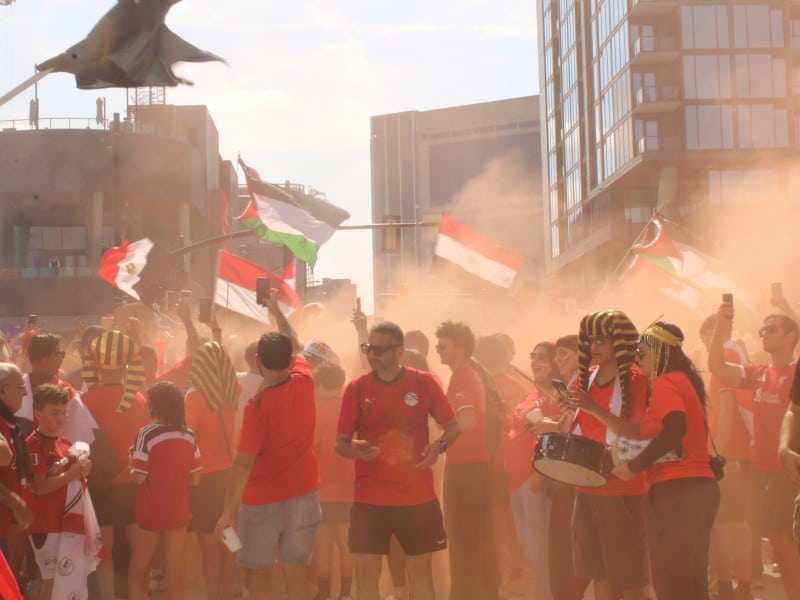
For Egypt, a historic match in Atlanta, despite a 3-2 loss
An afternoon of high and lows for Egypt fans who traveled to the Benz for Tuesday’s match against football soccer giant Argentina
For this Congolese fan, the DRC match is about more than just soccer
Excitement in Atlanta’s Congolese community as the DRC takes on Uzbekistan