Groceries, Islamophobia, Gaza: What’s driving Georgia’s Muslim Voters
Nearly 30,000 Muslim American voters in Georgia cast early ballots. They’re fueled by an array of issues.
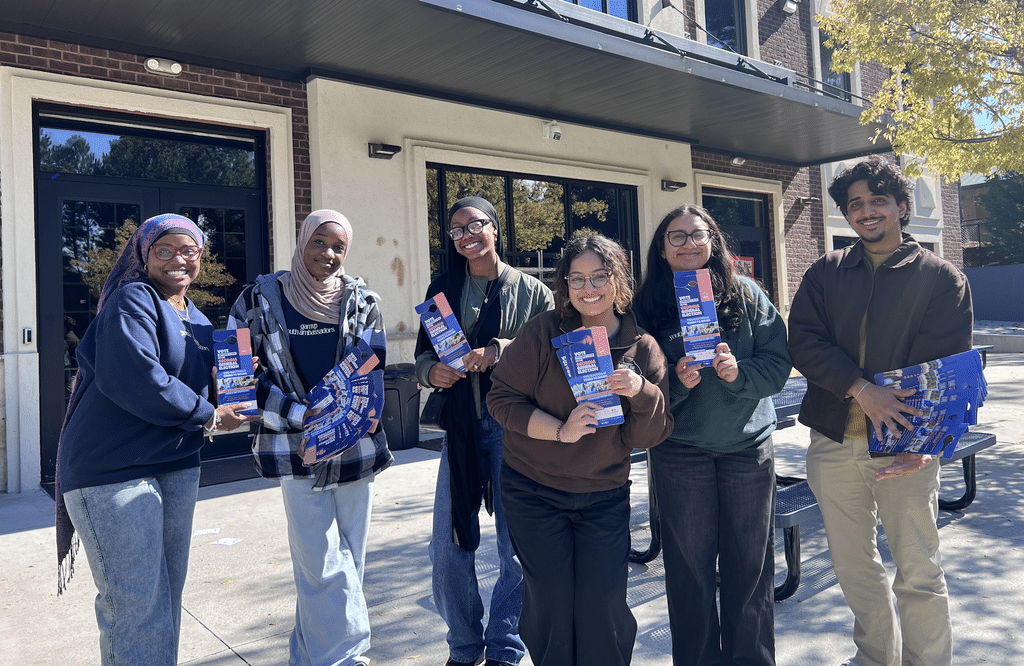
On Halloween evening, several families gathered for a fall festival for kids at The Hub, a Muslim community space in Sandy Springs. While face painting, toy archery and movies were top of mind for the children, many of their parents were thinking about the upcoming election on Nov. 3. Early voting for the midterm elections ended on Oct. 30, and many at the event had already cast their ballots.
A total of 29,922 Muslims voted early in Georgia this year, according to the Georgia Muslim Voter Project’s (GMVP) numbers. A turnout that is just around 6000 short of the total Election Day voters in the 2022 midterms. Those numbers are on track with historic midterm early voter turnout across the state (2.5 million have already voted).
GMVP director of communications Urooj Ali said the numbers are encouraging. “That is a pretty high number for Muslim voters, she said. “On the outreach side, we’ve been working on phone banking and door knocking and text banking to make sure that we are getting the word out to Muslim voters across the state.” Not only do they have teams in Metro Atlanta, they’ve also been canvassing in cities including Savannah, Albany, and Columbus.
Omar Idris, a Metro Atlanta resident, was at The Hub on Saturday with his two kids. He’d already voted, and said he’d noticed an increase in civic engagement in the Muslim community, compared to previous elections.
“I’ve seen people who have never even considered voting before being like, ‘Hey, when’s early voting? When can I vote?’ said Omar. “I know a friend of mine who lives up in Dalton, (Georgia), and he said he works with a forever-Republican who has never voted Democrat ever in his life. He’s like, ‘Yeah, I’m never going to vote Republican again.’ So there are people who have never voted who are voting. There are people who have always voted Republican, who are now not believing any of the lies.”
GMVP was founded in 2015 ahead of the 2016 presidential election and canvasses the state to mobilize Muslim voters, no matter who they end up voting for. The non-partisan organization aims to register voters, inform them on how and where to vote, and also bus the community to polls right after early morning Fajr prayer or after the weekly Friday Jumah prayer. Muslim constituents make up a relatively small percentage of the state’s electorate–around 100,000 Muslims are registered to vote in Georgia – but Urooj said, with increasingly close elections, this sleeper minority can move the needle.
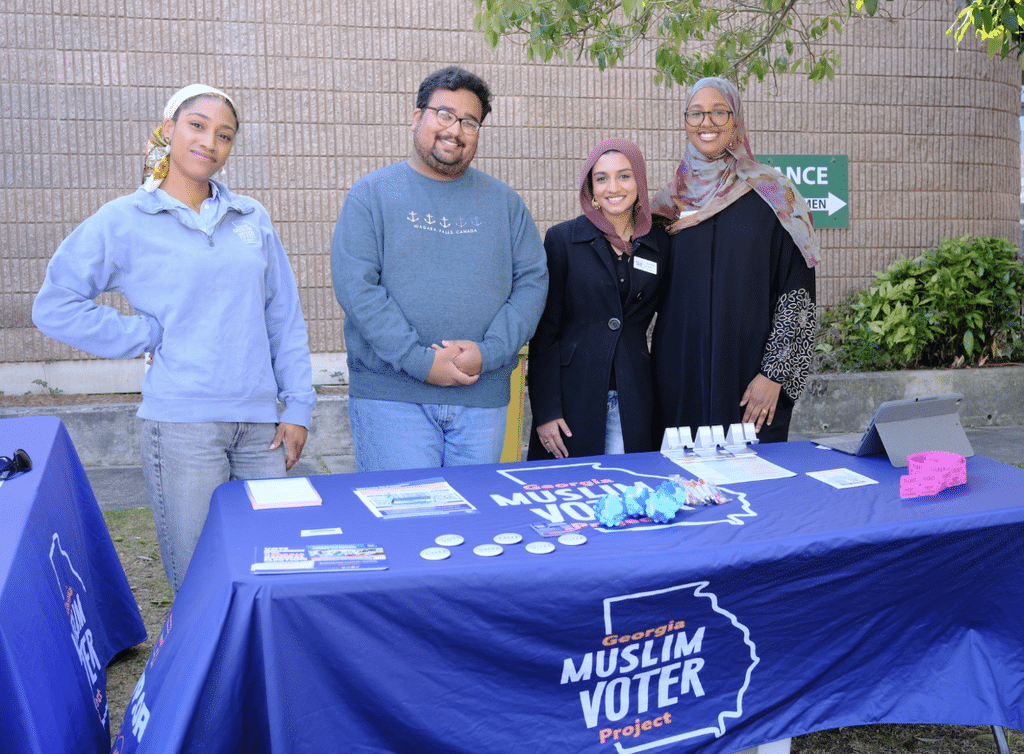
As is the case for many Georgia residents across the state, affordability is the top issue for Muslims in Georgia. That is certainly the case for Shazan Samnani. He began working with GAMVP as a junior ambassador in 2023 and is now a field director with the organization.
“The cost of gas is really taking up a lot of my credit card. I know I feel that,” said Shazan, who spent Saturday canvassing for GMVP. “With the Iran war, we’ve seen oil prices go up, and that’s caused a lot of our pockets to tighten. I really believe in affordability.”
In tandem with President Donald Trump’s war in Iran, Islamophobia is also a top issue for Muslim voters, said Urooj. “Muslims in America aren’t strangers to Islamophobia or the anti-Muslim rhetoric that’s often used against them,” she said. “So, I don’t know if it’s necessarily the top issue that’s taking them to the polls, (but) it is definitely up there.” For the past few weeks, Urooj has been speaking to Muslim voters whose priorities are the rising cost of living,, access to healthcare and education and heightened concerns about surveillance with Flock cameras.
Many are still cognizant that Islamophobia is on the ballot. Republican Greg Dolezal, running for lieutenant governor, released an AI-generated ad in March depicting anti-Muslim tropes with the message: “Keep Georgia Sharia free.”
Affordability has been the focal point for many campaigns this cycle, including Senator Jon Ossoff, who is running for reelection against Republican Mike Collins. However, for some, that issue alone isn’t enough to vote for Ossoff, who has been critical of the Israeli government and its conduct in Gaza, but has stopped short of calling for a total arms embargo or cutting of aid to Israel.
“I didn’t vote for Ossoff either because I’m not willing to let go of my principles just for who seems to be the lesser evil,” said voter Hadiyah Saeed. “Because maybe it’s the lesser evil to me here, but it’s still killing my brothers and sisters around the world.”
The Israeli occupation of Palestine, including the killing of more than 74,000 in Gaza — including at least 21,000 children — since 2023, according to the Palestinian Health Ministry, is a prominent issue for many. Some Muslim Americans, like Omar, feel abandoned by both parties. In 2024, he voted for Trump and now he says he feels like he “shot [him]self in the foot.”
Hadiyah said family has not been significantly affected by the rising gas prices at the pump, but the conflict with Iran is still a significant issue. “Gas prices are high because the war in Iran is happening. The war in Iran is happening because of Islamophobia, corruption at the top, protecting Israel, things like that,” said Idris. “So affordability is certainly a big problem. But I don’t understand why killing kids in Iran is not a big deal; it’s not enough to change your mind, but your gas price going up by two dollars a gallon is — how are these two things even on the same field?”
Related Articles
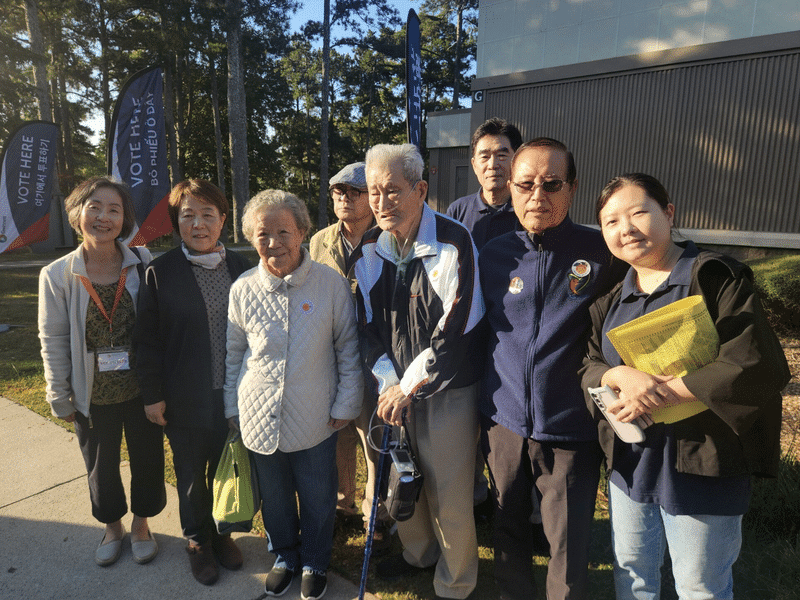
From H Mart to the Polls: Korean American Voters in Georgia Turn Out Early
In Duluth, a drive to turn out the growing number of registered AAPI voters.
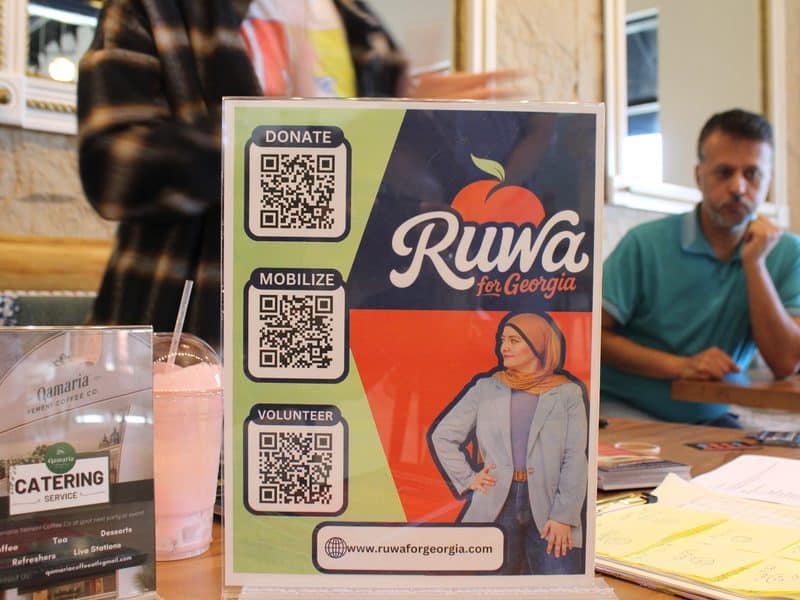
In Gwinnett, state senate candidate Ruwa Romman makes the global, local
“If you are complaining about the cost of living, I remind them that everything has gone up because of the war.”
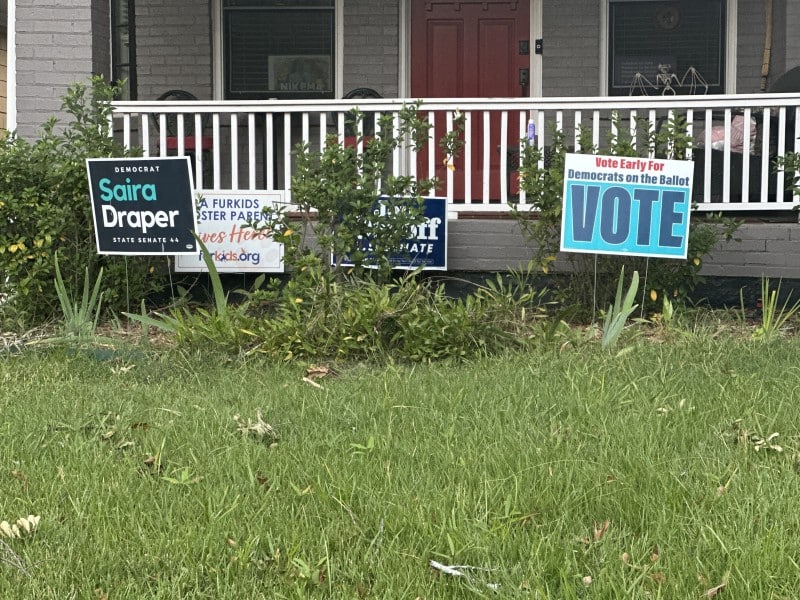
Midterms: In Georgia, more than a dozen candidates with roots across the world are up for state office
285 South asked them about what they plan to do to support their immigrant constituents.