As Georgia’s legislative session kicks off, here are the bills that immigrant advocates are watching
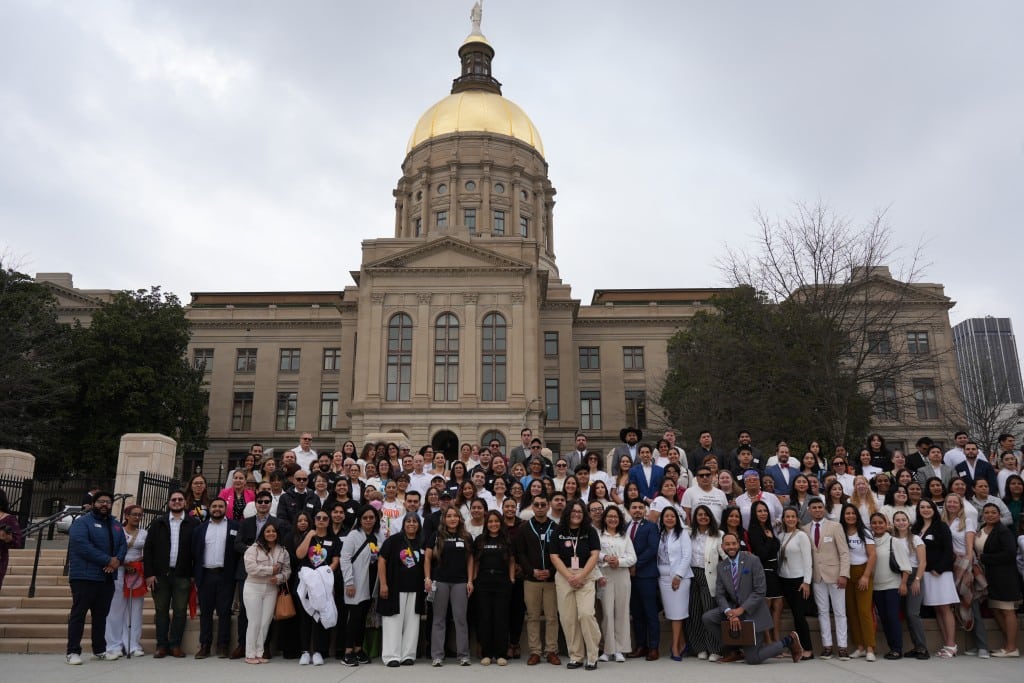
A year ago, the Georgia General Assembly gathered for its 2025 legislative session on the eve of President Donald Trump’s second inauguration—while the country waited to see what a second Trump administration would bring.
Even as Trump promised harsh policies toward immigrants, though, the Georgia legislature had for years been passing measures targeting the state’s immigrant communities, including HB 1105, a 2024 bill requiring local law enforcement to notify federal authorities about any undocumented people in their custody.
In 2025, as Trump’s crackdown expanded, the legislature continued to debate bills decried by immigrant advocacy groups and civil rights organizations—some that would end up passing, and some that wouldn’t.
This time around, those groups are keeping their eyes out for more of the same—while also pursuing measures that, in their view, would benefit vulnerable communities around the state.
As this year’s legislative session kicks off, 285 South checked in with three organizations keeping tabs on potential laws that would affect immigrant communities in the state. Those include a wide range of issues, including immigration enforcement, education, healthcare, voting rights, and freedom of speech and religion.
On Tuesday, a group of Democratic legislators came together, outlining proposals they’ll be introducing, including a ban on masks for Immigration and Customs Enforcement (ICE) agents; a measure preventing law enforcement officers from other states from operating in Georgia without approval from the governor; and provisions allowing Georgians to sue ICE if their rights are infringed upon.
Azka Mahmood, executive director of CAIR-Georgia, said her organization prioritizes laws that safeguard the Muslim community from attacks that impede their religious rights and freedom of expression. This year, they will be monitoring proposals targeting DEI initiatives, nonprofits advocating for Muslim rights, and religious freedom and First Amendment rights. Jennifer Lee, policy director for Asian Americans Advancing Justice–Atlanta (AAAJA), said their priorities are “around continuing our long-standing work in immigrant rights, and then leaning more into affirming democratic values.”
Here are the bills that representatives from immigrant rights organizations we spoke to are looking at this session:
- Sanctuary cities: Senate Bill 21 targets “sanctuary cities” by stripping local governments of protection from civil lawsuits if an undocumented person commits a crime within their jurisdiction—if those governments don’t cooperate with federal immigration agents. Because there are already no sanctuary cities in Georgia, critics worry the law could harm local governments; the same measure was introduced in the 2025 legislative session but failed to pass. “We had a lot of opposition last year from the counties and from the [Georgia] Municipal Association, because basically the bill would remove sovereign immunity from local government and allow individuals to sue their local government if they believe that they didn’t do something right in immigration enforcement,” Jennifer explained.
- Language access: House Bill 437 would require the State Board of Education to create rules for local schools so that students and parents with limited English proficiency have access to English as a Second Language (ESOL) program materials in their own language. Under current law, because standards vary from school to school, parents may only have access to ESOL materials in English—which may make it difficult for them to track their child’s progress. The bill would also create standards for foreign language interpreters working in education. “Last year, it made it out to committee, but it never was heard in the Education Committee in the House, but that really has the most bipartisan support for language access, Jean-Luc said.
- HIV prevention: Senate Bill 195 proposes allowing trained pharmacists to dispense preexposure prophylaxis (aka PrEP) and postexposure prophylaxis (PEP), which help prevent HIV infection. Currently, pharmacists can only dispense the drugs after they’ve received a physician’s prescription. In 2023, researchers found rising rates of HIV infection among Georgia’s Latino communities, even as infections fell among white and African American communities. “Being able to expand PEP access is really important because then they could, theoretically, lower the HIV infection rate among the Latino population in Georgia,” Jean-Luc said.
- Notario fraud: House Bill 189 codifies that notaries public cannot authorize an individual to draft legal documents, give legal advice, act as immigration consultants, or represent people on any proceedings related to immigration in the U.S. In 2025, 285 South reported on how people looking for legal immigration support have been scammed by notaries who weren’t qualified to offer it. The proposed law, said Jean-Luc, aims to reduce fraud and prevent people, especially Latinos, from being harmed by people who are potentially scamming them.
- Dual enrollment: House Bill 18, which was first introduced in the 2025 session but failed to pass, would have required high school students wishing to participate in dual-enrollment programs—i.e., to have access to college classes—to be legal Georgia residents. This would exclude undocumented students from accessing these courses. Now advocates worry that the bill could be brought back in the second year of the legislative session. “Currently, high school students of all immigration statuses are eligible to participate in dual enrollment, and this bill would have changed that,” Jennifer said. “That bill that got a hearing last year but did not move forward, so we’re going to continue to watch that.”
- Hinduphobia: Senate Bill 375 proposes to codify “Hinduphobia” as a form of discrimination. Georgia’s existing hate crime law, HB 426, already protects residents from discrimination on the basis of religion. Both Jennifer from Advancing Justice and Azka from CAIR Georgia said the bill could be used to prevent criticism of the right-wing Hindu nationalist government of Indian Prime Minister Narendra Modi, or any of the country’s policies.
- Penalties for students protesting: Senate Bill 602 proposes to deny state funds for loans, grants, and scholarships for any student who is convicted of a criminal offense or who is determined by a postsecondary institution to have violated its code of conduct. Advocates say the bill targets students involved in protests, particularly in regards to Israel’s war on Gaza. The bill was introduced last year but didn’t pass, so advocates are keeping an eye on it—as well as “any similar bills that try to target the Muslim community’s freedom of expression,” Azka said.
- Political organizations: House Bill 177 requires foreign-supported political organizations from “hostile foreign countries” (Russia, China, Iran, and North Korea) to register with the State Ethics Commission. The law was introduced last year, but didn’t get full approval. It was opposed by organizations like AAAJA, Project South, CAIR-Georgia, and the Georgia ACLU. “The sponsors of this bill very explicitly said it was in response to organizations that were pro-Palestine, and also organizations that they felt like were pro-China,” Jennifer told 285 South. “It was very clear from the beginning that this was a bill that was opening up the door to target specific organizations that had stances that were not supported by the administration, and that could conceivably be tied to China, Russia, or Iran.”
Authors


Related Articles

“We are stuck”: With SNAP and Medicaid benefits cuts, refugee families in Clarkston on edge
Following legislation passed last year, almost all immigrants and refugees in the U.S. lost access to crucial food and healthcare support. Here’s how two families are coping.
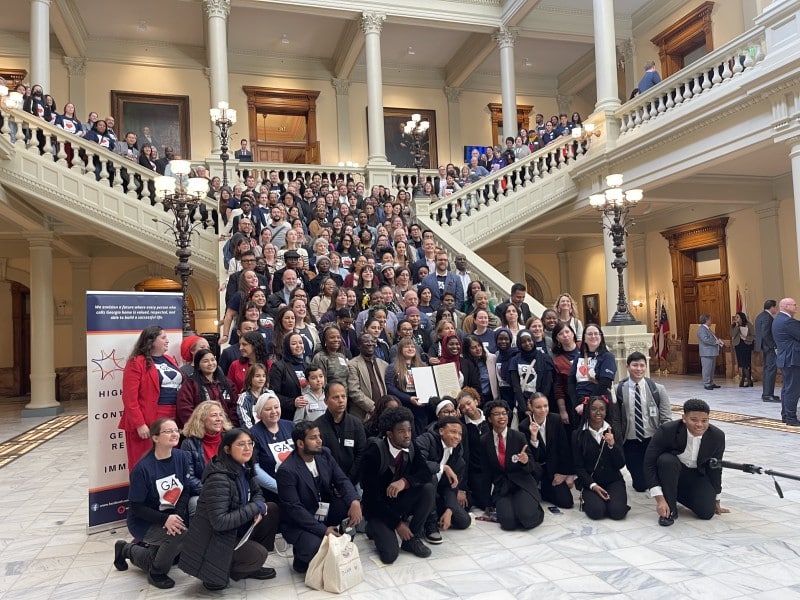
On Thursday, refugee, Muslim, and Latino organizations made their voices heard; advocating for a host of laws to improve immigrants’ quality of life in Georgia
Among them: increased opportunities for foreign medical graduates to expanding language access in schools to repealing immigration enforcement bills
“Stop terrorizing us”: For this 17-year-old high school student, the fight to stop ICE is not just political—it’s personal
A few dozen students gathered at a Lawrenceville park on Friday, determined to keep the protests going.