Amid warehouse job cuts and an end to food stamps, many families in Clarkston face an uphill battle
Rohingya families open up about the cost of living, layoffs
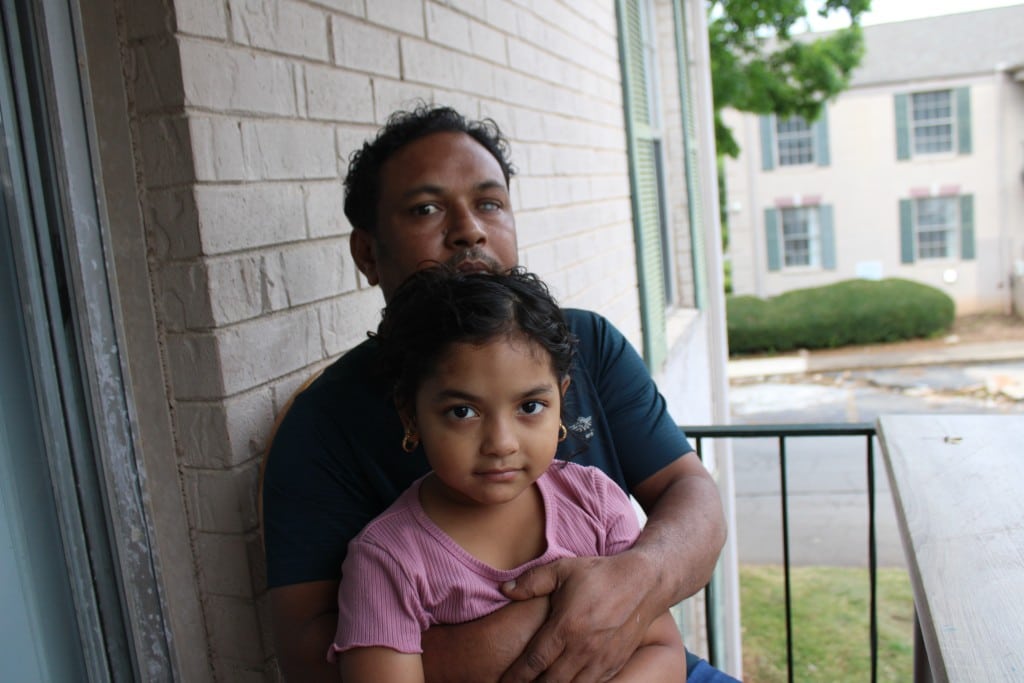
On April 18, Khairul Boshor Abol Foyas arrived at work around 6:30 p.m., the typical start time for his night shift at the Amazon warehouse in Stone Mountain. Standing at one end of an assembly line, he began packing boxes of soda cans. It seemed to be a routine shift until, about 15 minutes in, he got a notice that his manager wanted to meet with him.
April 25, he was told, would be his last day of work.
His thoughts raced ahead. How would he pay his rent? How would he make sure his family of five in Clarkston would have enough to eat?
Khairul, his wife, and three of their children moved to Clarkston in 2024 from Malaysia, where they’d spent 10 years awaiting resettlement in the U.S.—as members of the Rohingya community, a Muslim ethnic minority, they’d fled their native country of Burma following decades of persecution. When he finally arrived in Atlanta, he was grateful. There was a sizable and active Rohingya community, and he was able to secure a job at Amazon. “I thought I was going to do good work, for a long time, and the job was nearby. This brought me happiness,” he said in Urdu, sitting in his apartment in Clarkston. That day, though, he said he was told that the company didn’t have any more work for seasonal employees.
For over a year, Khairul said, he’d been working for 25 to 30 hours a week at the Amazon Fulfillment Center on Park Place Boulevard, earning around $2,400 a month as a seasonal or temporary worker—what’s known as a white-badge employee. Over the last few months, though, his hours had been reduced. During the entire month of Ramadan, he said, he earned around $800.
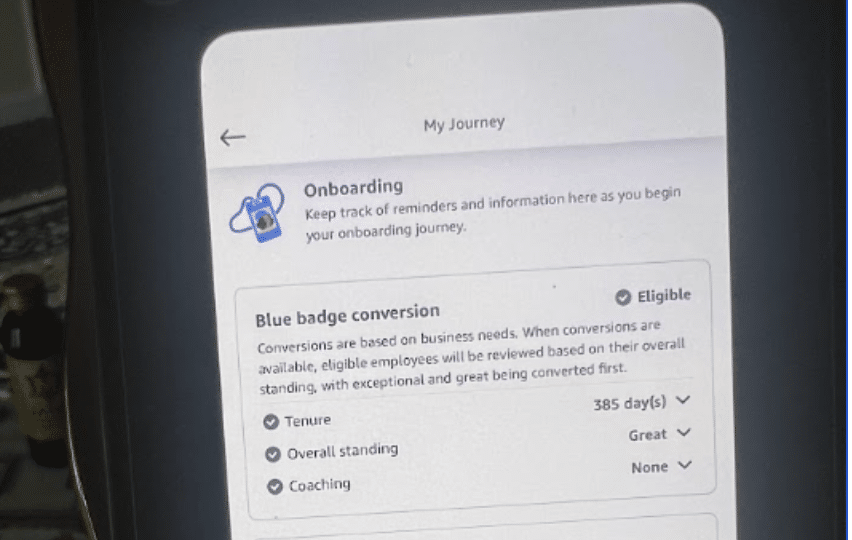
As a white-badge employee, Khairul knew he didn’t get the same benefits of permanent, or what’s known as “blue-badge,” employees at Amazon. But he had recently checked his work app and had been heartened by an update: He was “eligible” to be a blue-badge employee.
285 South sent Amazon’s media office a request for more information but hasn’t received a response.
Dashing his hopes of becoming a permanent employee, the news of his termination hit Khairul hard. It also compounded another hardship: In December, he and his family had lost access to the federal government’s Supplemental Nutrition Assistance program (SNAP, aka food stamps) following the July passage of the One Big Beautiful Bill Act (OBBBA). The legislation restricts most immigrants and refugees from accessing SNAP and Medicaid benefits, unless they’re from a select number of countries or have held a green card for more than five years.
Khairul applied for a green card just last month. He’s not sure when it will be approved, or if it will be at all.
In 2025, over 36,000 noncitizens were receiving SNAP benefits, according to reporting from Georgia Public Broadcasting; now, following the OBBBA, many of them are no longer eligible for that support. 285 South has filed an open records request with the state agency that administers SNAP, the Georgia’s Department of Human Services; we’ll update this story if we receive a response. On a national level, the Congressional Budget Office (CBO) estimates that 90,000 a month will become ineligible for SNAP between 2026–2034. (A previous version of this story incorrectly stated that 650,000 noncitizens accessed SNAP in 2023, according to the CBO.)
“I think a lot of people are going to suffer and a lot of people are going to go hungry,” said Shelby Gonzalez, vice president for immigration policy at the Center for Budget and Policy Priorities, a research institute based in Washington, D.C, that advocates for policies that reduce poverty. “This was a devastating cut that was targeting people who have been granted humanitarian protections,” she said, adding that it’s the first time in U.S. history that benefits have been taken away from those who have come to the country for humanitarian reasons. “For decades, these are individuals who have been supported by bipartisan policies, and our nation has turned their back on them.”
Sitting at the kitchen table, Khairul’s neighbor Mohamed Ali Aliahamad scrolled on his phone. He also works at the Amazon warehouse in Stone Mountain. After several minutes, he joined the conversation.
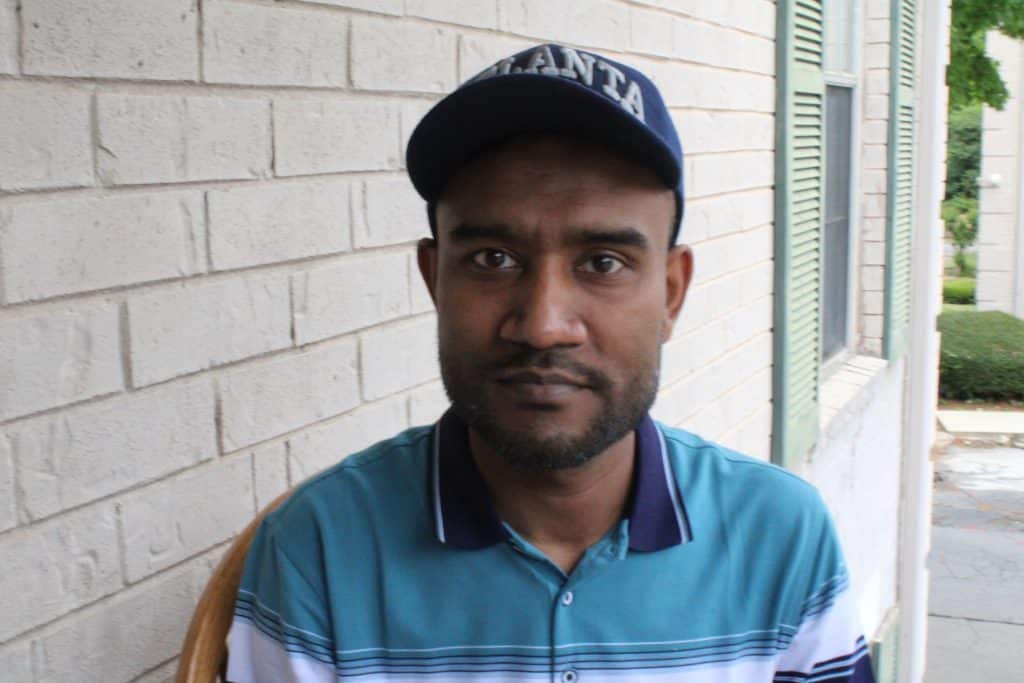
Since arriving in the U.S. in 2024, he said, he’s encountered challenge after challenge. He’s filed taxes for the last two years but hasn’t received a refund because there is an issue with his social security number. When he reported the issue to the IRS, he said he was told that it would take more than 500 days to investigate. “If someone has a problem, it doesn’t get resolved easily, it can take weeks, months, even years to resolve a problem,” he said, speaking in Urdu.
Mohamed also had his SNAP and Medicaid benefits cut this year, and the money from the tax refund would be extremely helpful right now. “At Amazon, in a week, I earn almost $700,” he said. He listed out the taxes: “Medicaid, Georgia state, social security, tax, tax, tax.” To take home, “I get about $500 or $550,” he said. “For the month, I make an income of about $2,200. $1,200 is my rent, car insurance is $300. I have an old car and it’s half, not full coverage. So that’s $1,500 finished. So what’s left? Balance $700, and I need to pay Georgia Power, and Georgia Power is high.”
Khairul chimed in, reminding Mohamed of another expense: “IOM loan.” That’s a loan that refugees are expected to pay back to the United Nations’ International Organization for Migration for the travel expenses involved with getting them to the U.S. Mohamed said for his family of four, the cost was around $4,000 or $5,000: “So every month, $127.”
Abu Talib, executive director of the Burmese Rohingya Community of Georgia (BRCG), says that, like Khairul and Mohamed, many local families are struggling due to benefit cuts and reduced work hours or layoffs at warehouse or meat-processing jobs.
Rohingya families aren’t the only ones affected by shrinking economic opportunities. Spencer Clark, who has been working on job placement for refugees for the past seven years at the refugee resettlement agency Inspiritus, said, “A lot of jobs are not hiring at the same volumes that we’ve seen in the past, even things like poultry processing.” In the past, warehouses and poultry plants might hire groups of 10 to 15 people at a time, Spencer said, “whereas now they may only take, like, one or two.”
Responding to the increasing needs in the community, the BRCG has launched a food drive with the aim of providing boxes with items like rice, vegetable oils, milk, cereal, and produce to 162 local families. Other local organizations, like Ethaar, have also launched emergency food aid fundraisers, hoping to meet the need.
“When I was in Malaysia, and I find out I had the opportunity to come to [the U.S.], I thought I was coming to a country with freedom,” said Mohamed. In Malaysia, he explained, many Rohingya don’t get identity cards, forcing them to live a life in the shadows. Equipped with official refugee paperwork in the U.S., Mohamed thought “our life would be easy, our humanity would be recognized.” But, he said, “it’s harder for me here than Malaysia.”
Khairul’s four-year-old daughter, Shahida, brought out a plate of freshly cut watermelon to share. For now, they’re okay, thanks to donations from the BRCG, and money he’s borrowed from a friend to help pay the rent. But when he looks into the future, he’s not sure what he’ll do.
Author

Related Articles
“You’re not supposed to shy away from that”: At a weekend vigil, people remember immigrants whose lives were cut short
The service doubled as a fundraiser for the family of Jesus Manuel Arenas-Silva, who died in ICE custody in Georgia in July.

Leaked reports show surge in use of force in Georgia immigration detention centers
Use of force surged 63% at two Georgia immigration detention centers