At the intersection of immigration and healthcare, stories “humanize what the systems can obscure”
Healthcare providers and community advocates came together to make space for stories about immigrant communities harmed by the U.S. healthcare system.
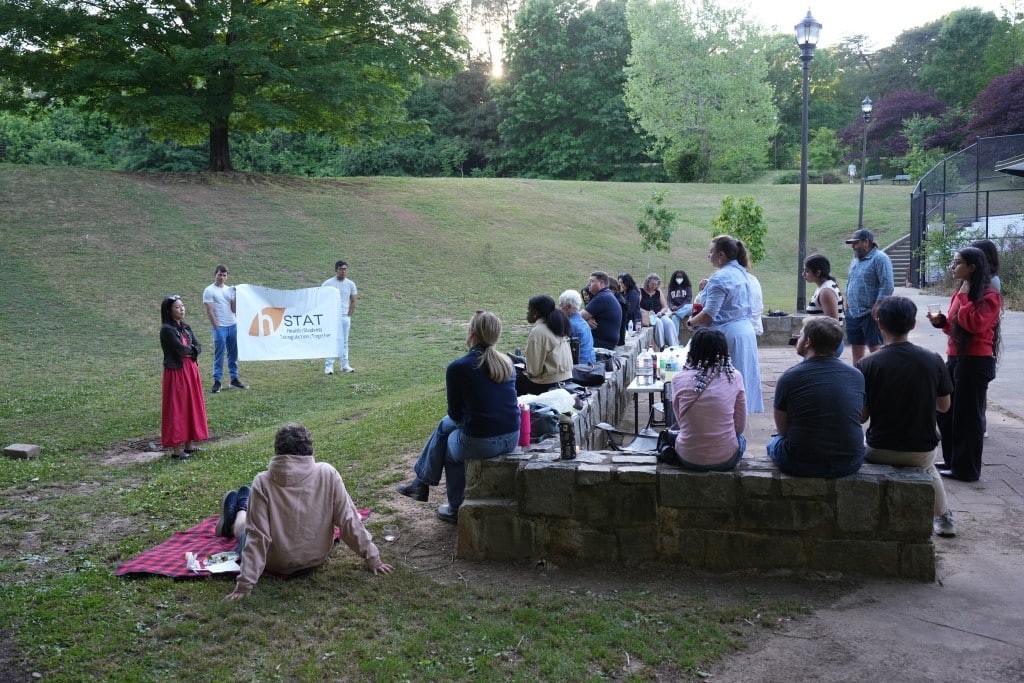
On Sunday evening in Candler Park, Dr. Toby Terwilliger told a crowd of roughly two dozen people about a patient he’d treated. The patient, born in Mexico, had been brought to the U.S. at just two years old. Working in construction as an adult, he sustained an injury that resulted in kidney failure—which meant that, twice a week, he needed to come for dialysis to the hospital where Toby worked. The patient developed fluid accumulation in his stomach that had to be drained.
“It would have been so easy for him to get a new kidney,” Toby said. “He was young, otherwise completely healthy, and if he did, he would be here with us today. Unfortunately, that is not something that he was ever eligible for.” Undocumented immigrants can’t access federal insurance programs like Medicare or Medicaid, which would help cover the costs of an organ transplant. While 3 percent of deceased organ donors are undocumented, only 0.2 percent of deceased donor kidney transplants go to residents without legal immigration documents.
“And because of that, I just watched week after week, month after month, how he deteriorated, and last February, unfortunately, had a complication that he could not recover from,” Toby went on. “It was so heartbreaking because it was completely preventable.”
Toby is a member of Physicians for a National Health Program, an organization advocating for single-payer healthcare. He was speaking at Standing for Stories, a vigil honoring the stories of people whose immigration status, in one way or the other, was leading to medical harm. He also noted the absence of medical colleagues who, because they’re in the U.S. on work visas, feared the repercussions of showing up and speaking out at events. The annual vigil was hosted by H-STAT, a nonprofit led by students in health fields that seeks to improve Georgians’ experiences with healthcare.
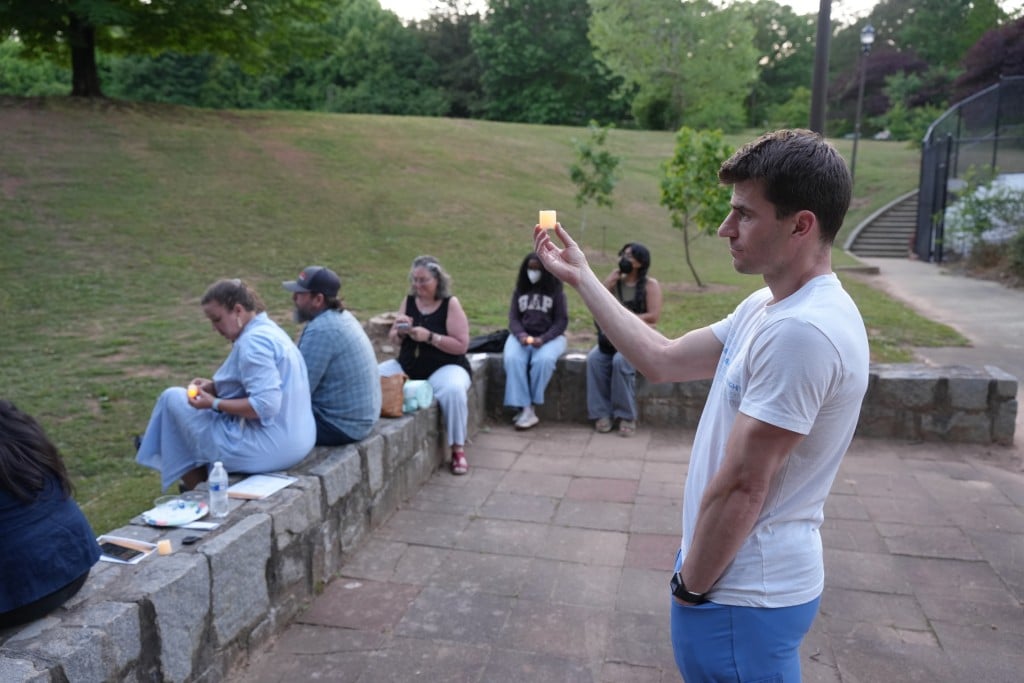
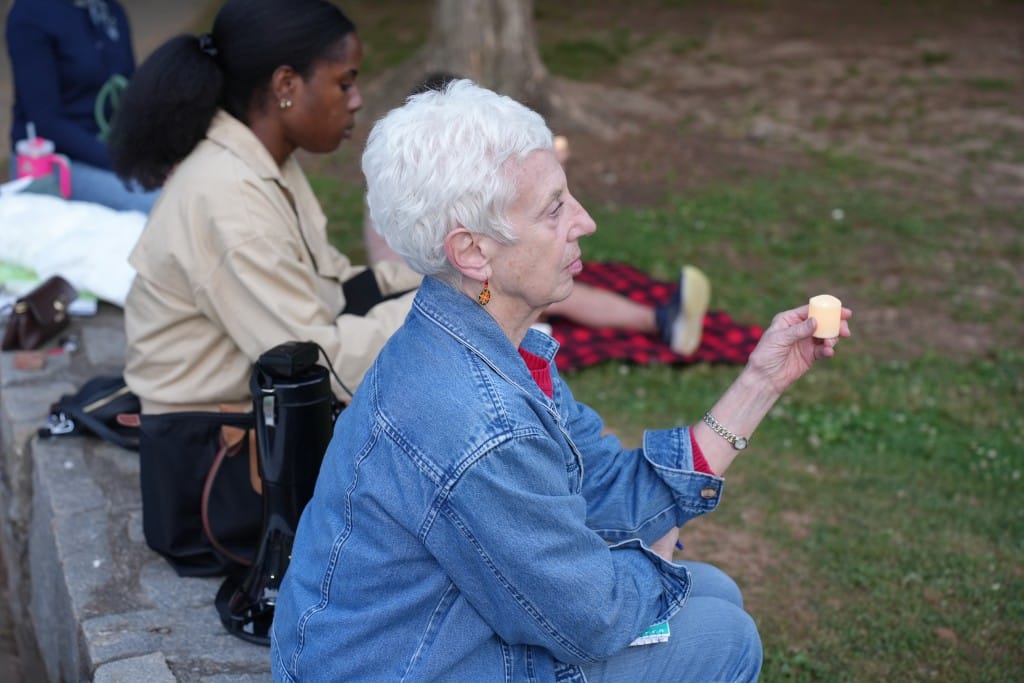
For about two hours, healthcare students, advocates, and attorneys shared stories about how immigration policies have been impacting access to healthcare among undocumented immigrants. Rita Valenti, a retired registered nurse from Grady Hospital, talked about how a coalition of Georgia nonprofits formed in 2020 to support Dawn Wooten, a nurse at Irwin County Detention Center who’d blown the whistle on gynecological procedures being performed on women there without their consent. “People came together and collaborated and developed this massive report on what was going on inside Irwin,” Rita said. “That report was taken to the United States Congress, and we got the Irwin County Detention Center closed in 2022.”
While Irwin County Detention Center reopened last October, Rita reminded attendees that healthcare providers are in a key position to promote change. “Through collaboration, through coordination, through sharing values, through working together, we can make that change.”
Zizi Ohamadike, a fourth-year medical student at Emory University and senior fellow of Stop the Criminalization of Our Patients, talked about Denny Adan Gonzalez, a 33-year-old Cuban national who died by apparent suicide last week at Stewart Detention Center. “His death raised concerns about the inadequacy of mental health monitoring, the conditions of solitary confinement, and whether warning signs had been missed,” she said. “His death came amid broader scrutiny of how individuals in distress are identified, observed, and treated in detention settings.”
She reminded attendees that sharing the stories is part of bearing witness and creating spaces for accountability: “They humanize what the systems can obscure; they remind us that behind every person, every number is a person of the name, a history, family, and also the future. Listening to these stories is not passive. I do believe it’s active and it’s a part of public health.”
285 South has been compiling this list of health clinics and facilities in the Atlanta area that offer affordable services, regardless of patients’ immigration status.
*Correction: This story was updated to clarify that Rita Valenti is a retired registered nurse.
Author
Related Articles
Venezuelans deported grapple with new realities in their country, amid earthquake aftermath and political upheaval
One former GA resident, now back in Venezuela, shares his story.
29-year-old dies after weekslong stay in Georgia immigration detention center
Prisciliano Trejo, who had leukemia and had been in ICE custody, died on July 24.
“We believe that God will make a way for us, whether here in America or somewhere else”
As Temporary Protected Status for Haiti expires, a Lawrenceville pastor is comforting his community, amid reports of self deportations and job cuts