“Are you concerned about yourself and your neighbors?”
As food insecurity grows among Georgia’s immigrant and refugee communities, one mutual aid group is operating under the radar to support their neighbors
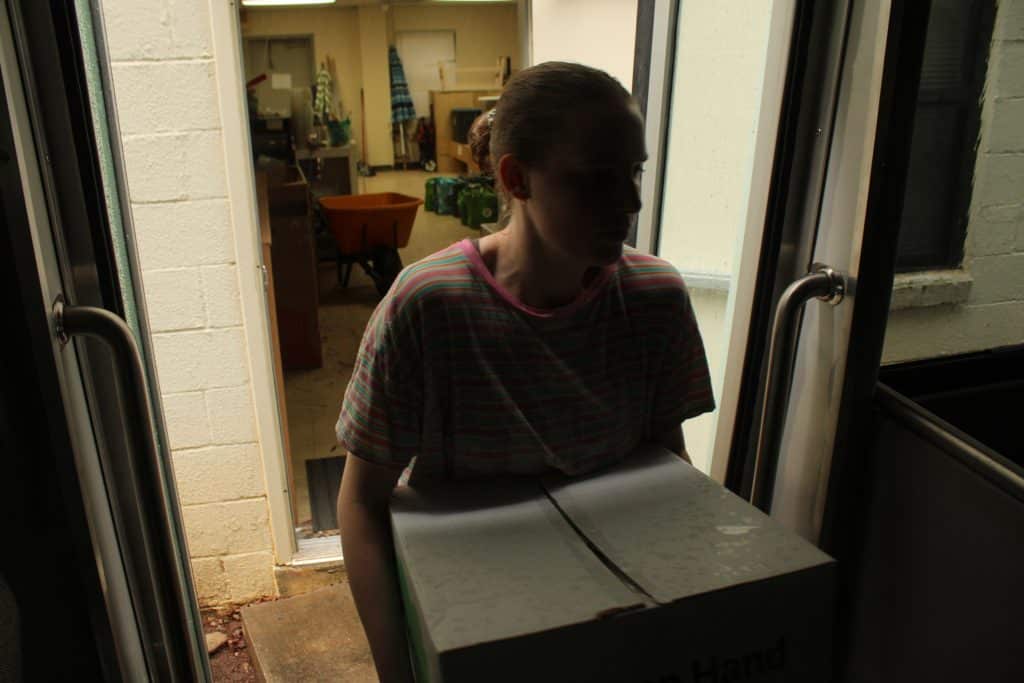
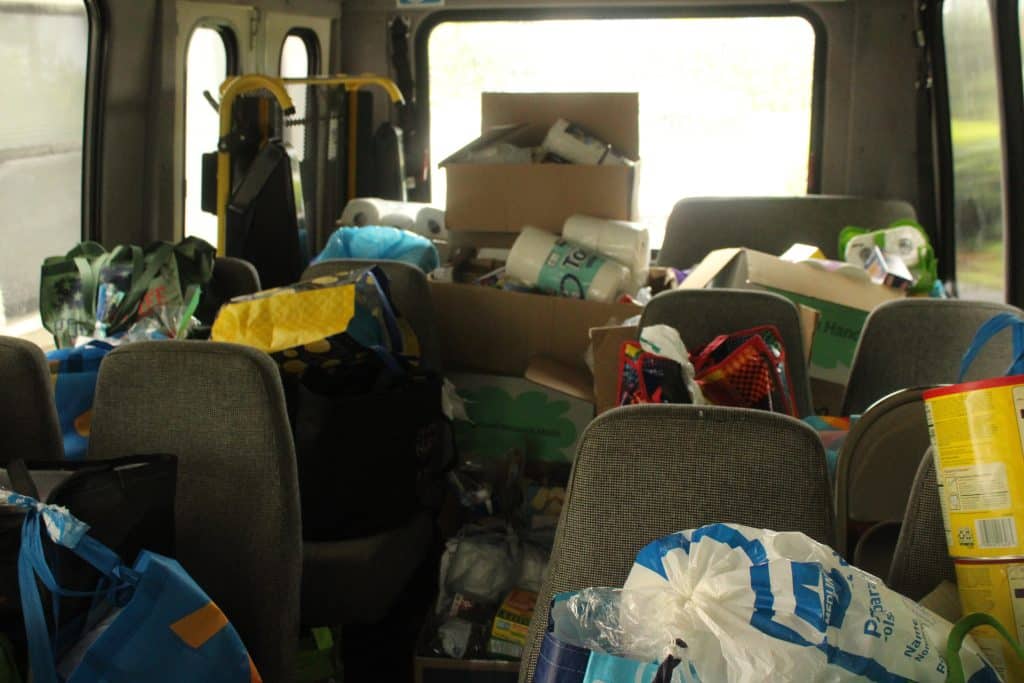
Dark clouds gathered over North Decatur Road, as three volunteers hustled to beat the storm on a recent weekday afternoon. They carried dozens of bags and boxes from the storage room of a local church into a waiting white bus. Inside the bags: Nido infant formula, Kirkland paper towels, Nature Valley granola bars, instant oatmeal.
Their task was simple enough: drop the items, along with school supplies, at a nearby apartment complex. Talking about it is less simple. The volunteers—with the Decatur-based nonprofit STAND—asked that the complex not be named. There’s a reason most of the food distributions the organization has run over the past several months have been kept quiet.
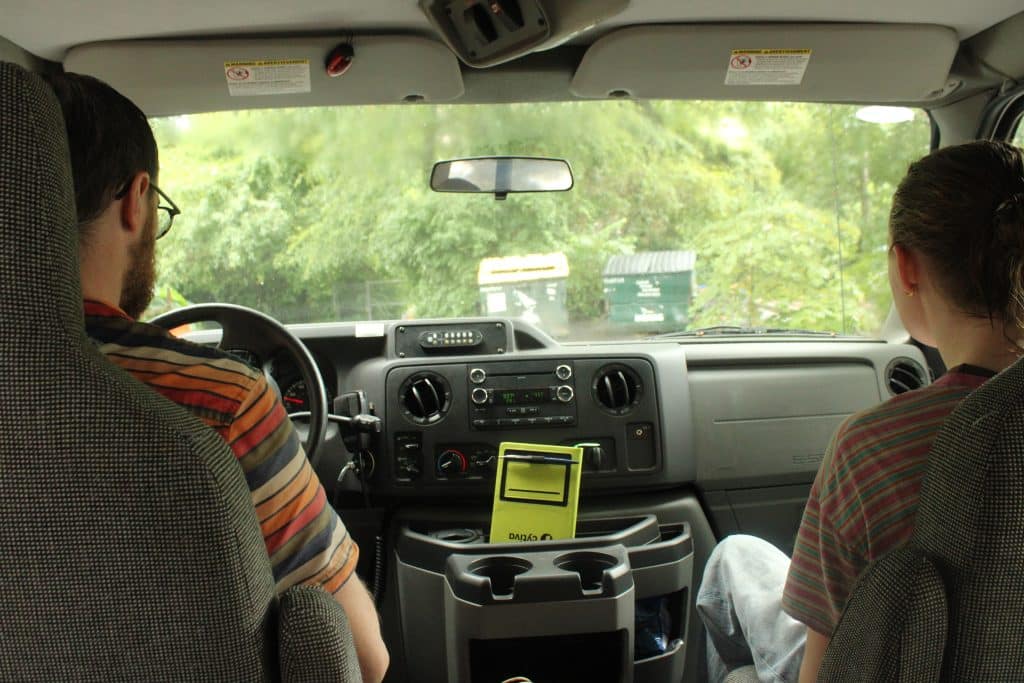
“These particular apartments have been repeatedly targeted by immigration enforcement,” says Matt Woodruff, one of STAND’s founders. They were tipped off about the complex a few months ago through a community contact, and have been coming to drop off supplies regularly ever since. “We are aware of at least 50 households that have had family members detained, and so there has been a pretty dire need for food supplies, clothing, any of those things.” Many immigrant families in apartment complexes have been in a sort of self-imposed lock down because of fear of ICE activity, he says, so it’s been urgent to drive to them directly, rather than expect people to physically come out to get what they need.
Another volunteer, Tara, told 285 South that she used to set up tables in a parking lot where people could come collect groceries. But, a few months ago, she explained, “they stopped because people weren’t coming out, even in the parking lot of their complex… It makes them nervous. It’s a target.”
According to official numbers, people in Georgia are having an increasingly tough time getting enough to eat: In a recent statewide survey from Emory’s Rollins School of Public Health, one in three families with children reported experiencing some level of food insecurity. The Atlanta Community Food Bank and its partners have reported a 70 percent increase in people trying to access food in the past five years. At the Latin American Association’s food pantry on Buford Highway, 340,000 pounds of food have been distributed in the past year; 100,000 more pounds than the previous year. “There’s a lot of need. A lot of hurt right now,” the head of the LAA, Santiago Marquez, told WSB in late July.
For people who come from immigrant or refugee backgrounds, the problem can be layered with other challenges. The escalation in ICE activity nationwide, including here in Georgia—which ranks fourth in the country for the number of people in ICE detention—has meant that many families are losing breadwinners and income earners. Their costs are mounting: rent, bills, groceries; on top of possibly legal fees for loved ones fighting their immigration cases. Another dimension to the food insecurity they face: to avoid the risk of an ICE encounter, some families are limiting how much they leave their homes to get food.
Then there are the more than 7,000 immigrants and refugees in Georgia who have already lost SNAP benefits in 2026 alone, following the 2025 passage of the Trump administration’s One Big Beautiful Bill Act. Area nonprofits that provide services to immigrant and refugee communities, including programs to address food security, have themselves suffered from cuts to federal grants.
In light of all this, STAND is careful about how it distributes food. It connects with trusted community liaisons around Clarkston and Buford Highway to organize dropoffs, then relies on those contacts to distribute food to families directly. STAND isn’t the only mutual aid group in the area trying to figure out how to best gauge and then respond to the needs out there—the group also coordinates with others, like the Afghan American Alliance of Georgia, which lost federal grant funding last year, to drop off essential items for its community members. STAND has also been expanding its community partners, broadening the network of folks who are ready to support the hardest to reach communities.
Still, volunteers know that their efforts can’t immediately fix thornier, systemic problems. “This is like Band-Aid aid,” Matt says as he steers the bus through the downpour. “This gets somebody through a couple weeks, hopefully.” Eventually, he says, the aim is to build trust, and ultimately “to plug them into more stable lines of aid,” providing support that reaches beyond food.
People weren’t coming out. Even in the parking lot of their apartment complex. -Tara, volunteer with STAND
When the volunteers arrive at the apartment complex, the layers of challenges come into sharper focus. The property manager tells Matt and another volunteer, Savannah Brancato, that school enrollment has been an issue: A principal from a local school, she says, had noticed a decline in enrollment and had come to the apartments to find out where the kids had gone. She had asked the manager’s help in ensuring the kids showed up at school this year. Many units were vacant, the property manager explains to the STAND volunteers; tenants have been leaving. She’s had to lower the rent for some families in an effort to get them to stay. People are afraid to leave their apartments; ICE agents had been spotted around the area, she said, in unmarked vehicles.
STAND started informally in the early days of 2025, as federal layoffs started to hit people locally. “At the beginning of all of this, there was the CDC stuff, and I felt really compelled by that because I knew a lot of those folks,” said Matt, who’s an assistant professor at Emory’s School of Medicine.
He and a few folks decided to host a gathering at the North Decatur United Methodist Church, to check in and see how people were doing. Savannah was among those who attended. “I saw a flyer in an elevator at work that said, Are you concerned about yourself and your neighbors? And I [thought], yeah. Come have spaghetti dinner with us, it said.” She decided to go. “I was a little nervous, but I showed up, and I don’t know. It’s people in the same boat.”
The group started organizing “values forward” protests – consciously emphasizing what they stood for, rather than what they were against – showing up at No Kings Day rallies, as well as dedicating time to filing FOIA requests—one of the group’s tenets is to “communicate truth, and demand it where it is hidden.”
Around two hours after they began loading boxes, Matt and Savannah were wrapping up the mission. “The pantry is mostly empty,” Matt says.
The group had originally planned on stockpiling food in case things got really bad, like they had in Minneapolis at the height of ICE activity. But they’ve changed course over the last few months, deciding not to hold onto anything because, they think, the emergency they’d planned for is already here. They’ve heard it from various partners in the immigrant services community, various other mutual aid groups: “Everybody says the same thing,” Matt says. “Everybody needs food.”
Author

Related Articles

UPDATED: Free or low-cost mental health services in Metro Atlanta, many offering counseling in multiple languages
Finding mental health support isn’t always easy – especially for residents in Metro Atlanta who may face barriers like cost, language, and cultural sensitivity.
Venezuelans deported grapple with new realities in their country, amid earthquake aftermath and political upheaval
One former GA resident, now back in Venezuela, shares his story.
29-year-old dies after weekslong stay in Georgia immigration detention center
Prisciliano Trejo, who had leukemia and had been in ICE custody, died on July 24.