“The side of hope”: Following tragedy back home, Atlanta-area Venezuelans find strength in one another
On a recent Sunday, nearly 100 volunteers gathered in Norcross to send supplies to the earthquake-ravaged country—and deepen ties in the diaspora.
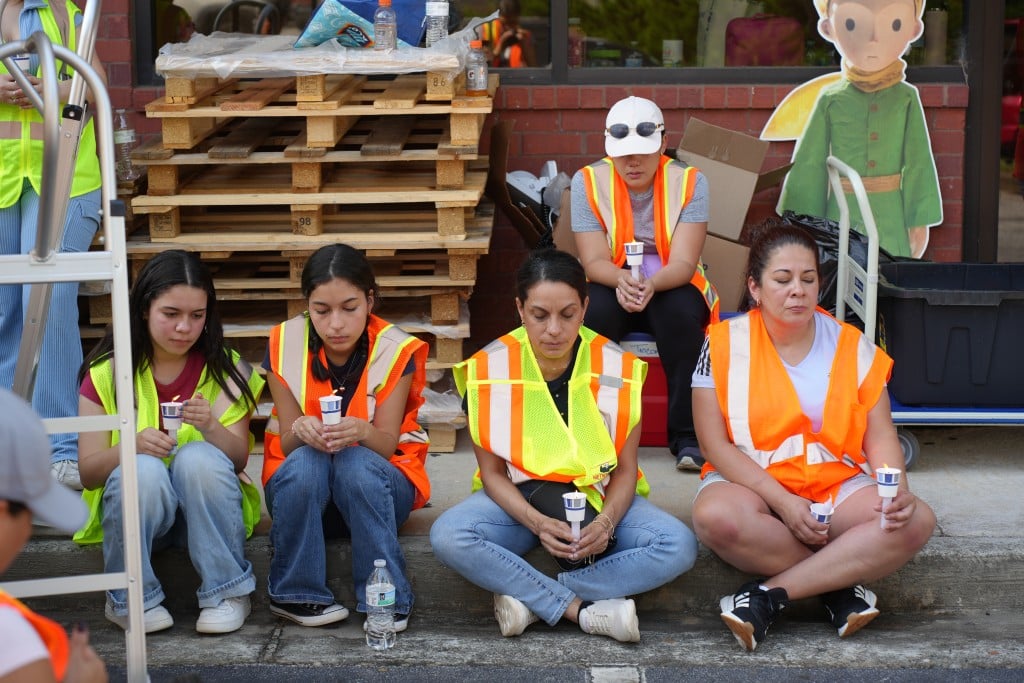
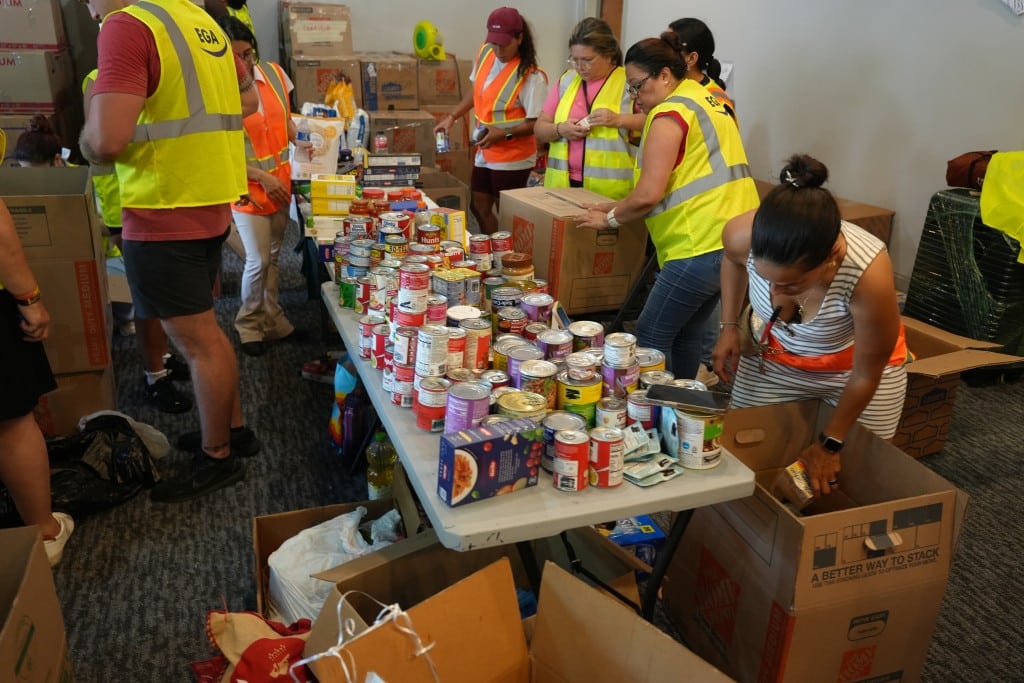
After three hours filling boxes in a Norcross office space—packing up food, diapers, pet supplies, and hygiene products to ship to Venezuela, which was ravaged last month by a pair of devastating earthquakes—a group of volunteers paused to step outside and pray together. One person recited the Mysteries of the Rosary as others repeated the words back in unison, holding lit candles. A mother carried a child in her arms and several volunteers sat down on a sidewalk with their eyes closed. People held hands and hugged others they’d only just met.
It wasn’t just charity that brought these 88 people together on a humid Sunday in early July. Though others joined them, most were from Venezuela; while they worked, they talked about whether or not they had family or friends who’d been affected by the powerful June 24 quakes, which killed nearly 4,000 people, at last count. Nearly 17,000 were injured in the tremors and nearly 18,000 were displaced.
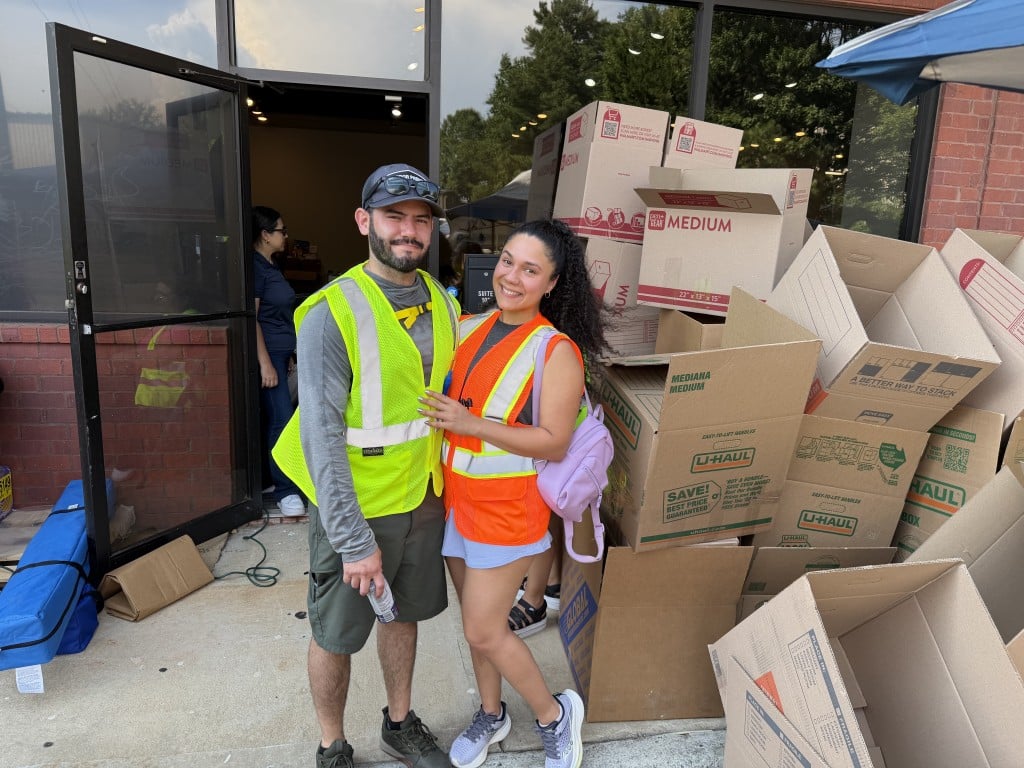
“Es como un deber de los que estamos afuera, sentimos que de alguna manera cargamos algún tipo de responsabilidad social, moral por nuestras raíces, por nuestra gente,” said Miguel Chalita, a 35-year-old Woodstock resident who is originally from Venezuela. It’s like a duty for those of us abroad. We feel that, in a way, we bear a kind of social and moral responsibility—for our roots, for our people.
Miguel had come with his wife, Maya, who is also Venezuelan and has also been feeling the weight of the quakes: In the weeks since, she said, she hasn’t been able to play music in the house, and has been seeking out events like this one that let her feel as if she’s helping support the earthquake victims.
Miguel and Maya and the team of volunteers they joined that day are part of a much larger community—diasporic Venezuelans in the U.S.—looking for opportunities right now to connect with one another and help out their home country. That’s a common phenomenon in the aftermath of tragedy, said Dr. Barbara Lopes-Cardozo, a psychiatric epidemiologist who studies mental health and psychosocial issues in humanitarian emergencies at the Centers for Disease Control and Prevention: Getting together in community, she said, is an important way “to get some support and mitigate some of the stress and the mental health problems, emotional problems that people are facing because of the disaster.”
Even those who didn’t know somebody who died might experience a trauma reaction, Dr. Lopes-Cardozo added—like trouble sleeping and feelings of depression or anxiety. Those feelings may build on a preexisting sense of dislocation shared by many migrants: Some research has found that being physically separated from family can lead to a sense of living between two worlds; many migrants describe their experience as a persistent feeling of uprootedness and emptiness.
Dr. Steve Sugden, a member of the American Psychiatric Association’s Disaster Psychiatry Committee, said that people who identify with a place they’ve been separated from—such as members of a diasporic community—may experience “grief shame,” and that their continued identification with the land can create a sense of vulnerability: “Once they have that feeling of vulnerability, then it brings in guilt and shame and a lot of those other negative emotions, grief and sorrow.”
Ronny Hernandez, a 22-year-old volunteer, said she’s been having trouble sleeping and developing headaches. Originally from Valencia, Carabobo—about three hours from La Guaira, which sustained most of the earthquake damage—she said that her parents’ apartment had been rendered uninhabitable. They weren’t living in it—they’re in Georgia now—but have neighbors who also lost their homes.
Volunteering offers her a sense of relief, Ronny said. In Norcross, she was able to quickly establish a system to receive and sort donations, and ended up acting as a kind of de facto logistics assistant. “He sentido como que wow, mi corazón no está bien, pero me siento como que muy útil, que es útil, que que estoy siendo útil para mi país y es un sentimiento que no puedo explicar. En verdad que me dan ganas de llorar.” I’ve felt like—wow, my heart isn’t right—but I feel so useful, that I’m being useful to my country. It’s a feeling I can’t explain. Honestly, it makes me want to cry.
Before the earthquakes, Ronny said, she wasn’t really connected with the Venezuelan community. But recently she’s met many other Venezuelan Americans and formed new friendships.
Volunteering is a good strategy to cope with distress, said Dr. Lopes-Cardozo; so is finding support groups, or people to talk with who are experiencing similar emotions. “That kind of peer support is really helpful to mitigate some of these emotional problems,” she said. For some, yoga and exercise might help; others might find comfort in meditation and prayer.
In any event, Dr. Sugden said, getting into a rhythm—a good night’s sleep, regular day-to-day activities—is always beneficial. “That helps ground us mentally, and if we can get grounded mentally, we can then actually think a lot better,” he said, adding: “Volunteering helps us because we’re trying to give back or help people who are in need, and it gives us a sense of purpose, and that sense of purpose for many people can be very helpful in helping us recover.”
Even among the sadness, the Venezuelans who volunteered in Norcross were able to find a sense of hope in their collective show of support for those hurting back home. Miguel said that, after years of political, economic, and humanitarian crises, Venezuelans everywhere are used to weathering adversity.
“Sobre todo como venezolanos creo que tenemos muy arraigada la esperanza sobre nosotros por todo lo que hemos sufrido y siempre nos hemos mantenido por encima de las desgracias que nos han sucedido, pero todo lo hemos tratado de compensar siempre buscándole el lado de lo positivo, del lado de la esperanza y es lo que lo que hoy en día todavía nos mantiene fuertes,” he said. Especially as Venezuelans, I believe we have a deeply ingrained sense of hope—given everything we have endured and how we have always risen above the misfortunes that have befallen us. We have always tried to balance things out by looking for the positive side, the side of hope, and that is what keeps us strong to this day.
Author
Related Articles
One Year After Georgia Hyundai ICE Raid, Community Fear Persists
A closed Asian grocery store, many Latino workers still in legal limbo, and discomfort with police presence.
Senator Warnock alerts of “serious concerns” around healthcare access, after visit to Stewart Detention Center
Including, for pregnant women.
Georgia passed a law targeting undocumented immigrants who commit crimes, after a high-profile 2024 murder. It may not be doing much for public safety.
In diverse Gwinnett County, HB1105 has become a quiet tool for the Trump administration to advance its immigration crackdown.