Atlanta-area students—and adult allies—are trying to fill education gaps that make some Asian Americans feel like “forever foreigners”
While some teens are hoping to see more of their own experience reflected in classrooms, others are fighting against a more diverse public school curriculum.
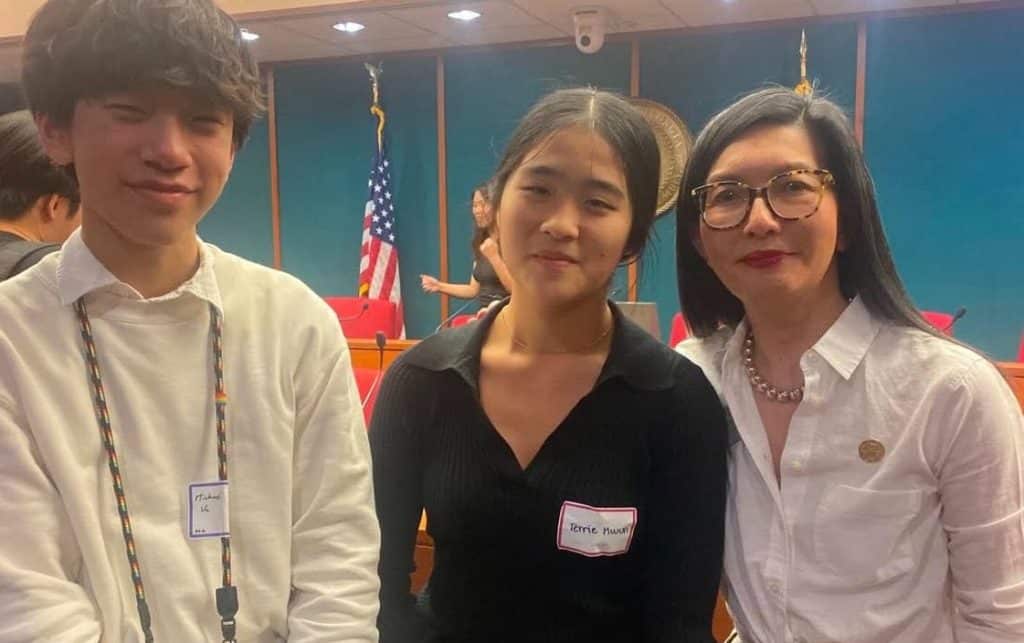
A typical teen, Michael Vu spends his free time biking, hitting a badminton racket, going out for bubble tea, and playing the shooting video game Valorant. He also loves to cook—tomato and egg stir-fry is one of his go-to dishes.
Michael’s parents immigrated from Vietnam to Gwinnett County in 2008. But, he says, he never really knew, or thought about, what it meant to be Asian American. In middle school, Michael learned about events that took place halfway across the globe, such as the Vietnam War and Tiananmen Square protests, but not much about Asians who were in the U.S.
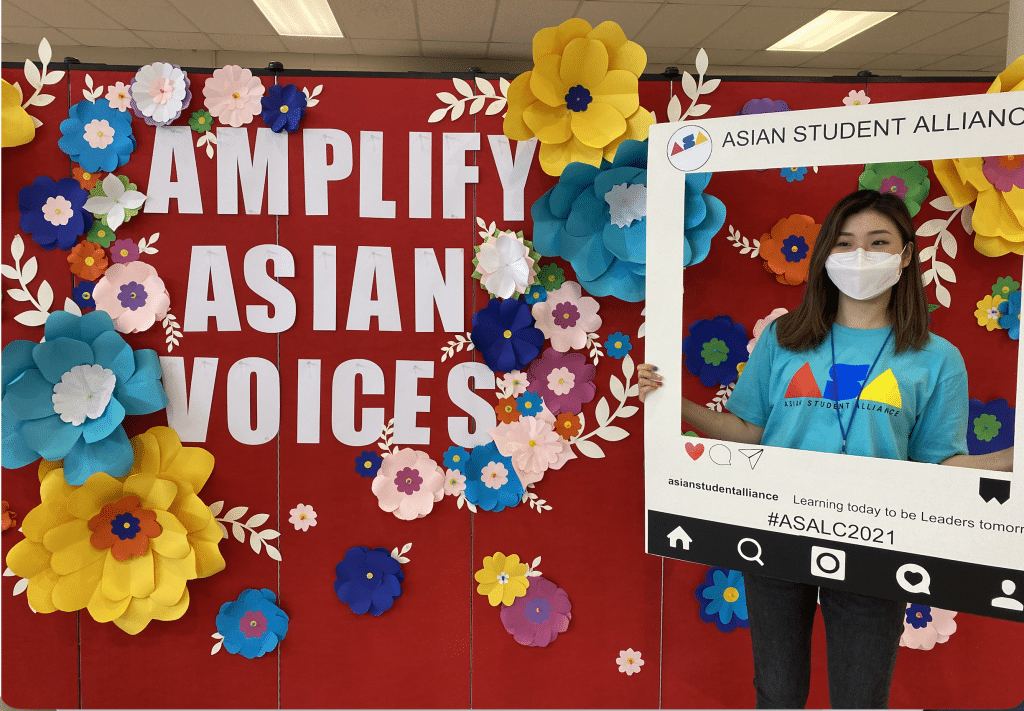
That changed in the summer of 2024, when Michael participated in a summer camp organized by the Asian Student Alliance (ASA). Sitting at the Norcross Public Library, he learned that Asian Americans—people who looked like him—were in Georgia as early as the 1870s, when Chinese workers came to Augusta to help complete a canal project. “When I learned about these studies,” says Michael, “I was like, why couldn’t this already start before?”
He’s not the only one who’s been asking that question. Ahra Cho, ASA’s executive director, says that what Michael experienced, with fresh eyes and fresh bewilderment, is an age-old problem: the minimal exposure to Asian American studies in public schools. But in recent years—as Asian Americans have been making an increasing mark on Georgia politics and culture, and in the wake of high-profile tragedies like the 2021 spa shootings, as well as the rise in anti-Asian hate crimes in the wake of the pandemic —advocates have been pushing to change that.
“We were founded right after the Atlanta spa shootings to create space for Asian American youth,” Ahra says. “One of our first campaigns was advocating for Asian American history to be included in U.S. history curriculum in Gwinnett County schools.”
At the same time, others have been fighting for the opposite.
In 2021, Governor Brian Kemp signed a letter asking the Georgia State Board of Education to oppose the teaching of “critical race theory.” (Originating in legal scholarship, critical race theory was formulated as a way to explore how laws and institutions, not just individuals, perpetuate racial bias; in recent years, some conservatives have used it as a catch-all term as they’ve sought to oppose, among other things, the teaching of the history of race and racism in public schools.) The board passed a resolution banning educators from teaching that any individual should feel any “discomfort, guilt, anguish, or any other form of psychological distress on account of his or her race or sex.” While it didn’t ban teaching ethnic studies in public schools, the resolution led to outrage and confusion locally and became part of national furor over diversity and education.
To add to the confusion, in 2025, the U.S. Department of Education mandated public schools remove diversity, equity, and inclusion (DEI) programs—or risk losing funding.
Ahra—who taught in Gwinnett County schools for nearly a decade—says there are currently no official Asian American studies courses offered in the five metro Atlanta public school districts where ASA does its advocacy work.
While Ahra was setting the ASA up in Suwanee, Weonhee Shin was moved to start the advocacy group Asian American Voices for Education (AAVED) in Decatur. Her goal was similar: stop hate crimes against Asian Americans through education, by combating stereotypes and suspicion of Asian Americans as “the forever perpetual foreigners.” She says that she and many other Asian American parents were inspired to explore their own history during the Covid-19 pandemic, when hate crimes and acts of racism toward Asian Americans were on the rise. Such acts, they learned, fit a historical pattern.
That’s the kind of history they want their own children to know, Weonhee says: “A lot of us went through the K-12 system in the U.S. We’re now parents, and we deeply care for our children. We want their educational experience to be different.” Illinois, she continues, “became the first state to pass a legislative requirement for Asian American history to be taught in the classroom. So parents in Georgia were asking, ‘What about us?’”
For students between kindergarten and eighth grade, the Georgia Department of Education’s social studies standards currently contain no mention of Asian American historical events. Once students get to high school, teachers are encouraged to mention three events that primarily concern Asian Americans: the use of immigrant labor during the construction of the transcontinental railroad (SSUSH12); Angel Island (SSUSH11), the San Francisco Bay landmark where hundreds of thousands of mostly Asian immigrants arrived in the U.S.; and the confinement of Japanese Americans in incarceration camps during World War II (SSUSH19).
As the world’s largest continent, Asia consists of up to 50 countries—depending on who you ask. Country and region names are sometimes subject to intense debate. Resisting geographic categories, like “Middle East,” a growing movement has begun referring to the area—which is a part of the continent of Asia—as Southwest Asia and North Africa, or SWANA, because they see the term as a legacy of European colonialism.
“A lot of us as Asian Americans, we’re not given any context of who we are and how we even got here,” Weonhee says. “So the idea of belonging can be a huge question mark, because it’s never even taught in the classroom.”
Developing that sense of belonging, says Weonhee, starts with teaching the histories not traditionally taught in classrooms. For example, Chinese American Wong Kim Ark’s 1898 legal victory establishing birthright citizenship in the U.S.; the 1956 election of Dalip Singh Saund, the first Asian American, first Indian American, and first Sikh to serve in Congress; Chinese American activist Grace Lee Bogg’s work during the civil rights movement; and Filipino Americans, like Larry Itliong and Philip Vera Cruz, who organized alongside Mexican American Cesar Chavez during the farmworker revolution of the 1960s; even Lebanese American consumer rights activist Ralph Nader’s historic presidential run in 2000.
285 South reached out to the Georgia State Board of Education, as well as the Cobb, Forsyth, DeKalb, Gwinnett, and Fulton County school districts. A Fulton County Schools spokesman indicated that, while it doesn’t currently offer Asian American studies courses, it’s open to adding them based on student interest. No school district officials responded to requests for an interview.
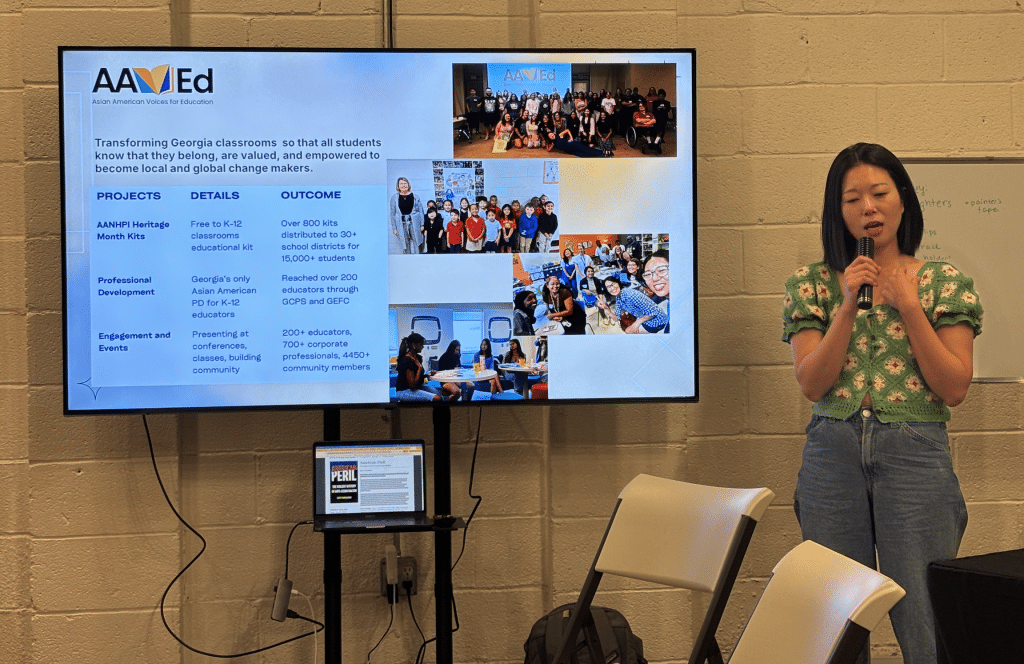
Over the last six years, Weonhee and like-minded parents have been lobbying for change and arming teachers with Asian American historical knowledge. Since 2021, they have trained over 200 teachers and distributed over 800 free educational kits during AAPI Heritage month to over 30 school districts in Georgia.
Ahra’s organization, the ASA, is also empowering teens to take matters into their own hands through leadership and social-emotional skills workshops.
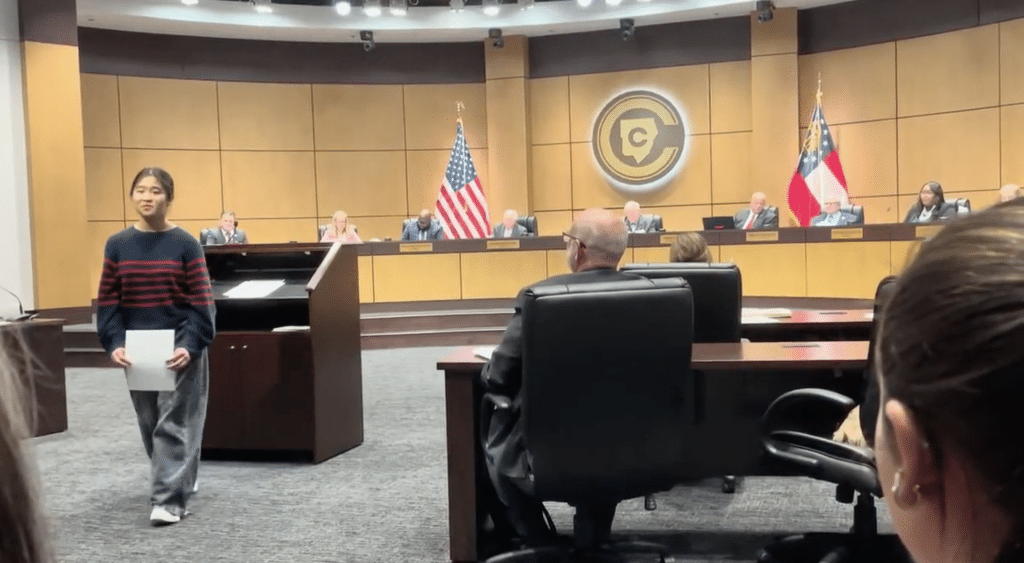
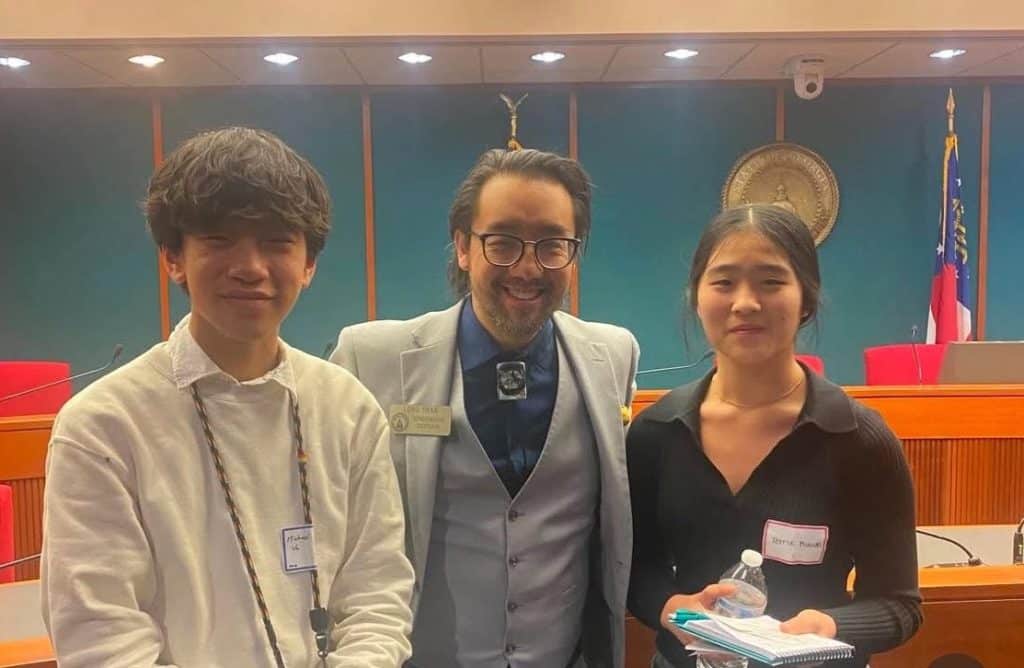
In February, Michael Vu joined an ASA field trip to the Capitol to meet with lawmakers to learn about the legislative process and how to advocate for policies. That’s where he met Korean American Terrie Kwun, who was also in eighth grade at the time. Realizing they were both passionate about the same cause, the two teens hit it off. They immediately “devised a plan to attend board meetings and events” to advocate for Asian American studies in their respective school districts, said Terrie. Michael presented several times in front of the Gwinnett County Board of Education and Terrie did the same in Cobb County, where she lives. Terrie says she was “very nervous” and even did background research on committee members.
“My nerves really died down while I was talking, because it was something that I thought was very important, where it didn’t matter if I felt scared to talk, because I wasn’t scared to say what I had to say,” Terrie says. “I know that the board members and the superintendent had mentioned some anti-DEI rules and policy bans on controversial issues. So of course, that added to the intimidation I felt for sure. But really, I think I met the purpose of what I wanted to say.” She asked the board members directly if they would pilot a course on Asian American studies. [So far, that hasn’t happened.]
Terrie says she considers herself fortunate because, unlike her peers, she grew up surrounded by Asian American icons and history; her mother, Sohyun An, is a Kennesaw State professor who’s been recognized as a “trailblazer in anti-racism social studies education and Asian American studies. Since 2011, Sohyun’s trained nearly 1,000 aspiring K-12 teachers; she says she’s likely the first teacher educator at the university level in Georgia to focus on Asian American studies.
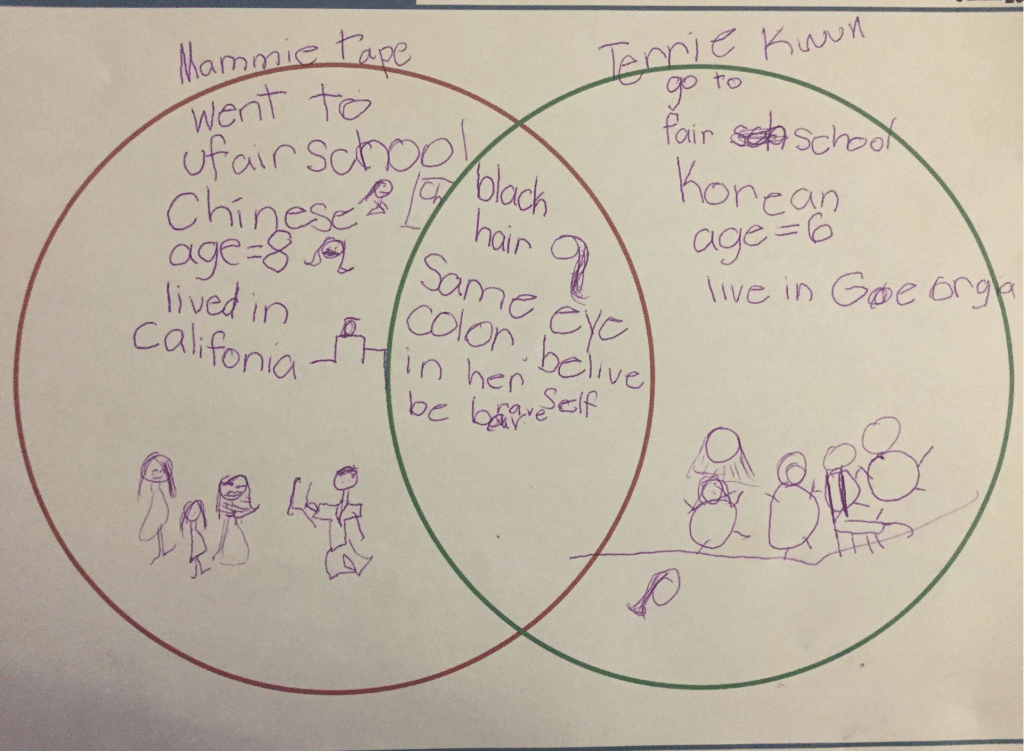
In school, the first time Terrie remembers hearing about an Asian American was in first grade, when she learned about anti-segregation activist Mamie Tape. But she was disappointed by the scarce mentions of Asians throughout the rest of elementary and middle school.
“I remember anticipating the lesson on the Korean War because, as a Korean American, I had grown up hearing stories about the war from my family,” Terrie says. “I expected connection, depth, and complexity. But instead, the lesson was so brief, and it was framed through ‘America going to rescue people over there.’”
Over the past few years, Professor Sohyun says, her education students have been worried about what they can and cannot teach because of the state’s political climate. She’s been guiding them on how to work within standards to teach additional histories.
“Elementary school teachers are required to teach immigration,” Professor Sohyun says. “But our teachers only focus on Ellis island because that’s what they’ve been taught when they were little. So then what I’m doing is saying, ‘Hey, this Georgia social studies standard says you need to teach fourth graders about turn-of-the-century immigration. So, you know, there’s also the story of Angel Island.’ I’m providing them historical background knowledge, along with the picture books and other instructional resources, so they can be more inclusive about teaching immigration.”
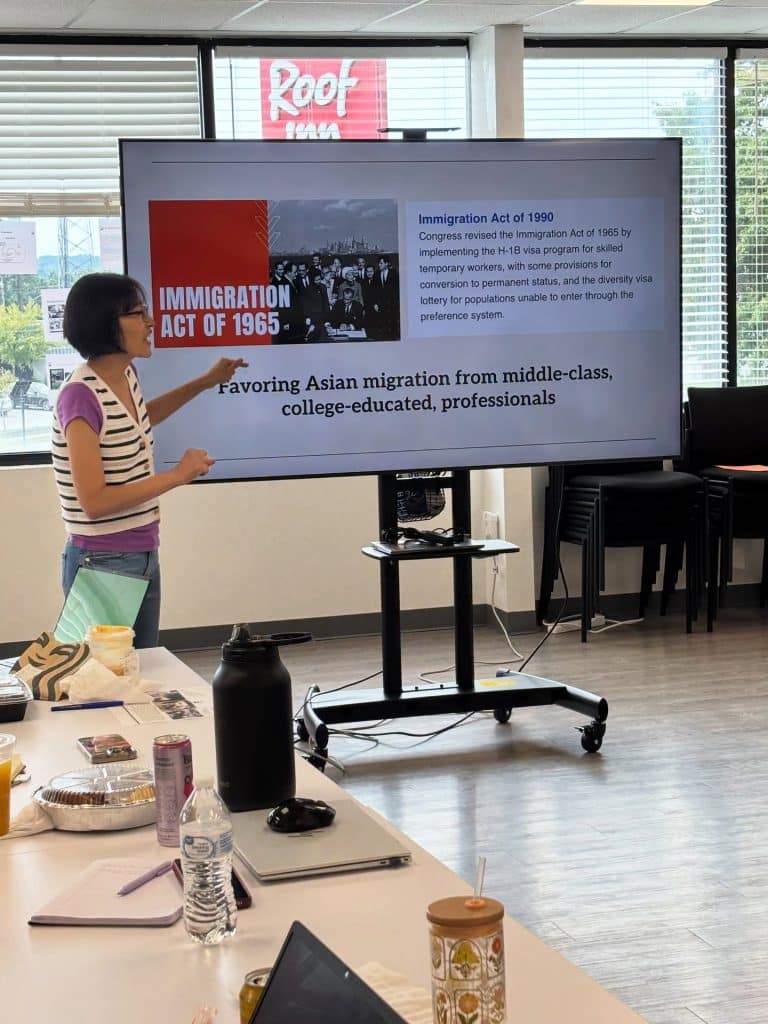
She’s currently working on a $3.5 million multistate research project with professors in California, Michigan, Virginia, and Georgia. Her research will look at how communities advocate for and implement policies mandating Asian American studies in K-12 classrooms and how it impacts learning.
In her free time, as a cofounder of AAVED, Professor Sohyun leads workshops and helps Weonhee Shin publish free lesson plans, heritage month kits, and curriculum guides for educators on their website.
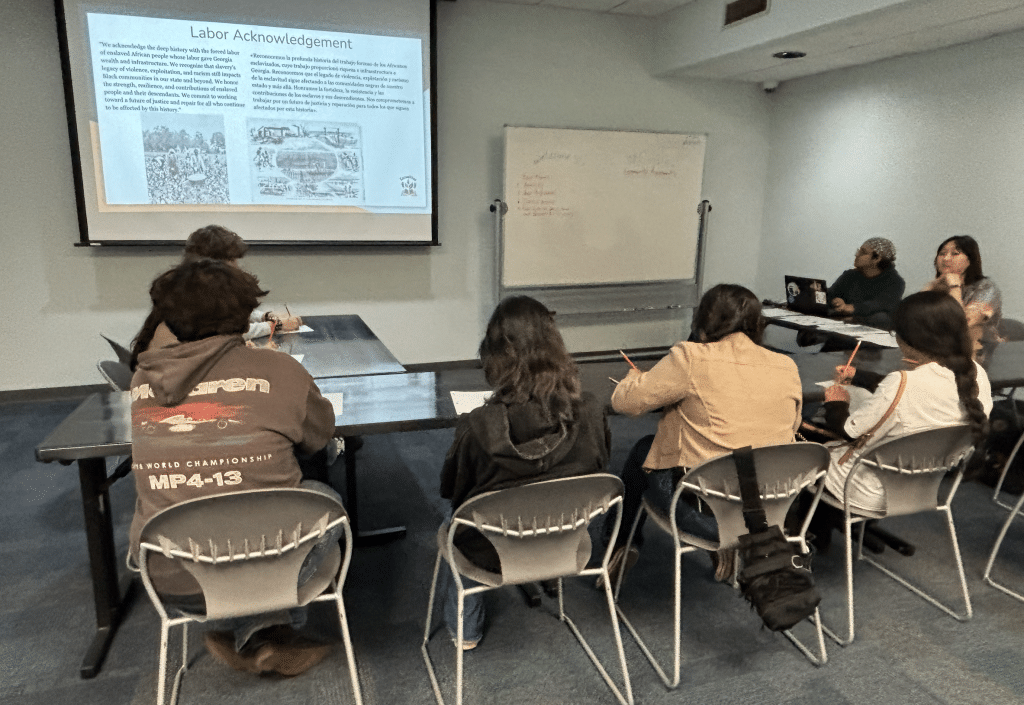
Some teachers, though, say they’re not waiting around for public schools to teach young people their history.
Once a student in Gwinnett County schools, Jonathan Peraza Campos now teaches middle school in DeKalb County—and is a cofounder of Escuelitas, a grassroots education effort centered around Buford Highway. The escuelitas model (the word means “small schools” in Spanish) first originated in Texas in the 1880s to counter bans on language and history in public schools, and to provide a space to teach Mexican American children their history and Spanish language.
When Escuelitas started in 2020, its primary goal was serving the area’s Latino and Indigenous Mayan population. In 2024, Jonathan’s team rebranded to focus on ethnic studies education for Latino youth and adults. As the number of Asian American teacher-organizers has grown, they’ve also begun adding more programs for Asian American youth and adults.
“Escuelitas comes out of a long tradition of social movements and people of color creating our own learning spaces, our own education centers, to teach our children the possibilities of education beyond what they experience in the school system that is often very marginalizing and limiting,” Jonathan says.
As for Terrie Kwun and Michael Vu, they’re now 14-year-old freshmen at Walton High School in Cobb and Peachtree Ridge High School in Gwinnett, respectively. They know they face an uphill battle, but they’re committed to doing what they can to see more of their own histories reflected in their classrooms. For now, they’re keeping their fight hyperlocal: This fall, they both plan on walking around their high schools, collecting signatures from fellow students to show administrators there is demand for learning about their own histories.
“I always felt like there was a solution,” Terrie says. “Maybe it’s a complex one, but there is one that we can start with as a building block. And I know me and Michael, we’re still going, for sure. And it will take time, but it really is something that has to be worked on.”
Author

Related Articles


Georgia passed a law targeting undocumented immigrants who commit crimes, after a high-profile 2024 murder. It may not be doing much for public safety.
In diverse Gwinnett County, HB1105 has become a quiet tool for the Trump administration to advance its immigration crackdown.
Update: Georgia GOP lawmakers backtrack on redistricting
A special legislative session to redraw Georgia’s maps had sparked fierce pushback from voting rights advocates and Democratic lawmakers.