A new Doraville cafe, serves up a taste of Southeast Asia’s kopitiam culture
Kopitiams aren’t just coffee shops—”there is human warmth, the friendliness from that cup of coffee”
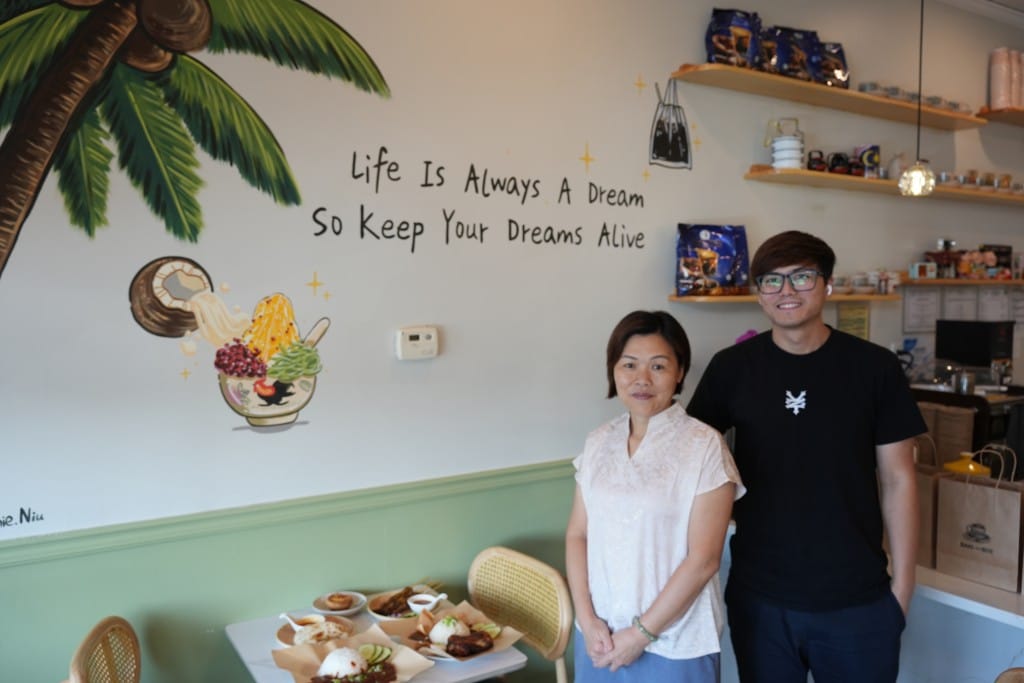
For cofounders Leng Wong and Jun Tay, the new Malaysian cafe Bake and Bite has been a decade in the making—that’s how long it’s been since the two first struck up a friendship, when Jun began frequenting a Chinese restaurant that Leng owned at the Atlanta Chinatown food Court in Doraville. One thing they had in common: Both had been born in the same town in Malaysia, Ipoh, where Leng had vivid memories of the coffee culture there.
Malaysia and other countries in Southeast Asia—Singapore, Indonesia, parts of Thailand—are dotted with popular cafes known as kopitiams, which are more than just places to get a quick drink: They’re community gathering spaces where neighbors spend hours catching up. “You drink, but at the same time, there is human warmth, the friendliness from that cup of coffee,” Leng said. That’s the vibe that she and Jun are trying to capture at Bake and Bite, the kopitiam-style cafe they opened over the summer in Asian Square in Doraville: “We try to bring the concept of kopitiam—what I mean is the coffee and people just coming here for comfort food.”
Kopitiams date to the 19th and early 20th century, when Malaysia was a British colony—and the destination of many immigrant laborers from elsewhere in the region. One of the last groups of migrants to arrive came from the Chinese province of Hainan; with limited job prospects, many became domestic workers, and some opened the forerunners of today’s kopitiams. The name itself is a combination of kopi, the Malay word for “coffee,” and tiam, a word for “shop” that comes from China’s Hokkien language.

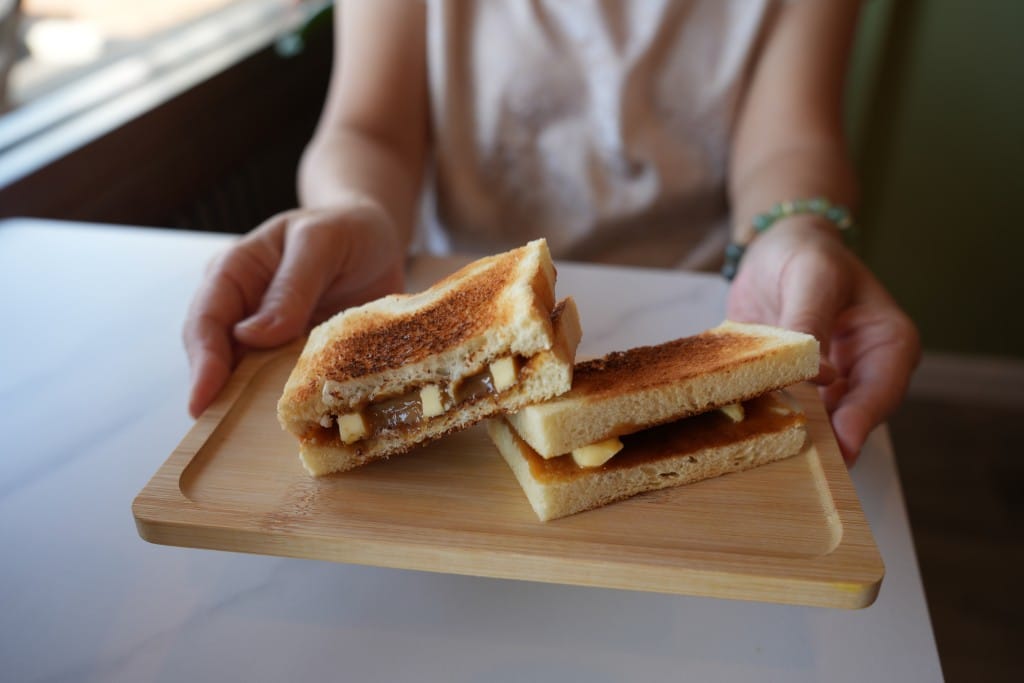
The menu available at a typical kopitiam reflects this meeting of cultures; for Bake and Bite, Buford Highway seems to be an ideal spot. Customers, for instance, might start the day with kaya toast, which is made with white bread filled with coconut jam and slices of salted butter. Served with half-boiled eggs and coffee, the morning meal is what one scholar called “a cultural remnant of the British colonial breakfast.” And it reflects a unique Malaysian influence, too, in the form of white coffee—an Ipoh specialty made with beans that have traditionally been roasted in palm-oil margarine.
After their initial meeting in the Chinese restaurant, Leng and Jun fell out of touch until two years ago, when Leng happened to stop by a matcha ice cream shop in Duluth where Jun was working. Their conversations eventually led them to go into business together. Jun, who went to pastry school in Malaysia, had expertise with food; Leng has a passion for running businesses. “We want[ed] to combine business and personal passion together, so that’s how this started,” she said.
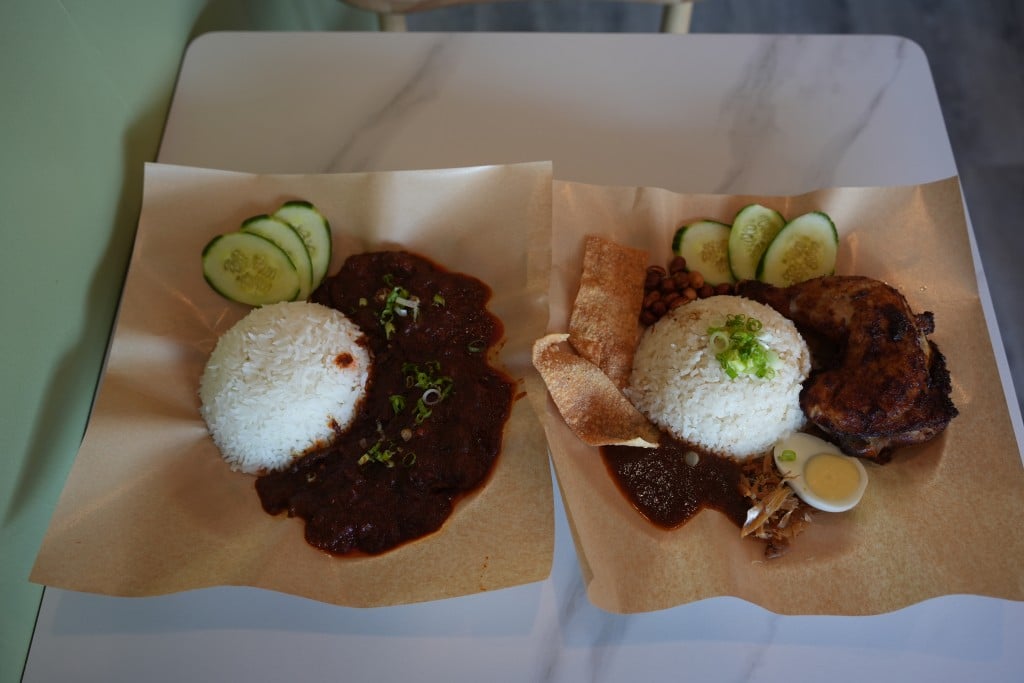
In addition to breakfast, Jun’s menu also includes dishes like nasi lemak—a fragrant coconut rice that’s considered Malaysia’s national dish, served here with fried chicken, boiled egg, anchovies, and peanuts—and rendang beef, available with rice or noodles. Another of Jun’s favorites is curry noodle soup, topped with tofu puffs, fried wonton strips, and shredded chicken.
“Because we both come from the same city and country, and we choose, I would say, the most authentic and popular [dishes] people recognize in Malaysia,” Leng said. Jun estimates that the dishes on the menu “taste 80 to 90 percent similar to Malaysia”—there are some ingredients, like plantain leaves, that are hard to find in the U.S.
A few years ago, Leng visited a kopitiam in her hometown where she encountered a phrase that resonated with her: “Life is always a dream so keep your dreams alive.” She wrote it down in her notebook, “so when I open my own cafe, I want to put this on the wall,” she said.
Now it’s painted on one of the walls of Bake and Bite; the opposite wall features renditions of some of the classic kopitiam dishes on the cafe’s menu, all rendered by the artist Dannie Niu. A few weeks after the restaurant first opened, both Leng and Jun felt a sense of relief that their joint dream had been realized. “It happened,” Leng said. “So again, life is a dream. You keep your dream alive.”
Author

Related Articles
These Atlanta eateries are saying “Paga Lo Que Puedas”: Pay What You Can
Kamayan ATL and Vinny’s Mutual Aid Bakery are joining over 100 restaurants in 13 countries for a day dedicated to putting food access—and people—first.
“Are you concerned about yourself and your neighbors?”
As food insecurity grows among Georgia’s immigrant and refugee communities, one mutual aid group is operating under the radar to support their neighbors
Atlanta Chinese Dance Company’s new show explores the Chinese American experience in the U.S. South
Chinese American Journeys is the first all-original show by the longtime local troupe Atlanta Chinese Dance Company.