For this green card holder, a walk to the dollar store turned into a frightening ICE encounter
Increasingly, federal immigration agents—empowered by a 2025 Supreme Court decision—are detaining pedestrians going about their daily business.
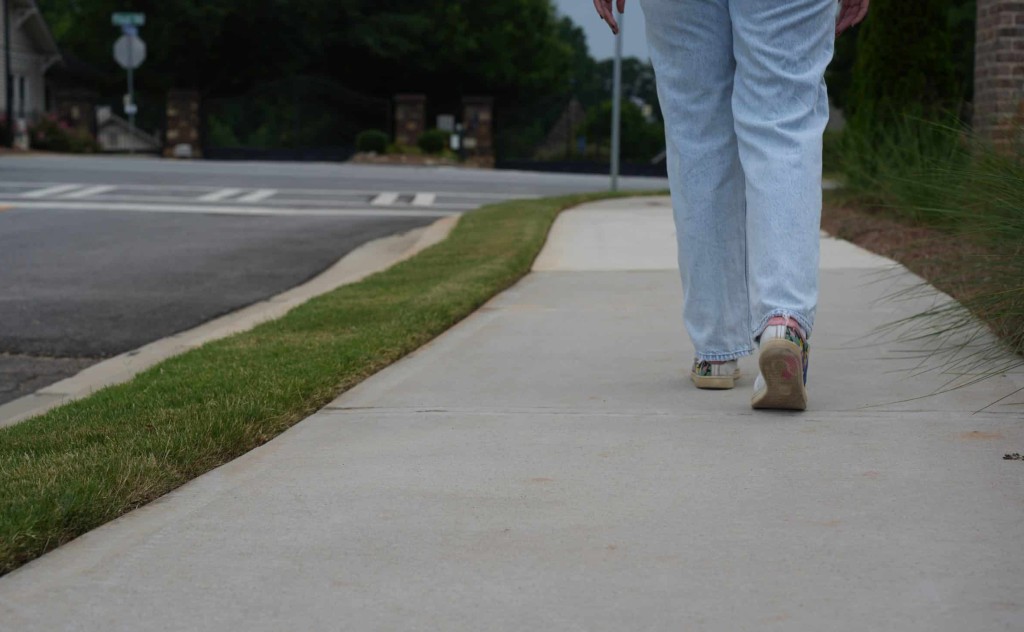
One Tuesday morning in May, Patricia had just left a dentist appointment in Gainesville when she decided to stop by a dollar store: The previous weekend, she’d gotten a sunburn on a vacation to the Bahamas and wanted to buy some lotion to salve it. Walking down the sidewalk, she thought she heard somebody saying “Ma’am” nearby but figured they weren’t speaking to her. She was focused on the map on her phone because she didn’t know the neighborhood well; Patricia lives in Hoschton, about 20 miles away in Jackson County.
At a certain point, Patricia noticed that a couple walking toward her abruptly crossed the street: “Fue como que a ellos algo les asustó,” she told 285 South. “Su lenguaje corporal fue lo que me llamó la atención.” It was as if something scared them. Their body language was what caught my attention. That’s when she turned around to see a large man behind her. First he asked if she was lost. After she told him she was okay, he continued to follow her, and when she turned around again he asked her: “Do you have any papers?”
Patricia, who is 35 years old and has light brown skin and wavy reddish-brown hair, was born in Quito, Ecuador; she moved to Georgia more than five years ago after her green card was approved. “Ya le veo el uniforme que era verde oscuro y ya cuando leí las letras ICE en la gorra, para mí se me paralizó el cuerpo, se me paralizó el habla,” she said. “Me quedé muda. No supe cómo reaccionar.” I saw the dark green uniform, and when I read the letters “ICE” on the cap, my body froze—I lost the ability to speak. I was struck dumb. I didn’t know how to react.
The Trump administration’s second-term immigration crackdown has been characterized by a vast expansion of tactics used by officers from Immigration and Customs Enforcement (ICE) and other federal agencies—who have, for instance, taken scores of people into custody following routine traffic stops. But immigration agents have also detained people, like Patricia, while they’ve been walking down the street or otherwise going about their daily business. A 2026 analysis by the American Immigration Council found that stops of pedestrians, formerly an uncommon tactic, have become “routine.”
If immigration officers suspect a person of being in the country without documentation, they’re allowed to ask about their immigration status. Their latitude to initiate such stops, however, was expanded by a 2025 Supreme Court decision allowing officers to use race and ethnicity as a factor in determining when to question somebody.
In Texas, officials detained a nun who was walking to church in her habit. In New York, eight Latino plaintiffs are suing the Department of Homeland Security over allegations that they were racially profiled by ICE agents who detained them without warrants; one was attempting to enter his apartment building after getting home from work.
In Georgia, it’s not clear how often ICE encounters like Patricia’s are happening. Gigi Pedraza, executive director of the Latino Community Fund, said she hadn’t heard of specific cases like Patricia’s, though she added that some cases may go unreported if the person ends up in detention.
Jerry Gonzalez, CEO of the Latino advocacy nonprofit GALEO, said such situations “undermine community policing and undermine public safety for us all.”
In Georgia, Patricia gave the officer her green card, which was in her purse. The officer, she said, told her it was fake. With her voice shaking, she then showed her driver’s license, which she was told was also fake. She grabbed her phone to call a cousin to let her know what was happening, in case she was arrested, and the officer told her she couldn’t use her phone, Patricia said.
“Para mí fue como que me rompieron todos los derechos y le dije, Soy un peatón. ¿Por qué me está diciendo que no puedo usar mi teléfono? Si hubiera estado manejando para que me dijera que no puedo usar mi teléfono. Entonces, yo le dije: Tú me estás parando porque solamente soy hispana,” she said. To me, it felt like my rights were being completely violated, and I said to him, “I’m a pedestrian. Why are you telling me I can’t use my phone? If I were driving, then you could tell me I can’t use my phone.” So I told him: “You’re stopping me just because I’m Hispanic.”
In response to a request for comment, ICE spokesperson Melissa Egan wrote in an email “Any allegations ICE law enforcement engages in ‘racial profiling’ are FALSE. ICE has authority for lawful arrests under 8 USC 1357. What makes someone a target for immigration enforcement is if they are illegally in the U.S. – NOT their skin color, race, or ethnicity.”
Patricia said that the officer had asked her to follow him, which she declined to do multiple times. The officer took her driver’s license and green card to his car, she said, which was a few feet away in a parking area. She thinks he checked her legal status in the U.S. As she waited for him to come back with his documents, she prayed. “Me acuerdo clarito que yo dije, Señor toca su corazón,” she said. I remember clearly saying, “Lord, touch his heart.”
A few minutes later, the officer returned Patricia’s documents to her without saying anything, and walked away. “Fue un momento incómodo. Él solamente me devolvió mis documentos, y él no me dijo ya puedes irte, todo está bien,” Patricia said. It was an awkward moment. He just handed my documents back to me, and he didn’t tell me I could go or that everything was fine.
Patricia entered a store nearby to try to calm herself. “Ese día se me subió la presión, estaba altísima.” That day my blood pressure shot up—it was sky-high. When she got home, she said, she cried “como una viuda,” like a widow.
For a couple of weeks afterward, she stayed at home as much as possible. Now, every time she sees a law enforcement agent or a police car, she feels her anxiety spike. “Todavía tengo miedo y eso que ya ha pasado ya un mes,” she said. I’m still afraid, even though a month has already passed.
She hasn’t shared her experience with too many family members or friends—which is the reason 285 South is using a pseudonym for Patricia. She doesn’t want to relive the experience. She said she is now saving money and studying to apply for U.S. citizenship, and wants to learn more about her rights in the U.S. Patricia also feels lucky that she speaks English and was able to advocate for herself—otherwise, she wonders if she would have ended up in ICE custody.
Before last month’s incident, Patricia usually carried only her driver’s license—she just happened to have her green card with her because she’d been traveling recently. Now she keeps it on her at all times. “Yo me sentí indiscriminada y se siente horrible, se siente horrible, se siente feo,” she said. “Uno lo mira en una película uno escucha, pero cuando a uno le pasa a uno mismo, realmente uno toma conciencia y dices que pude sentir yo el racismo.” I felt discriminated against, and it feels horrible—it feels horrible, it feels awful. You see it in movies or hear about it, but when it happens to you personally, you truly become aware of it and realize, “I actually experienced racism.”
Author

Related Articles
Atlanta students feel the toll of immigration enforcement
An ESL teacher who has worked with immigrant students for more than 20 years says she has never seen this level of fear.
Midterms: In Georgia, more than a dozen candidates with roots across the world are up for state office
285 South asked them about what they plan to do to support their immigrant constituents.
After a sewage eruption at Stewart Detention center, some detainees are still not drinking the water
“The smell is still there, it’s lingering,” said one advocate, who’s been reporting on conditions