“I woke up in a different world”: Decatur family torn apart after ICE encounter
Marina and Igor were living a comfortable life with their four children. Now Igor, originally from Moldova, is in immigration detention, and the family is trying to stay afloat.
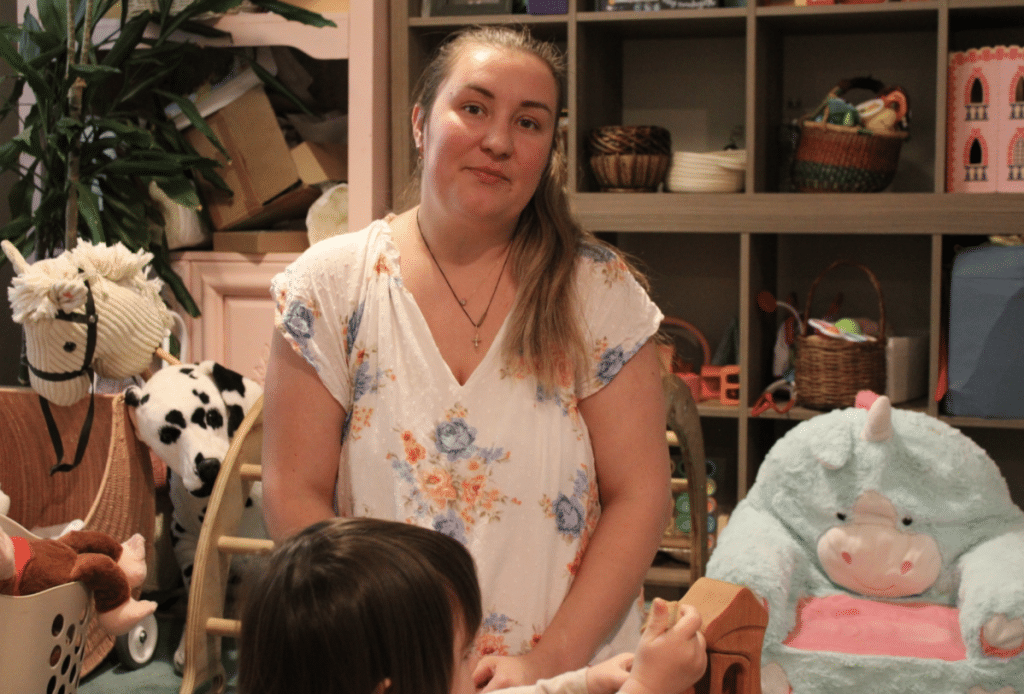
Marina’s two-year-old daughter wakes up from her nap and snuggles next to her mom on the sofa. After a few minutes, she brings out a toy tea set and takes pretend sips while her eldest sister makes faces into the camera of their mom’s phone. Elsewhere, two other sisters are still napping. Their home is filled with plants and wooden toys; a wall of children’s art fills one side of the living room.
Marina and her husband, Igor, have been building this home together on a leafy street in Decatur for the last seven years. Everything had been going well. “We have a nice car, pay rent. He has a good job. My daughter goes to private school,” Marina says. But that changed on March 27: “I woke up in a different world.”
Marina had just come home after dropping her daughter off at the Waldorf school a few miles down the road when she tried calling Igor over FaceTime. He didn’t answer. Instead, he texted her a picture of a police car and said he’d been pulled over. Thirty minutes later, he called her back.
“He shows me the wrists with the handcuff and he says, I’m being taken,” Marina recalls. “He’s like, write down the phone number of my employer, let them know so they can take the truck and the load. And that’s it.”
Igor, who works as a truck driver, was born and raised in Moldova, and had been traveling from California to Tennessee. He was pulled over in West Memphis, Arkansas, Igor told Marisa, for driving an oversize load a few minutes before sunrise; an Arkansas law bars oversize movement from 7:00 a.m. to 9:00 a.m. Booked in the Crittenden County jail, Igor then received an immigration detainer—a request from federal immigration agents to hold a detainee until they can assume custody. Once federal agents showed up, he was transferred to Winn Correctional Center, a U.S. Immigrations and Custom Enforcement (ICE) facility in Louisiana where more than 1,500 people are currently held.
According to a government document that Marina shared with 285 South, Igor was “not in possession of valid immigration documents allowing him to be in or remain in the U.S. legally.” Marina said Igor was carrying his valid work permit and a copy of his application for asylum in the U.S., which is pending. (She asked 285 South to include their first names only out of concerns for their privacy.)
The second Trump administration’s harsh crackdown on immigrant communities has led to an increase in the detentions of people who have no criminal records—according to a report released earlier this year, the number of such people in immigration detention on a given day spiked more than 2,400 percent in the administration’s first year. Igor, Marina says, belongs to that group.
He’s also part of a much smaller one: Moldovans in detention. According to ICE data, 184 people from Moldova have been held in immigration detention between 2021 and 2025. The relatively small numbers could be in part because the community itself, while growing, remains small—about 50,000 people nationwide. Although Molodova is a country where refugees often flee to for safety—most recently Ukrainians—a slow economy, political persecution, restrictions on freedom of speech, and a separatist movement on its eastern border are just some of the challenges facing the small former Soviet state, according to Amnesty International.
Neither Igor nor Marina, who left Russia about 15 years ago and also has a pending asylum case, wanted to go into detail about why they left their home countries.
Though he couldn’t speak to the specifics of any cases, Danilo Mandić, a lecturer in sociology at Harvard University who frequently provides expert testimony on asylum cases from Moldova and other Eastern European countries, explained that Russia’s war on Ukraine has destabilized the region. “Moldova is a very tiny country, but it’s one of a series of these countries that are feeling the ripple effects. That tends to mean that the state apparatus becomes more repressive, more paranoid, fewer checks and balances,” said Mandić, who’s also the author of Bad Refugees: Geopolitics, Stigma and Forced Migration in Modern Times.

Since Igor’s detention, Marina has been doing what she can to sustain her family, which was supported by Igor’s income as the owner-operator of his truck. She sold Igor’s truck, launched a GoFundMe campaign that’s received support largely from her fellow Waldorf families, and started listing some possessions on Facebook Marketplace. She’s also applied for SNAP and Medicaid for her children, all of whom are U.S. citizens. As an asylum seeker, she doesn’t qualify for those benefits.
On the day Marina met with 285 South, she apologized for how she looked. She was tired; she had spent more than four hours that morning applying for benefits at the office of the state agency that administers WIC (Women, Infant, and Children).The night before, Marina had been in the emergency room with her infant daughter, who had been running a high fever. A few days before that, she herself had to go to the ER because of abdominal pain—she had a kidney stone, she eventually learned.
Marina hopes the kids will get Medicaid approval soon, and that it will retroactively pay for the last 90 days, since she’s been to the ER with the kids multiple times in the last few months. Her two-year-old daughter was recently diagnosed with an osteochondroma, a noncancerous bone tumor, and may need surgery. “I cannot possibly deal with the trauma of the surgery while having all the children at home and myself,” Marina said. “I’m trying to really hold on, but these things keep happening, happening, happening nonstop. I’m not sure where the end of it.”
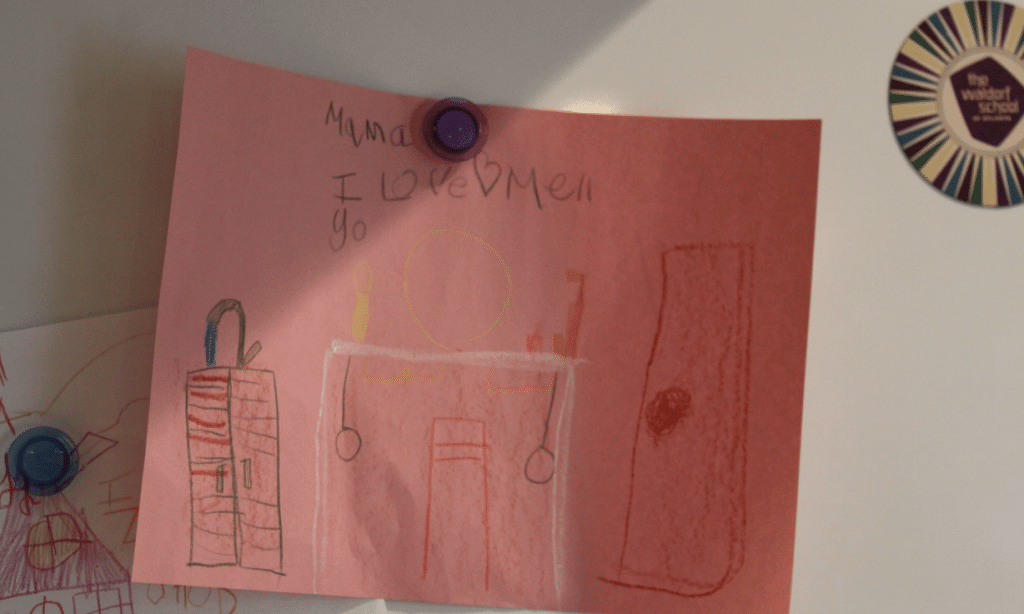
Marina speaks to Igor every day, she said. A few days prior, he had told her about Mamuka Artmeladze, a 43-year-old man from the country of Georgia who died at Winn Correctional Center in early June. Sometimes, she can’t believe what she’s hearing. “Is this the same country that I’ve lived in? Like, what’s going on?”
The family’s lawyer, Dmitry Efros, has been working to get Igor released on bond, but their bond requests have been denied twice, with the judge citing Igor as a “flight risk.” It was “a very arbitrary and capricious decision by the judge, to say the least,” said Dmitry, but perhaps unsurprising. President Trump fired more than 100 immigration judges in 2025, according to reporting by NPR, putting pressure on those that remain to align with the White House’s agenda and ramp up deportations. “Judges just come up with their own standards and don’t really follow the standards that are set up in the Board of Immigration Appeals,” said Dmitry, who added that he’s seen this with other clients in the last six months.
He’s filed an appeal for Igor that’s now with the Board of Immigration Appeals, though he doesn’t think the case will be resolved anytime soon. “This decision takes a long time these days, just because of how backlogged the courts are,” he said. Igor’s asylum hearing is around the corner. Given his pending claim and his access to good legal representation, Marina is optimistic, she said: “There is no way they deport him. I will never let that happen.”
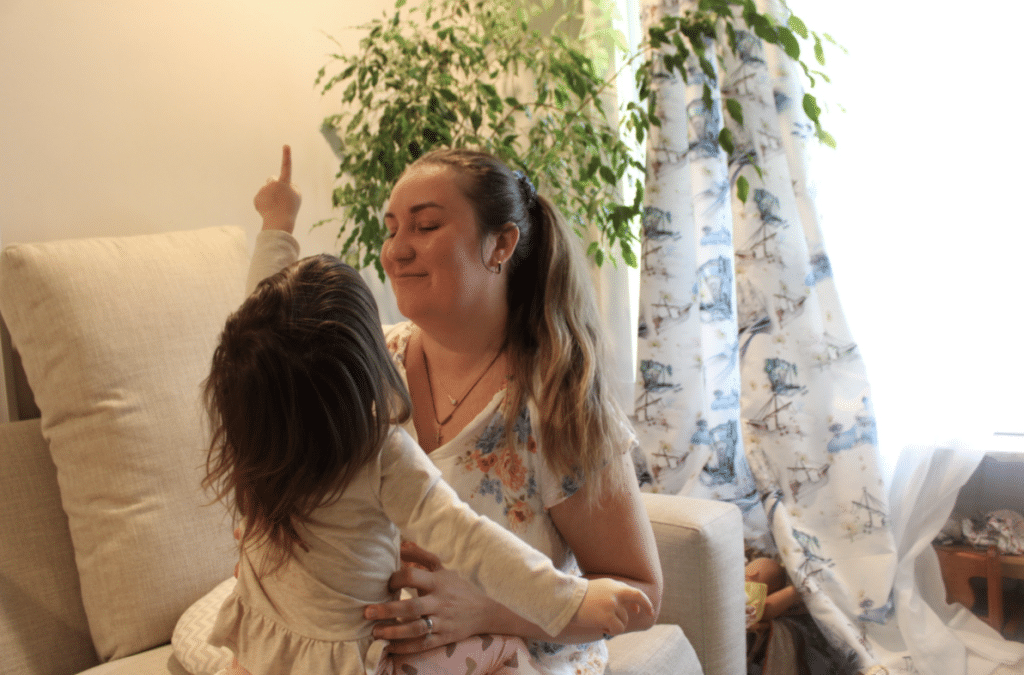
Incarcerated in Louisiana, Igor is missing out on precious moments, said Marina. “When he left, the baby girl, she just learned how to flip. She didn’t even crawl. Now she’s standing and crawling and eating solids, and he doesn’t see any of that, so he’s missing the whole babyhood stage.”
She’s been trying to manage her kids’ anxieties around their situation, but it’s been hard. “I’m all the time on the phone with the lawyers,” she said. “My six-year-old speaks very good English, so she understands everything they’re saying.” They don’t understand why their father is in jail. Doing her best to explain, Marina has told them, “There are certain groups of people that don’t want people from other countries coming to this country,” while at the same time assuring them that they “shouldn’t feel that way, because you’re born here, and this is your country.”
Her six-year-old’s response? “She’s like, But if you are not welcome, I am not welcome.”
Authors


Related Articles
After a sewage eruption at Stewart Detention center, some detainees are still not drinking the water
“The smell is still there, it’s lingering,” said one advocate, who’s been reporting on conditions
This Georgia resident was planning his wedding. Now, he’s on hunger strike in Folkston, fighting for his release from ICE detention
Around 500 people at the Folkston detention facility continue their hunger strike, protesting health and safety conditions, and prolonged detention
Kashmiri filmmaker and GSU alum behind Atlanta-filmed ‘Saffron Kingdom’ released after unlawful detention
The arrest comes as the Trump administration has ramped up immigration crackdowns across the U.S. — and its use of detention against pending cases, like Sheikh’s.