Humidity, tough times, or the World Cup – nothing stopped community members from showing up for World Refugee Day
People who came to Georgia as refugees face cuts to food benefits, Medicaid, and more. But spirits remained high at the annual celebration in Clarkton on Saturday.
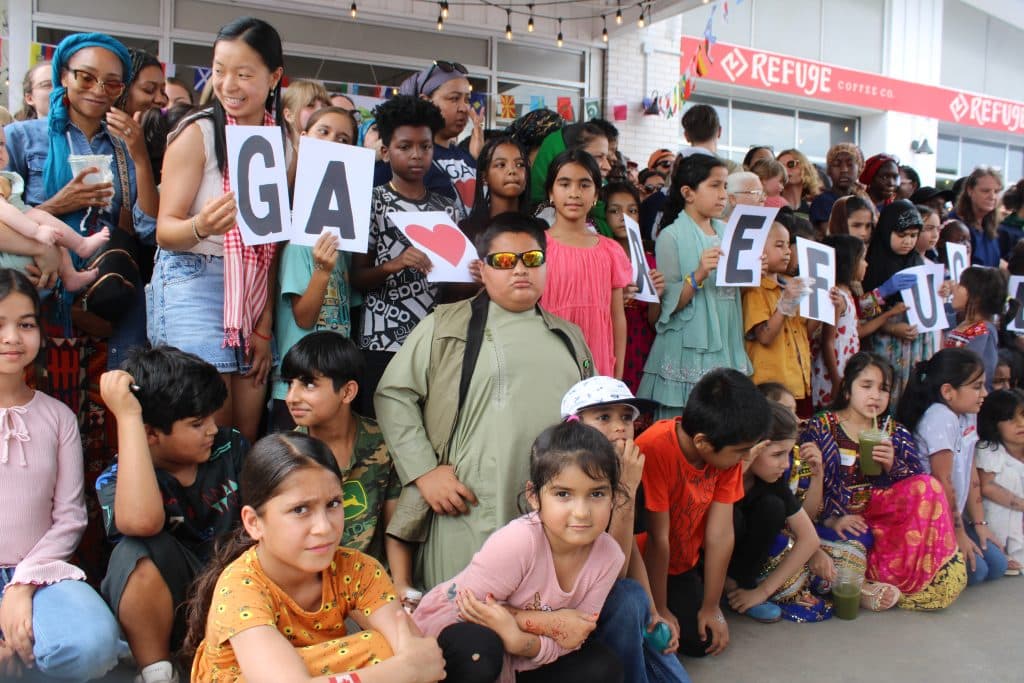
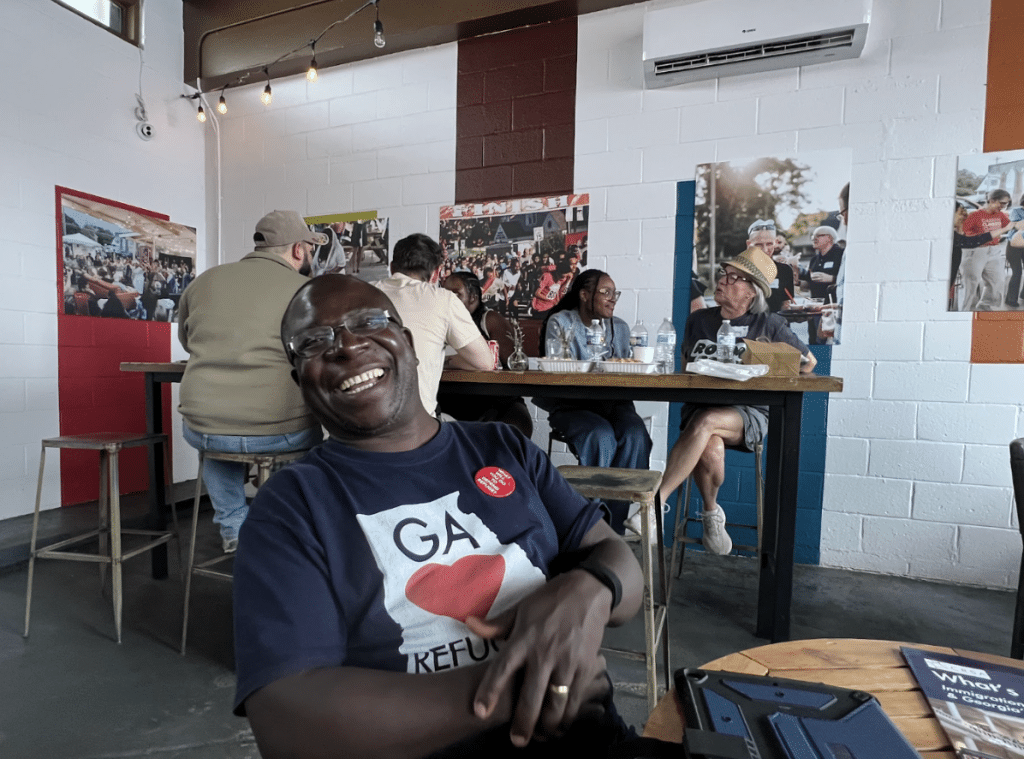
Crispin Wilondja stood in front of Refuge Coffee in Clarkston on Saturday, addressing a crowd of people with roots from all over the world. “I am from the DRC, the Democratic Republic of Congo,” he said, his voice loud and smile wide. “I’m here to celebrate refugees who make this country great.” His audience cheered and clapped.
The crowd had assembled on World Refugee Day, an occasion marking the passage of the 1951 Refugee Convention—a United Nations treaty initially signed on to by 26 countries, including the U.S.. Passed in the wake of World War II, which left over 60 million people displaced, the treaty defined and outlined the rights of refugees.
As the ground continues to shift for those arriving in the U.S. as refugees or asylum seekers, this year’s celebration differed from the 2025 gathering, which took place at Stone Mountain’s Eritrean Community Center. President Donald Trump’s refugee ban was then just a few months old; now it’s been more than a year and a half since the U.S. admitted any refugees apart from a small handful of white South Africans. Immigration paperwork for people from the 75 countries on the White House’s visa ban list—whether for green cards, visas, or asylum applications—is stuck in an indefinite limbo. And with the passage of the One Big Beautiful Bill Act last summer, food benefits have been dramatically reduced for most immigrants and refugees. In October, Medicaid cuts are also expected to take effect.
Aimee Zangandou, who heads refugee and immigrant services for Inspiritus, said about two-thirds of their clients will be impacted by those cuts. “We anticipate that all those refugees that have [arrived] in the past five years will not be eligible,” she said, standing behind Refuge Coffee’s signature red truck. “It’s a crisis.”
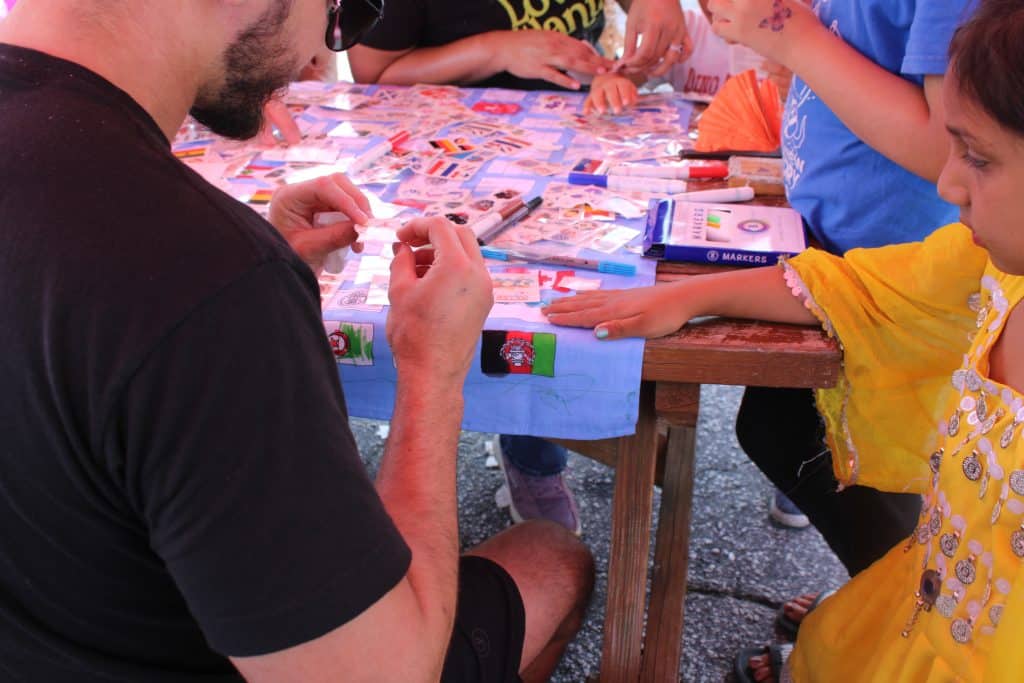
Still, spirits were high on Saturday. Children ran around freely, some sipping on matcha, others getting temporary tattoos at a table covered with flags from around the world. A few squeezed the blocks of Nee-doh that had been in one of the surprise toy bags.
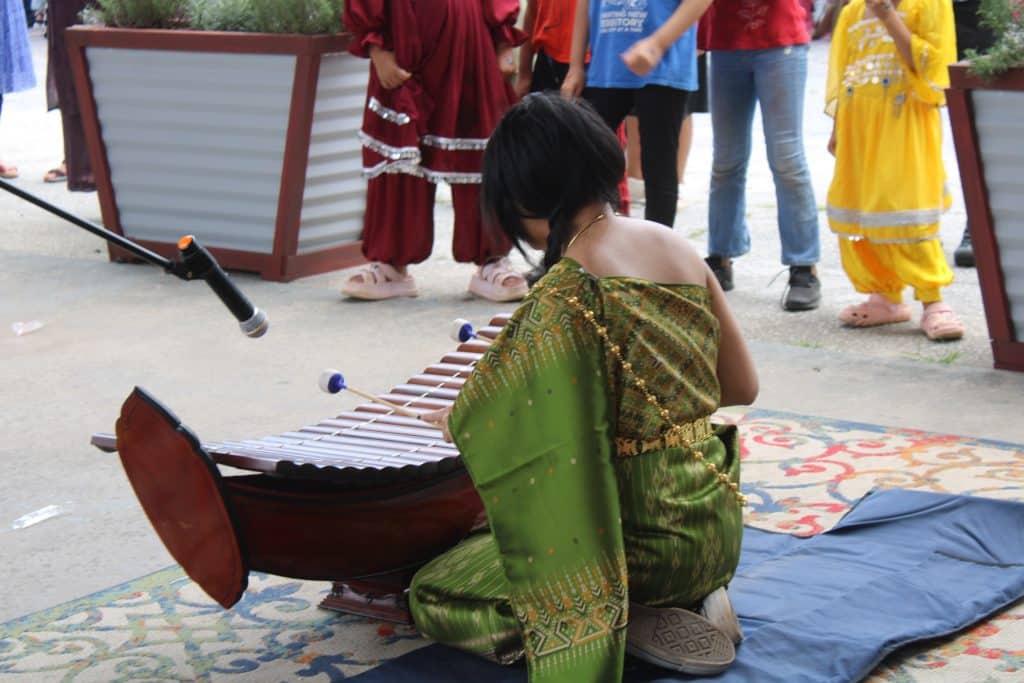
Between speakers, attendees at the four-hour event watched performers including Dar Nai, who sang in Karen, the language spoken by the ethnic Karenni people in Burma; the South Asian fusion rock group Jaago Band, fronted by Bangladeshi American Tanjina Islam, a Democratic political activist; and Eliza, a young woman from the Laotian American Society playing the traditional ra nat, a wooden xylophone-like instrument shaped like a boat.
Standing beside Eliza, a Kim Lattanaxay from the Laotian American Society addressed the crowd. “We are also children of refugees,” she said, explaining that many Lao people immigrated here in 1975 in the wake of the Vietnam War. “We are so glad to be included in Refugee Day, and to be reminded that we are also not forgotten.” Young children, some dressed in T-shirts, others in traditional shalwar kameez, watched from beside the stage as she spoke.
She also shared a recent win: The Lao heritage flag—rather than the official flag of the country, an authoritarian state under one-party rule—is the one that is now recognized in Georgia. “As of 2025, the Laotian American Society has worked with the Senate and House representatives, officially making the red flag of the three-headed elephant the official heritage flag of Laos, and that is what is being recognized in Georgia to represent Laos,” Kim said.
More than three million people have arrived in the U.S. as refugees since 1975, according to the United Nations. Worldwide, there are over 41 million refugees; twice the number there were a decade ago. Notable though, the number of refugees decreased from 2024 to 2025, as more than four million refugees returned to their countries of origin; mainly the Democratic Republic of Congo, Sudan, Syria, and Afghanistan. Georgia has welcomed well over 10,000 refugees in the last decade, the largest numbers from the Democratic Republic of Congo, Myanmar, Syria, and Afghanistan. From October 2025 to January 2026 though, Georgia admitted just 37 refugees, all of whom are of South African origin.
Crispin Wilondja, who is a Lutheran minister, was appointed vice chair of the Coalition of Refugee Service Agencies (CRSA) on Saturday. He’s frustrated with the politicization of immigrants and refugees, he said, cooling off inside the coffee shop as the event began to wind down: “ There is a big gap between a refugee you see on TV, with how refugees are depicted, and to meet a refugee to hear their stories. I have to tell people, no one chooses to become a refugee, no one chooses to flee your country, but you flee when that becomes the final option to survive to save your family.”
He holds three master’s degrees in biology, philosophy, and theology. But when he started working part-time at a Decatur school for young girls whose families came here as refugees, he said, “no one asked me about my education or things like that, so I was just ‘bus driver.’” Later, when he was laid off from his full time job as case manager at a local refugee resettlement agency, the head of the school in Decatur learned about his background. “They said, Mr. Crispin, can you teach? I said, Teach? Teaching has been my life. I can show you all my degrees. She said, Wow,” he said, laughing. “Those are things we go through as refugees.”
Author

Related Articles
Free or low-cost mental health services in Metro Atlanta, many offering counseling in multiple languages
Finding mental health support isn’t always easy – especially for residents in Metro Atlanta who may face barriers like cost, language, and cultural sensitivity.
Venezuelans deported grapple with new realities in their country, amid earthquake aftermath and political upheaval
One former GA resident, now back in Venezuela, shares his story.
29-year-old dies after weekslong stay in Georgia immigration detention center
Prisciliano Trejo, who had leukemia and had been in ICE custody, died on July 24.