In the dark: an especially cold winter for one family
Afghan family of 9 has not had electricity for more than 10 days, despite paying utility bills and rent.
UPDATE 1/20/2025: After learning about the family’s situation, DeKalb County Commissioner Ted Terry alerted DeKalb’s Code Enforcement office as well as a local refugee agency. The family has been placed in a temporary apartment, and they now have heat and hot water. While Mr. Naeemi is grateful, he’s frustrated that finding legal support for his case has been so hard. 285 South has reached out to the property management Asset Living, for an update on the electric repairs on the Naeemi’s apartment, as well as Dekalb County’s Code Enforcement office, but neither have responded.
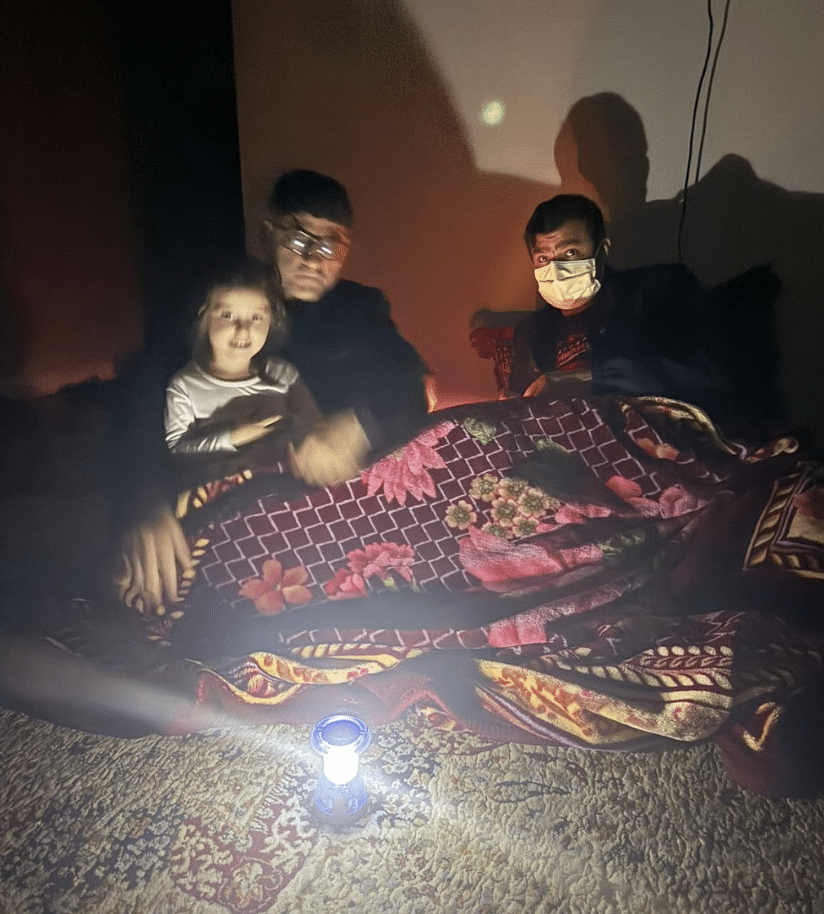
Since Fazlullah Naeemi moved to Metro Atlanta from Afghanistan 11 months ago, he’s paid nearly $6000 in electric bills for his three bedroom – two bathroom apartment. He’s been paying those bills consistently, as well as $1780 in monthly rent. But for the past 10 days and as winter has really set in, with temperatures often dropping below freezing on some days, he, his wife, and their seven children have had no electricity in their apartment.
No working stovetop or oven, no working fridge, no washing machine, no dryer, no hot water. And no heat.
At night, Fazlullah ’s wife and children have been sleeping at friends’ or relatives’ houses – but it’s a lot to ask – especially with such a big family. He and his elder daughter work the night shift at the airport where they clean the inside of airplanes between flights – so they sleep during the day in the apartment – when it’s not as cold.
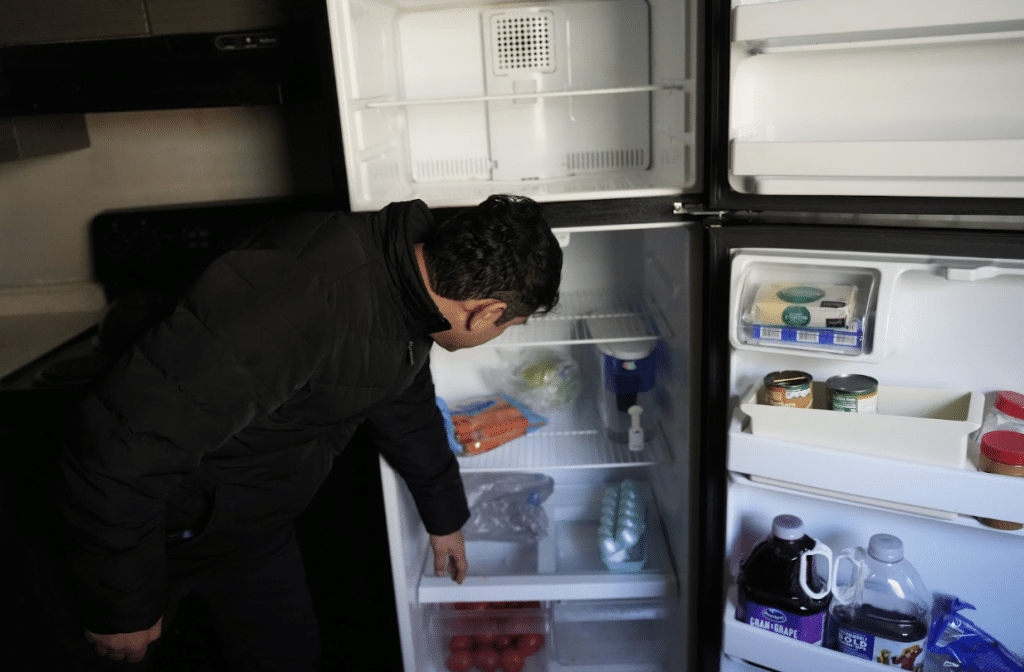
When 285 South went to visit them at the Brentwood Apartment complex off North Decatur Road on Thursday, Faizullah opened the door to his fridge in the dark kitchen. The smell that permeated was not rancid – but close. In it were tomatoes, a bag of carrots, a carton of eggs, a handful of condiments, and two cartons of cran-grape flavored Ocean Spray. Most of the food, he said, he’s had to throw away.
“His refrigerator was full of food and everything,” explained Ahmed Sultani, a case manager with the Afghan American Alliance of Georgia (AAAGA), interpreting for Fazlullah, who speaks Dari. “As a result of the lack of electricity, everything is gone. He just put it in the trash.”
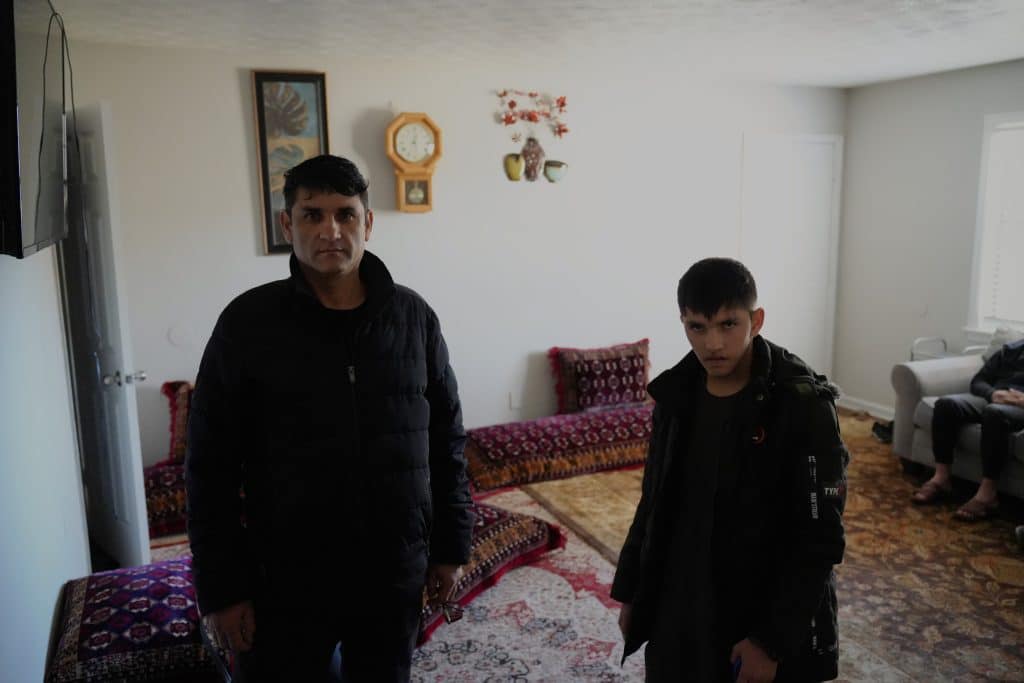
Fazlullah’s wife, Bibi Jawhar, who normally makes traditional Afghan rice, meat and vegetables dishes that require a stovetop – had not been able to cook in almost two weeks. For dinner that night, a cousin who lives in the English Oak apartments in nearby Clarkston was coming over to bring home-cooked food. “It’s a big challenge and problem for us with our kids,” she told 285 South, in Dari, with Ahmed interpreting for her. “We don’t have electricity. We don’t have food to cook here.”
Bibi Jawhar spends most of the day at home in the apartment with her 17-year old son, Ahmad Farzad, who has a disability. They’re wrapped up – he was wearing a heavy black jacket and she was covered in a shawl. Once the other kids – who range from ages 5 to 15 – come home from school – they’ll head over to a relative’s house for the night. They haven’t been faring well either, Fazlullah said. “As a result of the cold weather, they got sick. But anyway, I sent them to the school.” At least it’s warmer there.
Despite the fact that Fazlullah has been paying rent and has been paying his Georgia Power bills – there seems to be no immediate solution to his problem.
Electrics gone bad
Fazlullah first noticed something was wrong in the apartment around five months ago, when the boiler in the bathroom was leaking water. But even before that, something felt off. He’d been paying several hundred more than his neighbors in electric bills since he moved into the apartment in January (his first bill was for $475, and hovered around there, or more, for months, while his neighbors paid around $100). He said he contacted the leasing office. They sent a maintenance person – who came and observed the leak – but didn’t fix anything.
Then, around December 10, his apartment went dark.
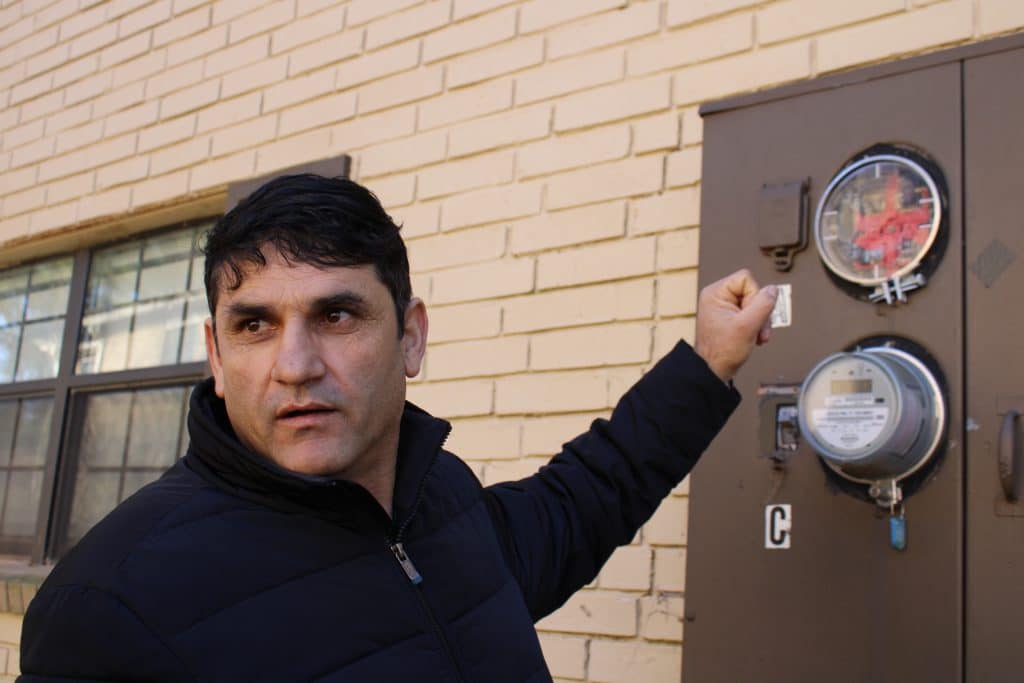
That’s because, Fazlullah said, he called Georgia Power, alarmed by a bill he received for $905. He said a technician came out to inspect his apartment. The technician, Fazlullah said, then removed his meter because the apartment’s electrical system was a fire hazard.
“Georgia Power said the leasing office should fix these wiring systems. They said if they don’t fix this wiring system, then fire will happen,” said Ahmad, translating for Fazlullah.
Fazlullah then showed 285 South a copy of a letter, dated December 11th, that was from Georgia Power and addressed to the leasing office. He said it was left in the doors of the leasing office. It reads: “In our telephone conversation I left a voicemail message (a letter left at your address on 12/11/24 informed you that your meter base weather head service pole (pedestal) is in need of repair or replacement. This is important and necessary in order to maintain a safe environment for you, the public and our employees.”
The letter also says that the meter socket needs new clips.
Fazlullah told 285 South that the leasing office has been saying they will repair the electric issue and the meter. But on Thursday, it had already been 10 days with no electricity.
On December 17, Ahmed accompanied Fazlullah to the leasing office, determined to get a timeline on how long it would take to turn on the electricity in his apartment again. Brentwood Apartments is a complex managed by Asset Living – which according to its website, has a “portfolio to $55 billion in assets under management comprised of more than 285,000 units across the United States.”
The leasing office agent, he said, told him they had already put out a bid to find an electrician to fix the problem, but it was still unclear how long they would take to make the necessary repairs.
“When I came there they told me we released a proposal for a quotation. So then I asked them, how long do you think the quotation will take?” The leasing office agent was vague. “They told me, we don’t know.”
Desperate to get his family out of this unlivable situation, Fazlullah reached out to everyone he could think of, even calling Dekalb County Police, who showed up, he said, and said someone would contact him from the legal office (but they never did, he said). Not knowing where to turn after none of them had fixed the issue – he reached out to Ahmed Sultani, the case manager with the AAAGA.
Who’s to blame?
285 South reached out to Asset Living, as well as sent an email to its CEO, Ryan McGrath, alerting him of the situation and asking what the company was doing about it. At the time of publication, they had not sent a response.
285 South also called the Brentwood Apartment leasing office and left a voice message, but has not yet heard back.
A representative from Georgia Power did comment on the situation, after 285 South reached out. Matthew Kent, a spokesperson for the company, said they would pass along the case to the company’s executive customer service level and try to resolve the issue.
After 285 South shared an image of the meter box missing from Fazlullah’s apartment, Kent wrote an email saying: “There are some repairs needed before we can safe[l]y replace the meter, which is the responsibility of the owner, which in this case, is the apartment complex.”
Atlanta Legal Aid, a nonprofit that provides support for tenants, connected with Faizullah and Ahmed after learning about his case through 285 South’s reporting.
Fazlullah’s case comes in the wake of a new law in Georgia which went into effect this summer. HB404, also known as the “Safe at Home Act,” requires landlords to ensure rental properties are “fit for human habitation.”

Fazlullah worked for nearly 20 years as a security guard for the U.S. embassy in Kabul before moving to Atlanta, after receiving a Special Immigrant Visa (SIV).
He’s surprised by what he’s encountered here. “I don’t feel good here,” he said. What’s especially hard – no one seemed to have taken his problem seriously. “No one can hear us.”
When 285 South asked Fazlullah what he would do if the apartment complex didn’t fix the problems, there was an awkward silence. “What kind of ask is that?” Ahmed said. “He cannot do anything. That’s why we’re here to help them.”
Fazlullah said he feels trapped in the apartment. If he decides to move to another place, he would be breaking the lease and would have to pay a fee. “He is like a captive,” Ahmed said. “Like a prison; You cannot move. They cannot fix it.”
As 285 South left his apartment on Thursday, Fazlullah apologized. “I’m sorry we don’t have electricity to make you tea.”
UPDATE:
The leasing office called Faizullah on Saturday, offering to put him and his family up in a hotel or move them into another apartment. They also offered him, he said, $750 and some gift cards to buy food. The agent he spoke to said, “hopefully,” the electricity would be fixed by Monday.
Faizullah agreed to go to a hotel, but when he arrived, the leasing office had only booked one room for his family of nine. He asked for more rooms – and they booked one more – but that still didn’t fit all of them. He and his family went back to their cold apartment to sleep. That night, the temperature dropped to 27 degrees.
Authors


Related Articles
“If we’re not here, who is?”
This small nonprofit is a lifeline for hundreds of Afghans in the Atlanta area. But it may be on its last legs.
Kashmiri filmmaker and GSU alum unlawfully detained one year after debuting ‘Saffron Kingdom’
The arrest comes as the Trump administration has ramped up immigration crackdowns across the U.S. — and its use of detention against pending cases, like Sheikh’s.
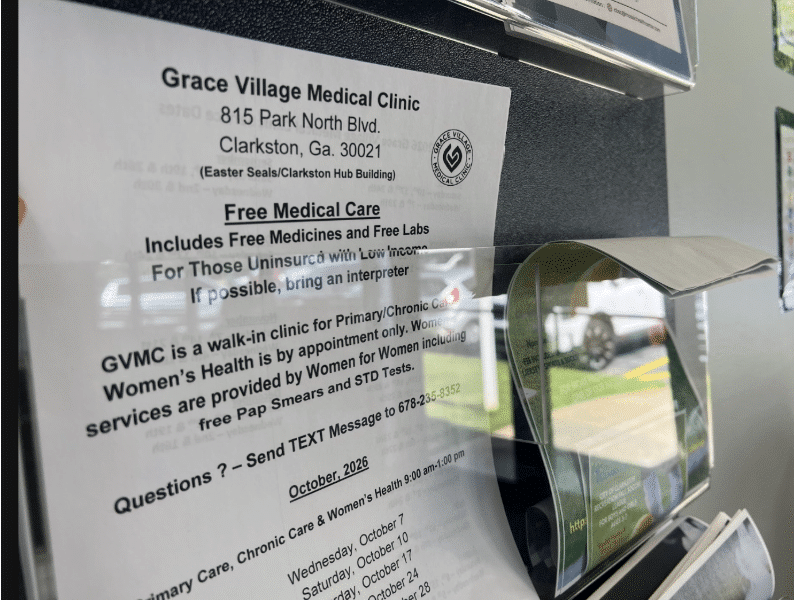
As Medicaid terminations go into effect, thousands of immigrants and refugees in Georgia face losing healthcare
So, we’ve updated our list of free or low-cost health care clinics in the Atlanta metro