
Newly arrived Senegalese find peace and support in Atlanta’s Westside—for now
With help from the City of Atlanta, local groups stepped up to support people from Senegal who crossed the border last year. But with the threat of mass deportation looming, they’re rushing to get paperwork done before Donald Trump takes office.
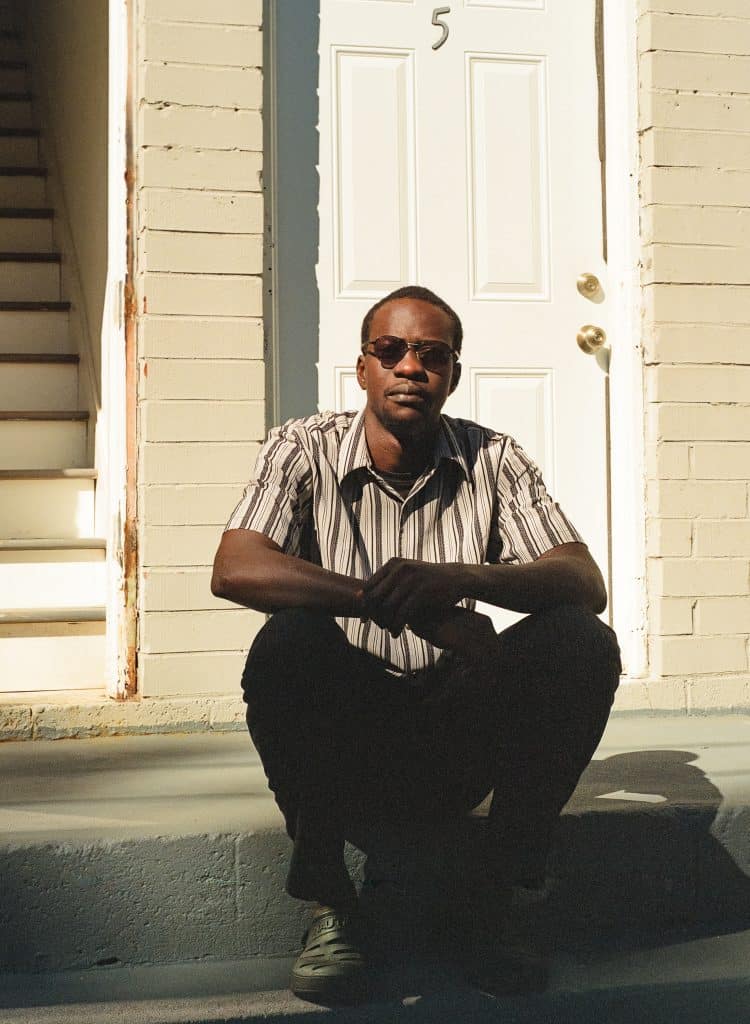
Serigne Seye’s favorite thing about Atlanta is the highway. “The ground is paved correctly,” he said, standing outside a beige painted-brick apartment building in the Westside of Atlanta, the sound of cars zooming down I-20 nearly drowning out his soft voice. The roads around where he grew up in the city of Kaolack, in western Senegal, were a lot bumpier, he said. As soon as Serigne gets his work permit, he plans on getting a driver’s license, so he can “drive a big car, a truck.”
On a recent warm fall day, the 32-year-old was wearing a neat collared shirt and sunglasses, and standing beside his friend Ibrihim, who had just walked out of his apartment. They were two of the 16 Senegalese men living in the housing complex—where they moved as part of a new program of the Atlanta chapter of the Inner-City Muslim Action Network (IMAN), a nonprofit launched in Chicago in 1996 that opened its Atlanta office twenty years later.
The bulk of IMAN’s work has been what’s called “green reentry”—supporting formerly incarcerated people to “ensure that they have a real life when they come out,” said communications director Zubair Zafar. But IMAN expanded its scope last year following reports of increasing numbers of Senegalese moving into the Atlanta area —part of a larger trend of people from Africa crossing into the U.S. via the southern border.
“Maybe a year and a half ago, there was a big influx of Senegalese migrants in Atlanta specifically,” Zubair said.
Now—as Donald Trump prepares to return to the presidency, buoyed by promises of mass deportation —IMAN said it’s hurrying to get asylum paperwork squared away, “as soon as possible in case there are mass deportations starting.” That’s something that immigrant support groups and attorneys around the country are also doing as quickly as possible.
Due to its relative political stability, Senegal has traditionally been a place that people migrated to from elsewhere in Africa. But as economic and social conditions have changed, more Senegalese have begun seeking asylum in the United States via Nicaragua, where people from many African countries can enter without a visa.
Serigne, who sold water bottles for a living back in Senegal, described his journey to the U.S. to 285 South as “very very difficult.” Using multiple modes of transport—planes, buses, feet—he traveled from Senegal to Morocco to Spain to Nicaragua to Mexico. Once he crossed the border, he flew to New York, where he lived in a shelter. He decided to come to Atlanta, at the request of a friend, “My friend talk to me, can you come to Atlanta?”
Once here, he had a surprise encounter at a local mosque, the Ikhra Center, where many Senegalese worship. Ibrihim, the brother of his school friend back in Kaolack, had also made his way to Atlanta “When I come here, I see him. I say, Wow.”
Cheikh Thiam, president of the local Senegalese community group Sencad, said many ended up in Atlanta because Senegalese at migrant shelters in New York heard they could find support in Georgia: “The word was spread—if you go to Atlanta, they will help you.” They were also drawn by an established Senegalese population already here, Cheikh added; according to an estimate from the American Community Survey, over 2000 people with origins in Senegal live in the state.
By late 2023, well over a hundred Senegalese migrants were living at one local mosque—“too many people,” Cheikh said. When the City of Atlanta got wind of the situation, the mayor’s office reached out to IMAN, said Tiffany Green Abdullah, IMAN’s grant manager. Meanwhile, Cheikh worked with other members of the community and local nonprofits to find housing: “[We] decided to spread them with families and get apartments for them with the help of other organizations.
Along with those of several other local immigrant-serving nonprofits, IMAN’s efforts were funded through a $10.8 million federal grant Atlanta received to support housing for migrants—amid a national uptick in the number of people who had recently crossed the border seeking asylum.
Since the staff at IMAN is Muslim, and some had even studied in Senegal before, the nonprofit seemed like a natural place for those who had recently arrived and in need of housing, to come to for support. “They [mayor’s office] knew, they’re Senegalese, they’re Muslim. Like, y’all are Muslim. You all [can] help,” Tiffany said.
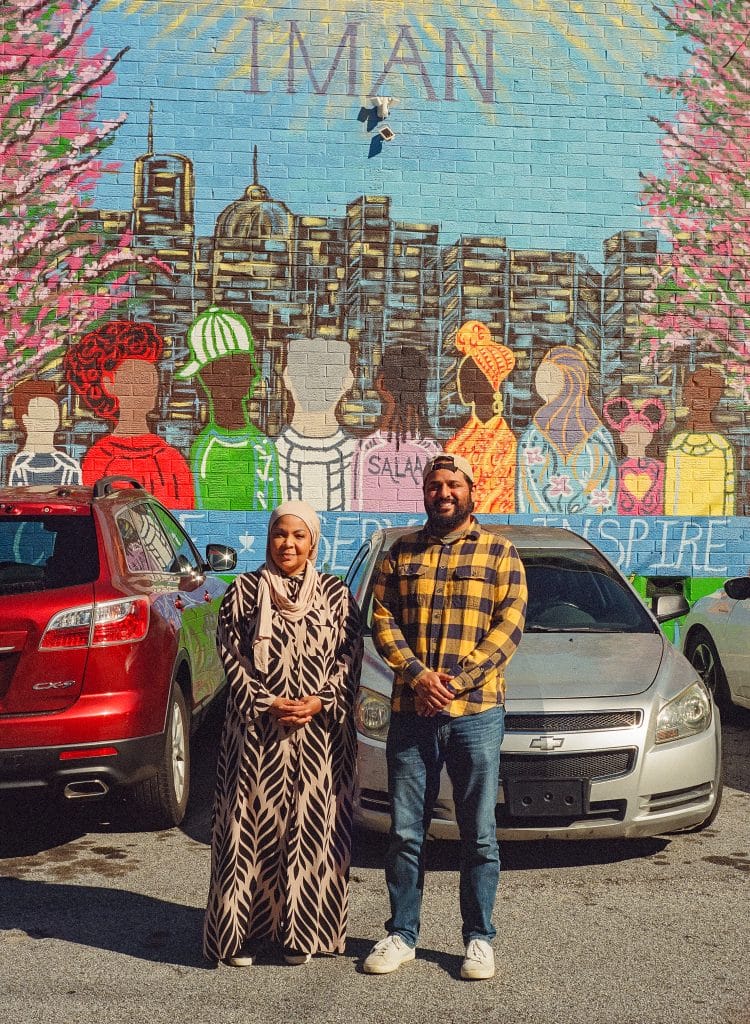
And, their experience integrating individuals into society was key. “We realized that a lot of the things that these migrants might need, we have the capacity and the competency for because of our work with green reentry—housing, vocational training, language training, things like that,” Zubair said.
With that funding, IMAN was able to provide housing for several of the men who had been living at the mosque. The organization also hired Hasib Abdulrahmaan to live and work as a full-time case worker in the apartment complex, which is a five-minute walk from IMAN’s office.
The language barrier, Hasib told 285 South, has been one of the biggest challenges for the men. He speaks French, and has studied in Senegal, where he picked up some Wolof, one of the country’s main languages. He’s been teaching English to many of the men. “You can’t speak to anybody and communicate anything that you need to in a new place that you don’t know much about,” he said.
Integrating them into American life is another thing he’s working on, “because American community life almost doesn’t exist,” Hasib said. “Senegalese focus on community life just naturally. It’s not like a thought. It’s just built into who they are.” Every day, he’s doing what he can to support them in developing that here. “It’s as simple as cooking together, eating together, making sure we’re praying together.” It’s natural to them, he said: “‘Where are you going?’ ‘I’m just walking up the street.’ ‘OK, let me walk with you.’”
Neither Serigne nor Ibrihim has a work permit yet, though both have applied for asylum. The application fees are upwards of $400, and IMAN said it’s still working on gathering enough funds to pay for the fees.
Until then, Serigne will continue with his routine. Exercising, learning English, taking on odd jobs, hanging out with the other men at the housing complex, against the ever present sound of the highway reminding him of his American dream.

Author

Related Articles
At the intersection of immigration and healthcare, stories “humanize what the systems can obscure”
Healthcare providers and community advocates came together to make space for stories about immigrant communities harmed by the U.S. healthcare system.

“They’re free to be kids here”
On a makeshift soccer pitch in a Decatur gym, middle schoolers from countries including Afghanistan, Congo, and Sudan speak a shared language (with a little trash talk mixed in).