“You’re not supposed to shy away from that”: At a weekend vigil, people remember immigrants whose lives were cut short
The service doubled as a fundraiser for the family of Jesus Manuel Arenas-Silva, who died in ICE custody in Georgia in July.
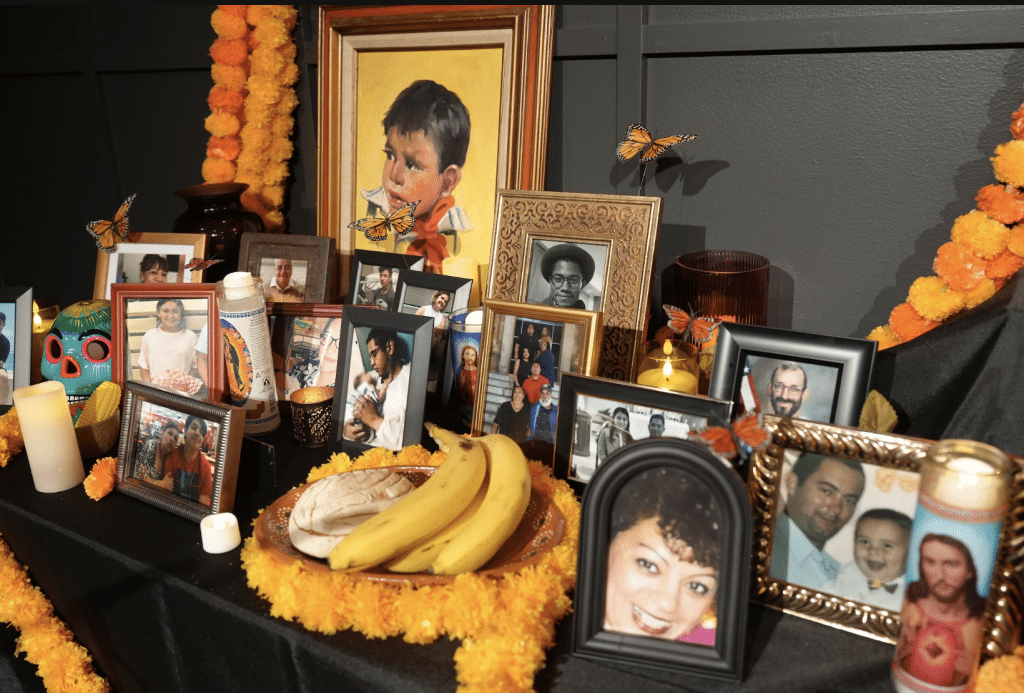
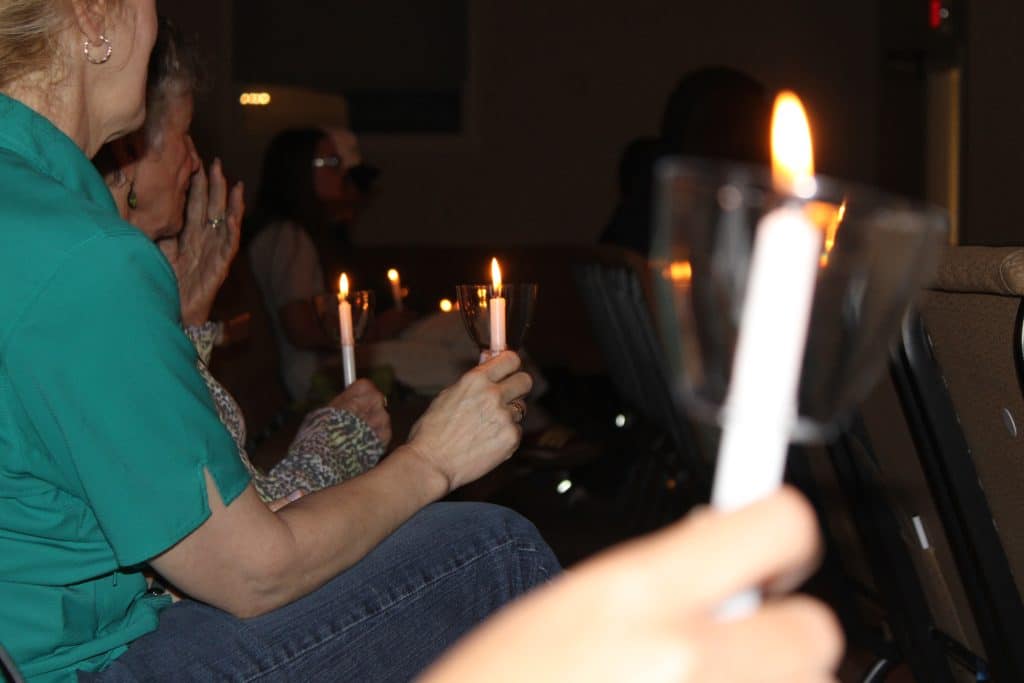
On Saturday morning, as torrential rain poured down outside and flash-flood alerts popped up on phones, nearly three dozen people sat facing an ofrenda at the Vinings Lake Church in Mableton.
Surrounded by strings of marigolds and small candles, the altar was full of photos of men, women, and children whose lives have been cut short by immigration enforcement, acts of hate, or the dangers of migration itself.
The pictures showed smiling people: Lorenzo Salgado Araujo holding a cake covered with strawberries on his 52nd birthday; Heber Sanchez Dominguez, from Mexico, wearing a black and orange baseball cap, looking up at the camera shyly. Eleven-year-old Joceylyn Rojo Carranza wore a pink T-shirt and held a basket of French fries. Another photo, a butterfly placed carefully in the corner of the frame, showed six-year-old Palestinian American Wadea al-Fayoume sitting in a white chair.
The vigil, called Remembering with Love: Every Immigrant, Every Victim, was organized by local chef and advocate Andres Carrillo, with support from El Refugio, Detention Watch Network, and the church itself, which had lent the space.
The event raised $2,000, Andres said—money that would go toward the burial of Jesus Manuel Arenas-Silva, who died in ICE custody in Georgia in July. His sister, nephew, and brother-in-law sat quietly in the back row of the dim room, fighting tears as, over the course of almost three hours, speakers walked up to the altar and shared stories about the people who had died.
Among those remembered was 15-year-old Javier Amir Rodriquez, the youngest of the victims in a 2019 shooting in Texas—when a young man who had published anti-immigrant and white nationalist posts online opened fire in an El Paso Walmart, killing 23 and injuring 22 others. “[Javier] loved soccer. He played at his school and on a club team,” read Andres, who grew up in El Paso. “He was known for being funny and doing pranks. His teachers described his smile as infectious. He had gone to Walmart with his uncle Octavio, who was cashing his check. His uncle wanted to gift him school supplies, new clothes, and a haircut.”
Where they had the information, the organizers included the last recorded words of the victim. State Rep. Akbar Ali told the story of Wadea al-Fayoume, who was killed in an Islamophobic act of hate. His last words were “Mom, I’m fine.”
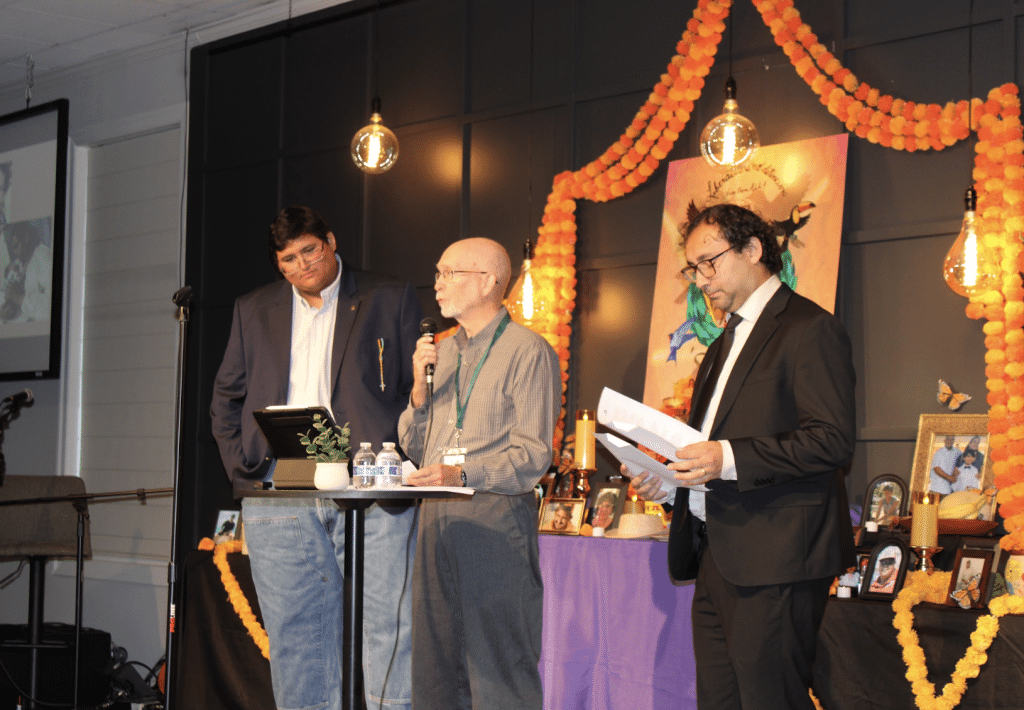
Andres focused on the everyday details of people’s lives because “it was important for them to feel human,” he told 285 South. He spent over six weeks preparing for the vigil, digging up as much information he could to create a comprehensive public record (you can find a recording of the entire vigil here). “There are some people we have a lot of information about. There’s people we have very little,” he said—especially deaths in ICE custody or on the border. “We talked about Jose Chajon-Raxon,” a man who died after a medical emergency at the Delaney Hall ICE detention center in New Jersey. “We don’t even have his age. We don’t have a picture. We don’t have the day he died.” He finally found a photo on Facebook, but “I’m just like, I can’t—I don’t know if this is real.”
As the vigil went on, the personal details grew more sparse. State Rep. Ruwa Romman and Amilcar Valencia, executive director of El Refugio, read out the names, ages, countries of origin, and places of death of the 21 people who had died in ICE custody in Georgia between 2005 and August 2026. When Ruwa got to Jesus Manuel Arenas-Silva, the three family members stood up. Amilcar told attendees that many of the families they’ve been supporting, whose names they had just read, including the family of Jesus Manuel, “always say this: I don’t want another tragedy to happen, I don’t want another family to live what we are dealing with.”
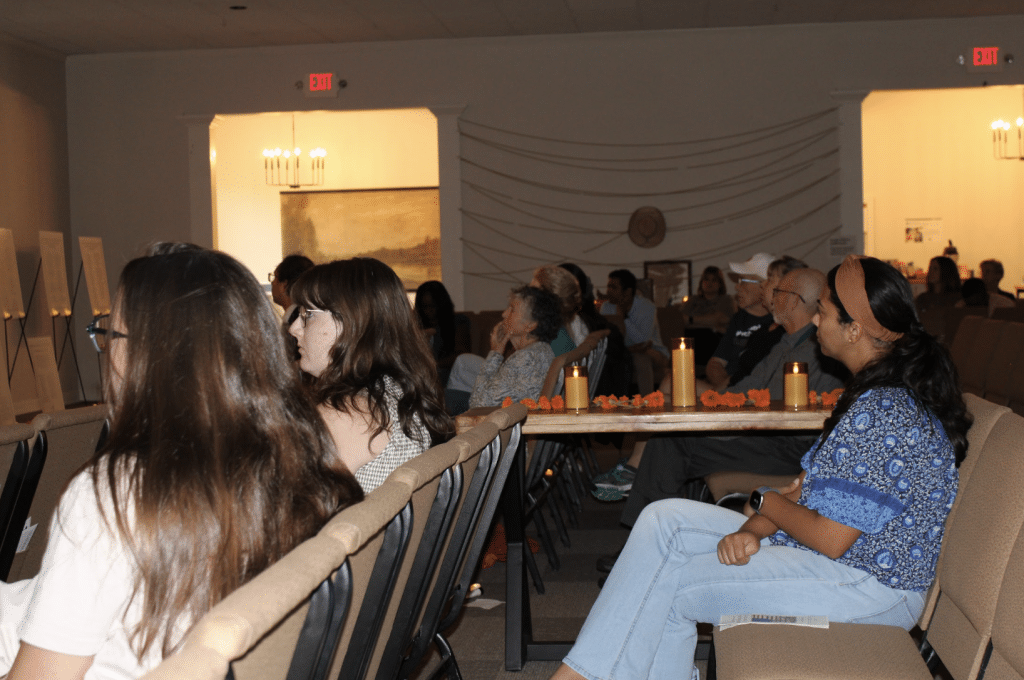
By the time the reading of the names came to an end, the rain had died down. A church member passed out small white candles, and community members lit each other’s in turn. Amilcar sang “Confieso,” a song about the death of a loved one, originally written by Puerto Rican musician Kany Garcia, and Melissa Rodriquez followed after him, singing “Amor Eterno”—“Eternal Love,” also about the loss of a loved one.
When Andres’s own grandmother died when he was a kid, he remembers reading a news story about it that felt “so simplistic.” All the details that make a life—“they built a life here, they were married for decades, they have three kids”—weren’t there. On Saturday, he said he wanted to help create the space for those stories to come to life, as painful as it was for him, and possibly others. “I grew up Catholic. You’re supposed to go to the heart of human suffering, you’re not supposed to shy away from that,” he said. “It is almost your responsibility to know this because you reading or writing about this pales in comparison to the people who have had to live through this.”
Author

Related Articles

Leaked reports show surge in use of force in Georgia immigration detention centers
Use of force surged 63% at two Georgia immigration detention centers
One Year After Georgia Hyundai ICE Raid, Community Fear Persists
A closed Asian grocery store, many Latino workers still in legal limbo, and discomfort with police presence.