ICE has two offices in downtown Atlanta. Amary Sall arrived for an appointment at the wrong one—and was deported
Amary and his wife, Gail, had recently opened a restaurant in Decatur. Now she’s left to pick up the pieces of their life.
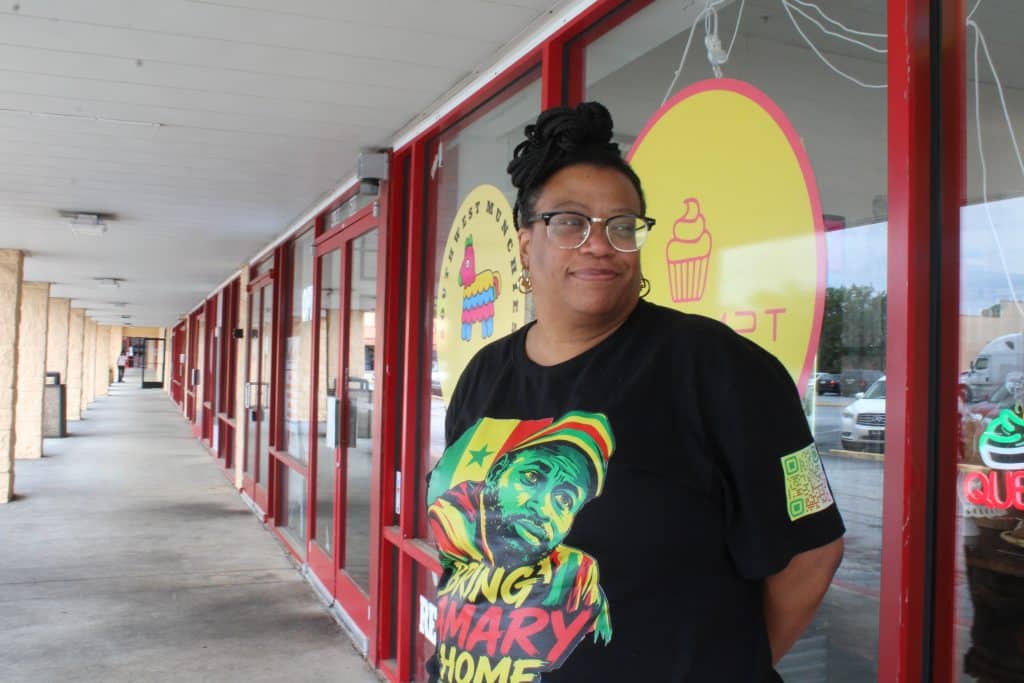
Gail Sall bounces her grandnephew in her lap while she waits for her son to show up and help out at Southwest Munchies, the restaurant she and her husband opened last fall in a strip mall along Covington Highway in Decatur. They had big plans for it: Southwest Munchies would be a place that would draw people not just for tacos, salads, and sweets, but also for a sense of community. The rectangular space, with local artwork filling the walls, would host regular events like cake-decorating classes and bingo nights, they hoped.
Amary’s immigration case had been underway when he and Gail first met in another restaurant kitchen—a few years ago and several miles away in Atlanta’s West End, where Gail was operating a catering business out of a cloud kitchen and Amary worked as a janitor. Gail being American and Amary originally from Senegal, they bonded over their love of Akon, the Senegalese American musician. “I played Akon,” Gail says. “I didn’t know Akon was from Senegal, so [Amary] was mouthing all the words to it. That’s when he started being more friendly, because he was like, Oh, she likes Akon.”
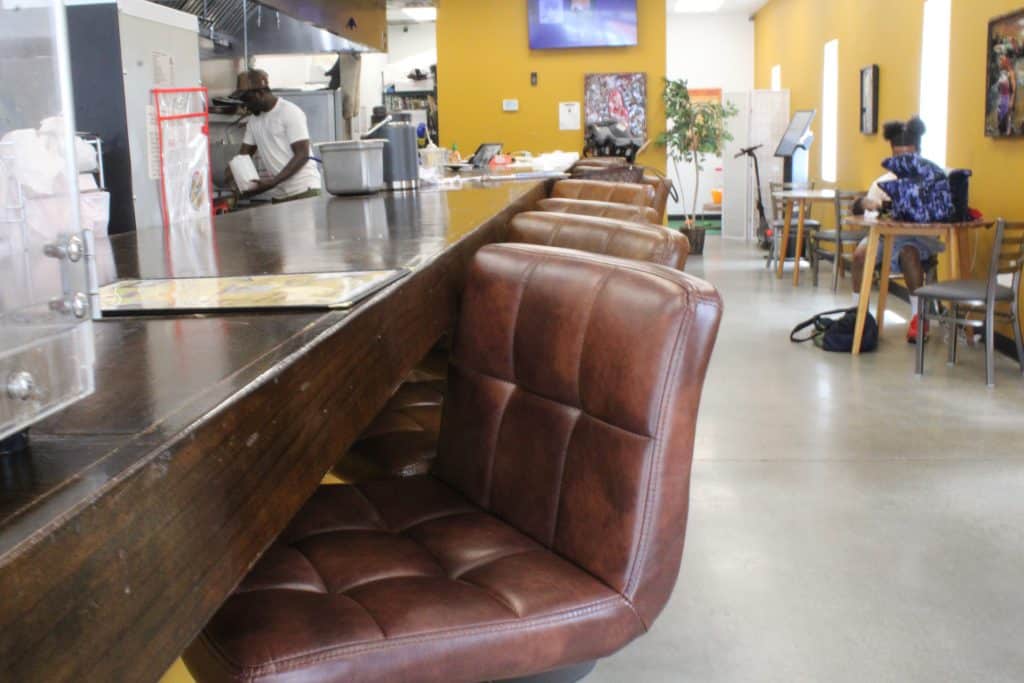
Today at Southwest Munchies, colorful cupcakes sit on display. It’s around lunchtime on a weekday, and a few people trickle in over the course of a few hours, but generally business has been slow. The brown leather barstools that Amary picked out line the counter that runs through the space.
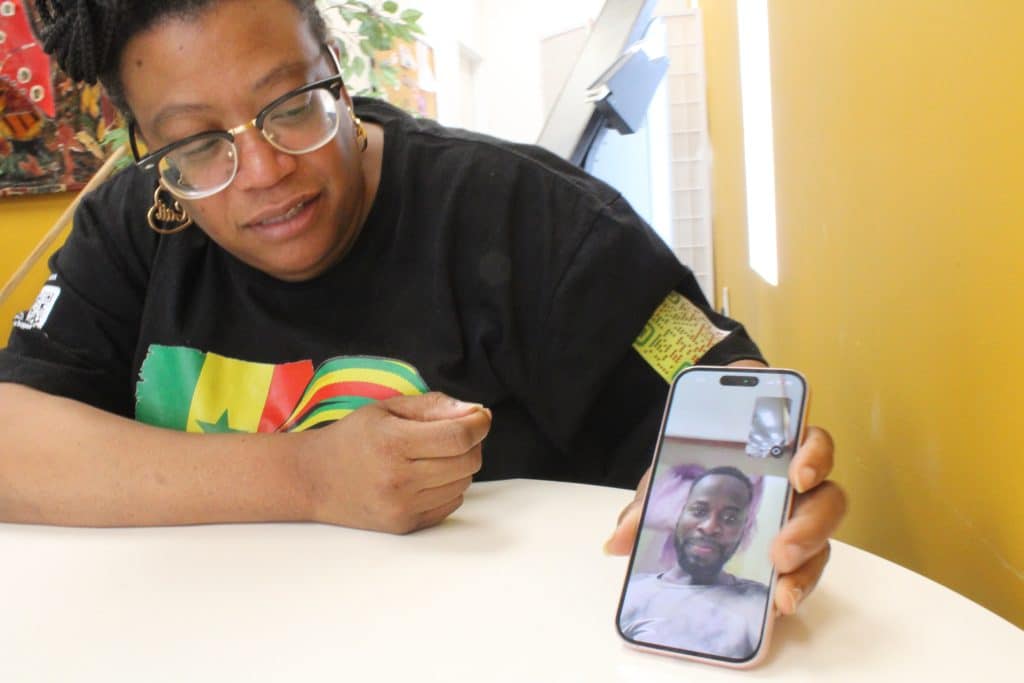
But Amary never got to see the stools, nor the restaurant itself, after it opened. He’s over 4,000 miles away in Dakar, Senegal, and his only access to this space is through Gail’s iPhone. In January, Immigrations and Customs Enforcement (ICE) deported him back to the country that he’d fled in 2022 out of fear of political violence due to his political affiliation.
Since then, Gail has been trying to keep her life—and the restaurant—afloat, but it feels like an uphill battle. “This is just declining into nothing,” she says.
Since Amary was deported, Gail has had to give up the cloud kitchen space she’d rented. She’s also moved out of her apartment and in with her parents. “It’s just increasingly harder to try to keep it all together,” she says, fighting back tears. With mounting bills, and unforeseen costs brought from Amary’s detention and deportation, her bank account is dwindling. “My mom now took over paying my car insurance.”
Amary’s arrest, detention, and subsequent deportation have also blown open her worldview, offering her a front-row seat to the workings of the immigration system. Amary had been in the country since 2022, and his immigration case was already underway when Gail met and married him. Neither of them expected what happened early on a Sunday morning last September, when multiple ICE agents showed up at the apartment the couple shared. “The minute he stepped outside, they snatched him,” Gail says. “He has no socks, no shoes, and [they] took Amary, still barefoot and in pajamas.” He ended up held for nearly four months at the Folkston ICE Processing Centre before his deportation early this year.
Amary’s ordeal started nearly four years ago with a simple mistake.
He’d gotten a Notice to Appear—a Department of Homeland Security document initiating the legal process to decide whether someone who has crossed into the U.S. without papers should be deported or given a chance to make a case for staying. According to a legal filing, Amary’s Senegalese housemate in Southwest Atlanta, Ndongo Dieng, also had an immigration court hearing the same day—August 3, 2022. They decided to go together. Neither of them spoke English or had a car; Amary had arrived in the U.S. just a few months prior. They asked Elhadj M. Gaye, another Senegalese housemate who did speak English and had been to the ICE office before, for directions.
Wanting to leave nothing to chance, Amary and Ndongo left their apartment complex two hours before their appointment, around 7 a.m. They rode a MARTA bus before switching to a train headed downtown, then walked a few minutes to 180 Ted Turner Drive for Amary’s 9 a.m. appointment. They arrived over an hour early.
Then court officers informed them that they were in the wrong building: There are two immigration court locations in downtown Atlanta and they were supposed to be at the other one, at 401 West Peachtree, which is 1.3 miles away by foot, from the Ted Turner location. According to the filing, Amary thought the officers tried to explain where the other ICE office was, but with limited English, he wasn’t sure. Leaving Ted Turner Drive, Amary and Ndongo asked multiple people for directions. Eventually, they took a MARTA train to Five Points, then walked 20 minutes to the West Peachtree location, where they arrived around 10:25.
When they got there, the security guards told them they needed masks. So they went back out, wandering around until finding a store that was a 20-minute walk away. By the time they got back, it was 11:30 a.m. They were told by an assistant clerk, through an interpreter, that “the hearing is over, and we will need to wait for a letter in the mail,” Amary recalled in the legal filing.
The next day, Amary found a lawyer who filed a motion to reopen his case, which is still pending. Meanwhile, he continued with his daily life, working two jobs—one at the cloud kitchen and the other at a warehouse south of the airport. He and Gail became friends, and eventually married in April 2025.
Last month was their one-year anniversary. “Our anniversary was on WhatsApp,” says Gail. “We were just chatting on phones, just laying there, looking stupid.”
In 2025, the number of people placed in deportation proceedings for being “in absentia”—a legal term that means a judge ordered someone removed because they failed to show up for their court date—tripled to 50,000, according to a review of data initially reported by NPR. In large cities across the U.S., including Boston, New York, and Chicago, as well as Atlanta, in absentia removals have increased anywhere between 20 and 40 percent.
A number of factors may be driving the increase, according to lawyers and immigrant rights advocates. It might be because some people are scared to even show up at immigration court, having heard reports of ICE arrests there; it could also be due to clerical or bureaucratic errors.
“A lot of times people don’t even know that they have a hearing, or hearing dates can change without receiving the notice in the mail,” attorney Ruby Powers told NPR. Or, she said, “sometimes immigrants can move and addresses are not immediately updated with the court, or go to places like apartment buildings that have less consistent mail delivery.”
For Amary, it was the confusion between the different ICE offices, along with the difficulty of getting around downtown Atlanta by foot or public transit, on top of the language barrier—and it led to life-shattering results.
After ICE detained Amary, Gail contacted the offices of Georgia Senators Raphael Warnock and Jon Ossoff, hoping they could help expedite the adjustment of status she had filed on his behalf, in the hopes of bringing him back. “They were asking me to submit documents and things like that,” she said, “but it hasn’t amounted to anything.” She also reached out to the office of Rep. Nikema Williams, which told her it couldn’t help—the Trump administration, citing the threat of “terrorist attack,” had added Senegal to a list of countries whose nationals are restricted from entering the U.S.
She’s now asking the offices of Warnock, Ossoff, and Williams to investigate whether there were legal grounds for Amary’s deportation—given that his case was pending. According to Karim Golding, the executive director of the legal advocacy nonprofit the Law Library, a pending case before the Board of Immigration Appeals “carries an automatic stay of removal in ordinary removal proceedings, meaning the government was not supposed to deport him before the Board issued its decision.” 285 South reached out to Immigration and Customs Enforcement for comment, but as of publication, had not heard back.
Gail has also been asking her elected representatives to demand an end to absentia-based removals. 285 South reached out to the office of Senators Warnock and Ossoff, as well as Congresswoman Nikema Williams, for comment. A representative from Warnock’s office responded, writing they “have nothing to share at this point regarding this case.” As of publication, neither Senator Ossoff’s nor Rep. Williams’ offices had sent a response.
Sitting at a small table at the back of Southwest Munchies, Gail receives a call. It’s Amary, who’s calling from Dakar, where he’s been staying with a friend from elementary school. His voice is muffled; behind him, there’s a mattress on the floor. “Five months I’m here,” he says, in his limited English.
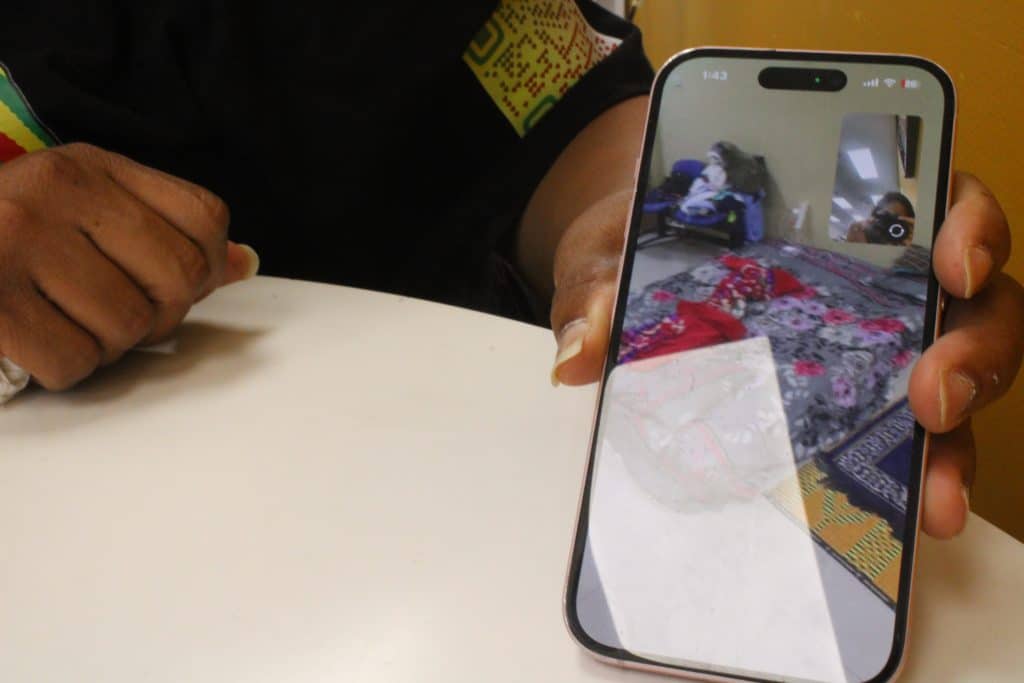
Half Puerto Rican and raised in California, Gail says that before meeting Amary, she wasn’t aware of just what the situation for immigrants can be like in the U.S. “I was in a bubble,” she says, “where our hardest decision that we’re gonna make is, like, where’s girls night? I never heard of ‘in absentia.’ I’ve never heard of due process, and so the more I dig into this, and the more I learn.”
She recalls a moment when she visited Amary at the Folkston ICE Processing Centre late 2025: “I go to the counter and I’m like, I’m here for Amary Sall. And they’re like, Well, you need his A number. I was like, So is he an A number? Is he a person? And the whole room got quiet and they were staring. We have more rights for animals.”
While Gail doesn’t have an exact plan just yet, the recent release of Gwinnett County resident Rodney Taylor from Stewart Detention Center gave her something to hang on to. “I’m not expecting anything, but it gave me hope,” she says. She’s also continuing to host events at Southwest Munchies, most recently, a meeting of a local Black Lives Matter chapter. She’s living her life between Atlanta and Senegal; thanks to a friend who works for Delta, she can fly free when there’s an open seat. She hopes to save enough money to buy Amary a car so that, at least for the time being, he can earn some money in Dakar driving a taxi.
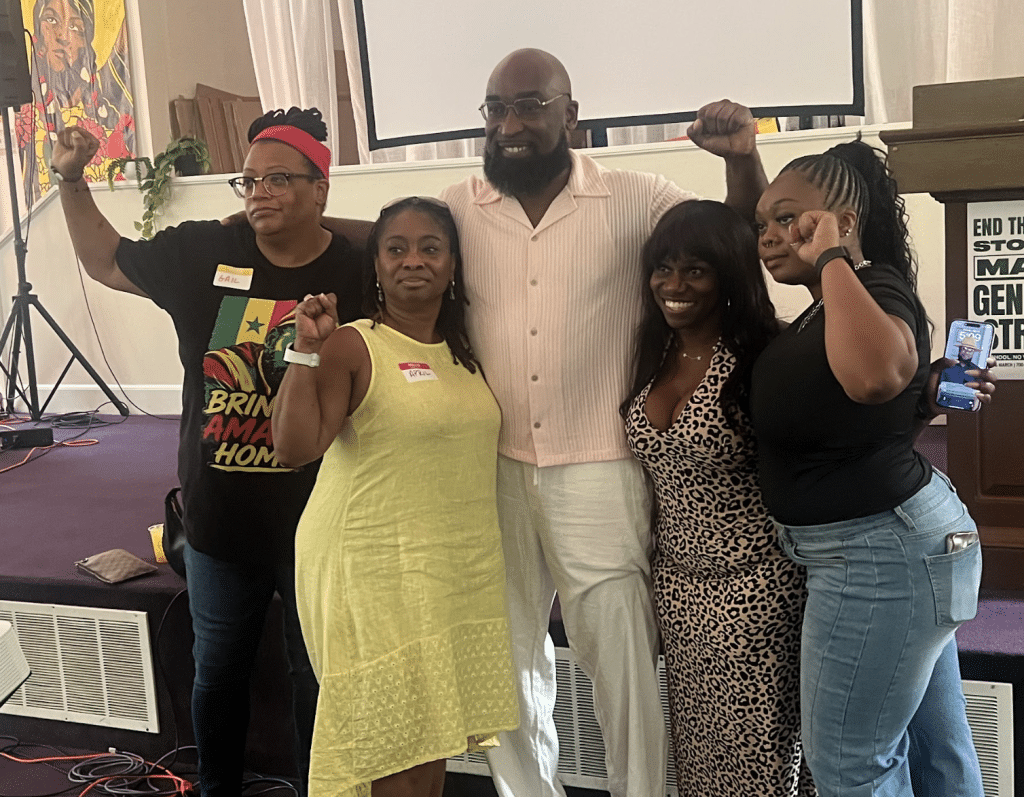
Author

Related Articles

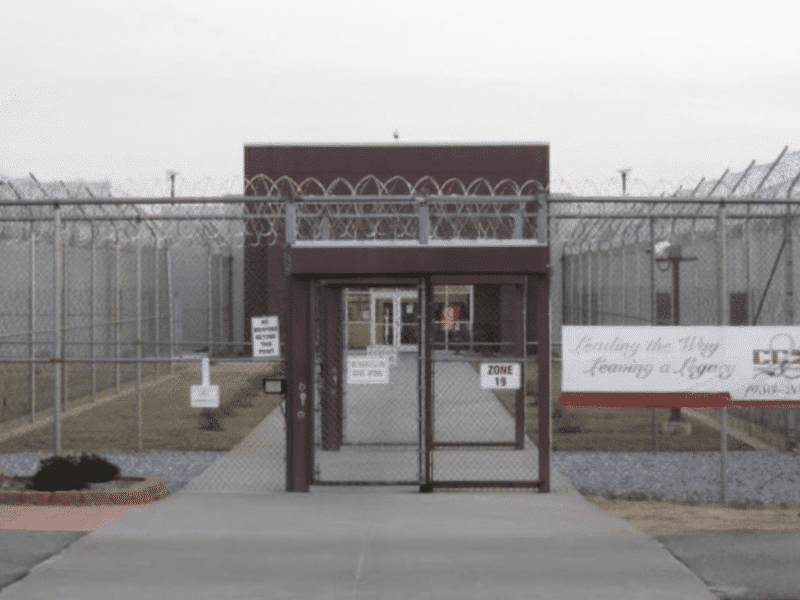
Leaked reports show surge in use of force in Georgia immigration detention centers
Use of force surged 63% at two Georgia immigration detention centers
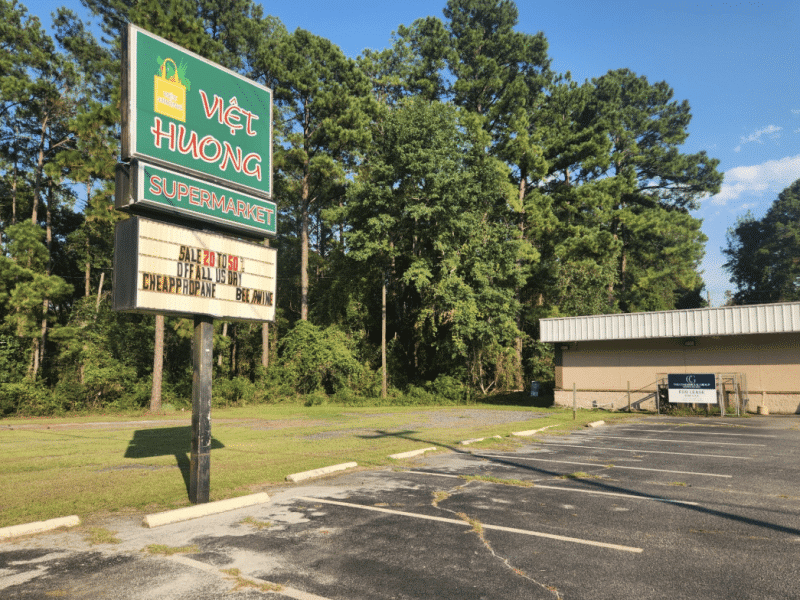
One Year After Georgia Hyundai ICE Raid, Community Fear Persists
A closed Asian grocery store, many Latino workers still in legal limbo, and discomfort with police presence.