
After 15 months in immigrant detention, Rodney Taylor is back home—but is still fighting for those left behind
“The Lord has for me what he has for me. He put it in my heart, in my spirit to continue this fight, so I’m not fearful of anything,” Rodney said.
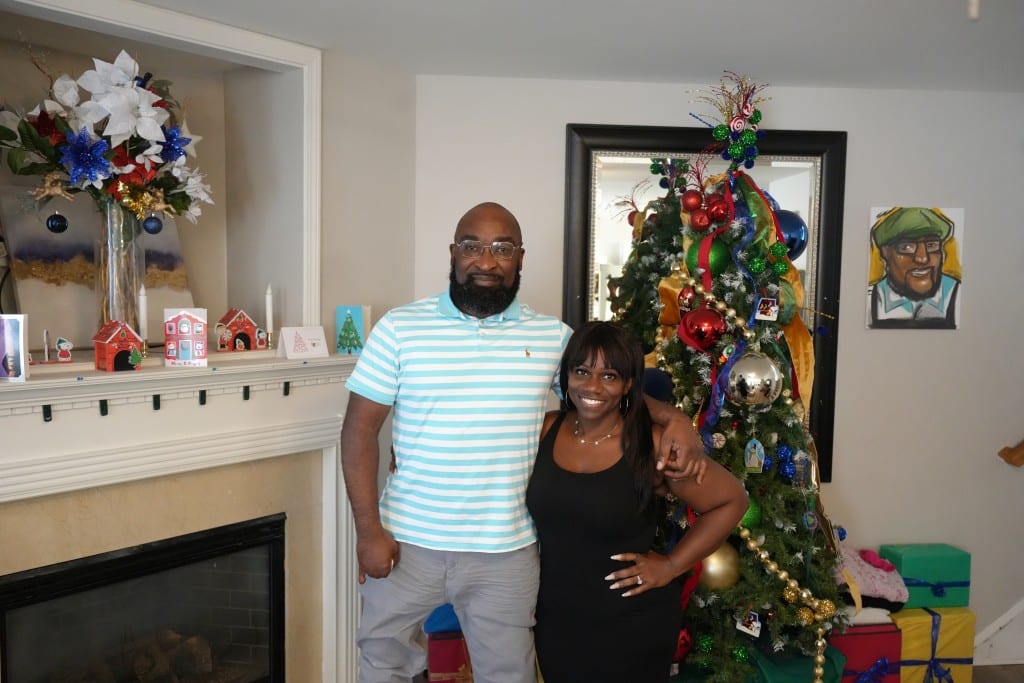
When Rodney Taylor returned home to Loganville in early May, he found a Christmas tree in the living room: His family had left it up after the holidays because they wanted Rodney to see it in person. After 15 months in detention at Stewart Detention Center in Lumpkin, Rodney learned on the morning of May 1 that he’d be getting out. At first he couldn’t believe the news. “My heart sank,” he said, sitting at home with his wife, Mildred Danis-Taylor, by his side. “Tears started coming down my eyes.”
In January 2025, Rodney was taken into custody by U.S. Immigration and Customs Enforcement (ICE) agents. Born in Liberia with disabilities, he came to the U.S. more than 40 years ago, at age two, for medical treatment. Both of his legs have been amputated. Rodney had a social security card and a work permit and was in the process of applying for a green card. He received a burglary conviction as a teenager that was eventually pardoned by the state—but that conviction was the reason why Rodney was detained, and why immigration officials sought his deportation.
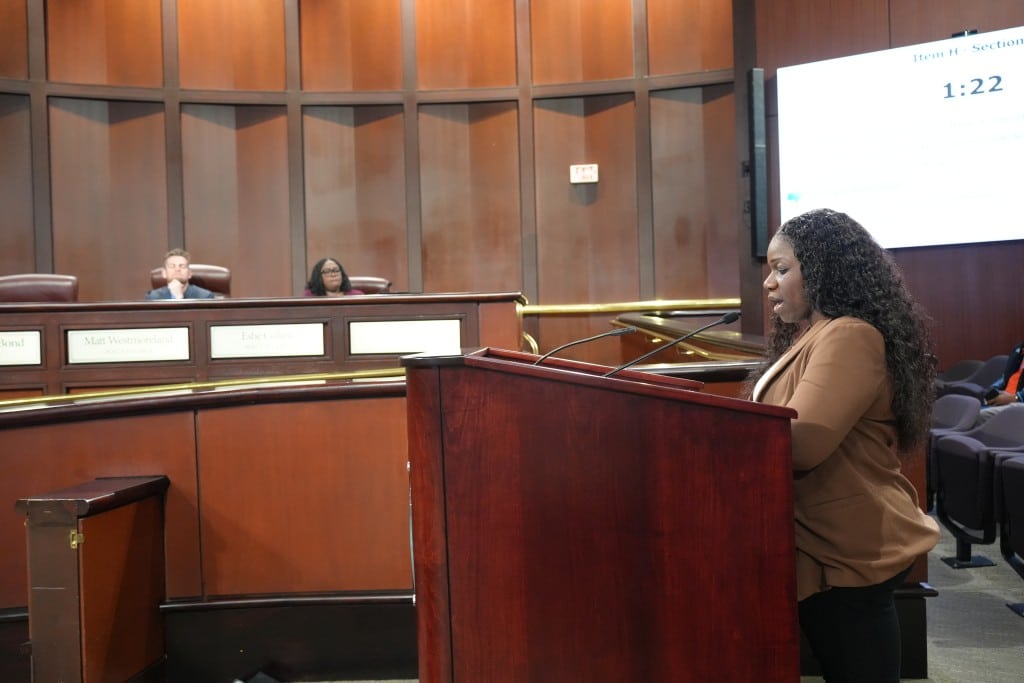
Rodney’s lengthy detention became a high-profile case in both Georgia and nationwide, owing in part to the difficulties he said he faced getting adequate medical care, and due to the efforts of his wife, Mildred—who advocated around the clock for his release alongside immigrant rights organizations like We Are Casa and El Refugio. She met with multiple members of Congress, including Sen. Raphael Warnock, Rep. Hank Johnson, and Rep. Lucy McBath, whom she accompanied to a congressional hearing. She shared her husband’s story with the Atlanta City Council, and spoke more widely about immigrant rights, supporting a resolution that opposed the construction of immigration detention facilities within city limits. She showed up at Atlanta City Hall, arguing that the presence of ICE agents at the upcoming World Cup games could intimidate residents and visitors. In the midst of these public events, she was often seen with an airpod in one ear—if Rodney called, she didn’t want to miss it.
Mildred was certain Rodney would be released, she said, sitting on a blue sofa in their living room, where dozens of family pictures hang on the walls. On May 1, 2025, Mildred had a dream. In it, she recalled, “the Lord had a conversation with me and said: He’s gonna come home.” Exactly a year later, on May 1, 2026, he got out under supervised release.
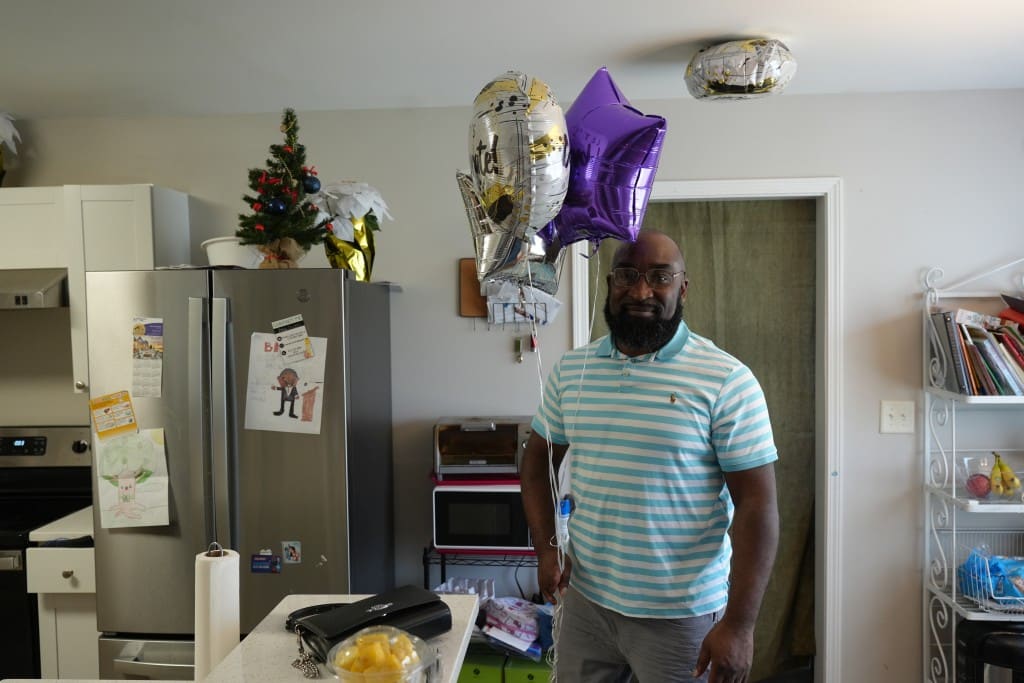
Rodney’s detention took a toll on the family—the couple shares seven children from ages six to 23. Mildred lost her job in June 2025 as a health advocate for a local hospital network. For a year, she lived off of her 401(k); the GoFundMe money they received went to Rodney’s legal bills and a commissary account that let him make phone calls from detention. Earlier in 2026, Mildred was able to get part-time work doing civic engagement for the Black Alliance for Immigrant Justice—a job that also allowed her to continue to share Rodney’s story.
The financial distress also took a toll on Rodney. “As a man, as a husband, you are there to fix everything, and when you feel like you can’t fix them, you feel hopeless,” he said, wiping tears from his eyes. “It was the worst for me knowing that she was out here struggling, going through it, and there’s nothing I can do about it. That was the dagger in my heart for me.”
Being detained with a disability
Rodney never felt that his lifelong disability held him back. Instead, it was his immigration status that limited him, especially once he was arrested. “I’ve been independent my whole life,” he said. “But when I got there, the way they made me feel—they made me feel like I was very disabled.”
Disabled people of color face a higher risk of violence from law enforcement, including from ICE agents, according to researchers. Although there is no clear data on how many people with disabilities are under federal immigration custody, civil rights organizations such as the American Civil Liberties Union estimated in 2012 that about 15 percent of people in immigration detention have a mental or cognitive disability. And organizations like Human Rights First have found that people with physical disabilities face “medical neglect and discriminatory use of solitary confinement” in ICE detention.
While in immigration detention, Rodney was unable to properly feed himself because of difficulty walking to the cafeteria. He said he relied on cellmates to bring food to his room, where he spent most of the time. In May 2025, he fell and injured his right hand. He suffered from high blood pressure and lost about 20 pounds, which caused his prosthetics to fit poorly, leaving him in pain. Showering was a challenge because the chair he’d been given, as opposed to an ADA shower stool, caused his prosthetics to get wet, he said. At times, he said, he found himself having to crawl in and out of the shower.
“The fact that they treated me like my disability didn’t even matter,” he said. “It was just a big uphill battle.”
A spokesperson for CoreCivic, the private contractor that operates Stewart, wrote in an email, “The conditions Mr. Taylor has described at Stewart Detention Center (SDC) simply don’t reflect reality.” The spokesman wrote that Rodney “had every accommodation made for his disability,” including the option to come to the medical unit daily to charge his prosthesis equipment, and the ability to charge his equipment in the multipurpose room in his housing unit. “SDC medical staff and his unit manager were all aware of the situation and helped facilitate his needs,” the spokesperson continued. “Any claim otherwise is false.” The spokesperson wrote that detainees with mobility limitations or disabilities “receive accommodations to ensure they have consistent access to meals, coordinated through medical staff and facility management.”
While in detention, Rodney said, he developed neuropathy, experienced as a sharp pain in his hands, and arms that go numb from time to time. He blames the condition on having to sleep with his prosthetics on for safety; in the 15 months he was detained, he said, he had over 30 different roommates. Now he’s visiting doctors to understand the full extent of his health deterioration. “The place needs to be shut down,” he said, adding that it takes two weeks to see a nurse, and two more to see a doctor. “Healthwise, their model is, if you’re not bleeding out or dying, put in a sick call.” (The CoreCivic spokesperson said, “All detainees have daily access to sign up for medical care, including mental health services. Our clinic is staffed with licensed health care professionals.” The spokesperson added that the company also ensures access to offsite medical care.)
Rodney’s alleged mistreatment briefly entered the national spotlight, when Rep. Lucy McBath pressed Kristi Noem, then the secretary of the Department of Homeland Security, on the matter at the congressional hearing that Mildred attended. “This is despicable,” McBath said. “It’s inhumane torture that no person should have to endure.”
Building back his life
At the time he was detained, Rodney was enjoying a successful career as a barber with more than 800 clients he developed over the years. He’s not sure when or if he’ll be able to return to barbering—he has to complete medical assessments before he’ll know what his body has the capacity for. At the moment, he said, it’s painful for him to stand too long.
He’s trying to move around more, getting used to holding his kids and playing with them. He’s also just enjoying the fresh air. “I have to get my body used to being back out.” He’s also trying to readjust his sleep schedule, having gotten used to frequent interruptions in the night—a guard’s jangling keys, other detainees getting up and walking around.
Rodney’s been enjoying all kinds of foods too —everything from pizza to McDonald’s to Indian dishes. The first thing he had after being released were lemon pepper wings at a Columbus restaurant: “I ate like 20 of them,” he said, laughing.
Before being detained, Rodney and Mildred had created a nonprofit focused on health advocacy, and Rodney was in the middle of organizing a community health fair, which Mildred had to bring to fruition after he was detained. Now, they want to continue doing health advocacy, but not just that: They’re hoping to create a community resource center where Rodney can also work as a barber. They want to help detainees with disabilities and teach their families how to advocate for their loved ones. “Just a place where he could have these community conversations and still have the barbershop,” Mildred said. “And host town halls for local politicians and accommodate the community as much as possible,” Rodney added.
Mildred, whose parents are from Haiti, is also considering running for office. “If God is using you to help, do it,” she said. “Maybe Rodney being detained was the way in. I don’t know, but I am curious to see how that works because I can’t be quiet now, right?”
Rodney says he wants to build on his experience to continue to help others, particularly immigrants and people with disabilities. “The Lord has for me what he has for me. He put it in my heart, in my spirit to continue this fight, so I’m not fearful of anything,” he said. “People have to start opening their eyes and realize that an injustice for one is injustice for everybody.”
Author

Related Articles
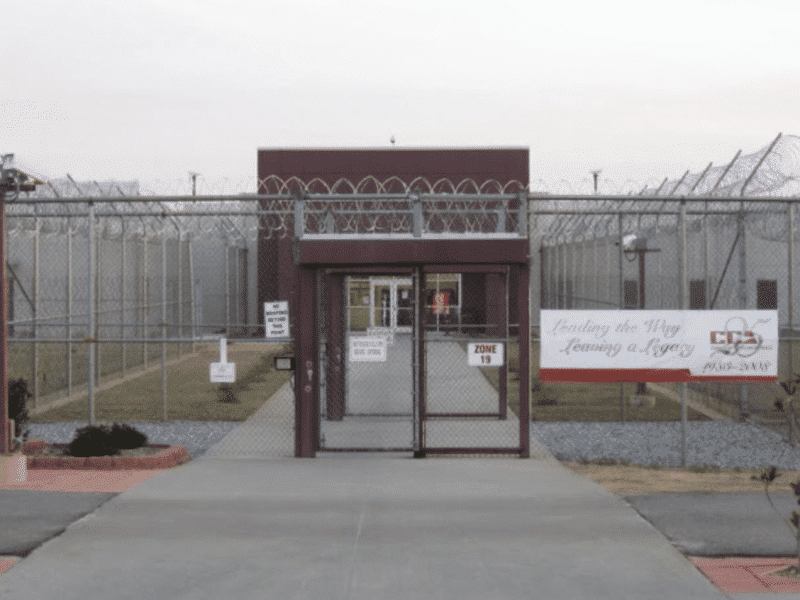
Warnock visited Stewart Detention Center; he is now alerting folks of “serious concerns in these facilities” around healthcare access, including for pregnant women
The visit took place the day before another group of Democratic lawmakers called for the closure of the ICE facility, which has been dogged by allegations of neglect and mistreatment.

Georgia passed a law targeting undocumented immigrants who commit crimes, after a high-profile 2024 murder. It may not be doing much for public safety.
In diverse Gwinnett County, HB1105 has become a quiet tool for the Trump administration to advance its immigration crackdown.
Venezuelans deported grapple with new realities in their country, amid earthquake aftermath and political upheaval
One former GA resident, now back in Venezuela, shares his story.